Alistair Hardaker
Image: Composite: image credits below
From archaeological discoveries that rewrote the Iron Age to the first UK display of the Bayeux Tapestry in nearly a millennium, 2025 proved a year of significant developments across the UK museums and heritage sector.
Major openings included the V&A East Storehouse in May and the Science Museum’s new Space gallery in September, whilst the sector also saw widespread industrial action, advances in AI technology, and continued progress in restitution and repatriation. Museums + Heritage Advisor rounds up the year’s defining stories.
‘The Melsonby Hoard’: A treasure trove that rewrote the Iron Age
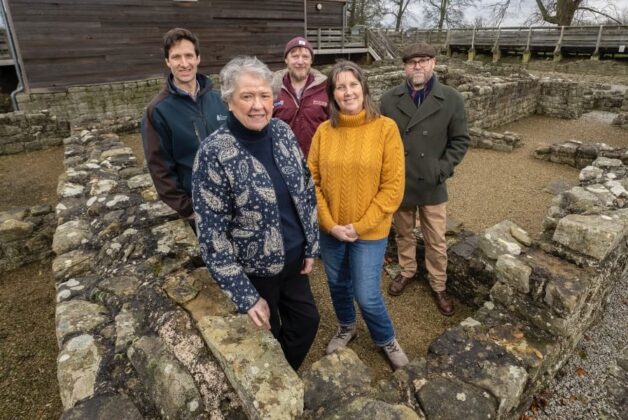
In March, an archaeological find was made public, a discovery “of a scale and size that is exceptional for Britain and probably even Europe,” according to Professor Tom Moore, Head of the Department of Archaeology, Durham University.
The Iron Age ‘Melsonby Hoard’ contains more than 800 items, all around 2,000 years old. While publicly announced this year, it had been excavated in 2022 by a team of archaeologists from Durham University, with advice from the British Museum and over £120,000 grant funding from Historic England. The hoard is now valued at £254,000.
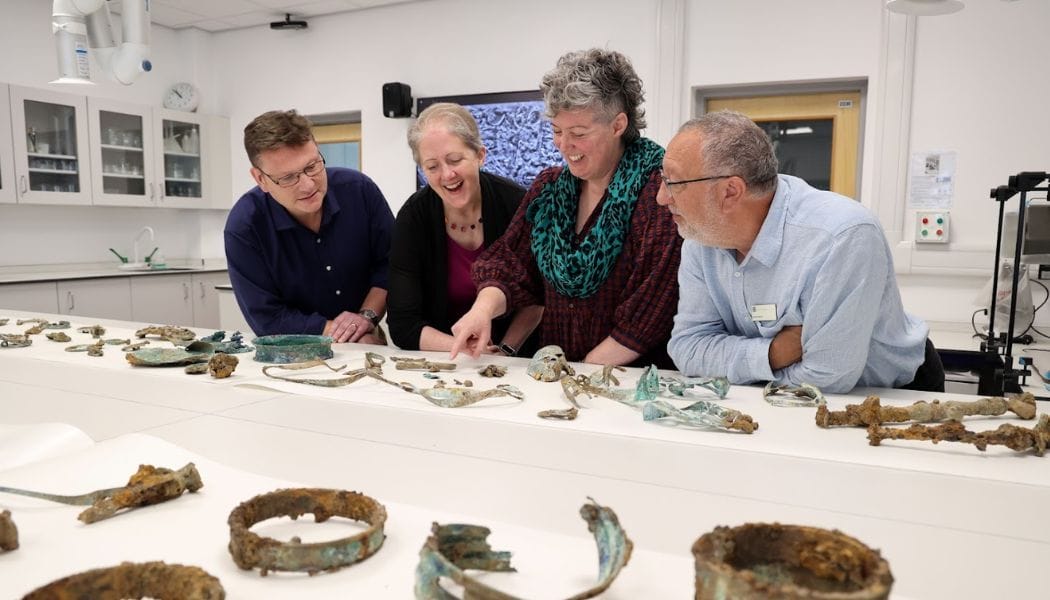
The British Museum said the find could lead to a major re-evaluation of how wealth and status were expressed. Duncan Wilson, chief executive of Historic England, said the hoard marked “one of the most important and exciting Iron Age period discoveries made in the UK.”
Earlier this year a fundraising campaign, led by The Yorkshire Museum, was successful in securing the hoard’s future. Further research, conservation and analytical work will now be carried out to learn more about the hoard and ensure its long-term preservation. The hoard is set to become part of the Yorkshire Museum’s public programme, sharing the discovery with visitors.
Long touted Bayeux Tapestry loan confirmed
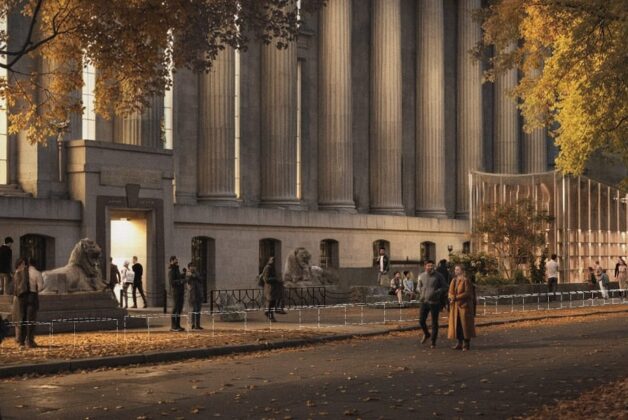
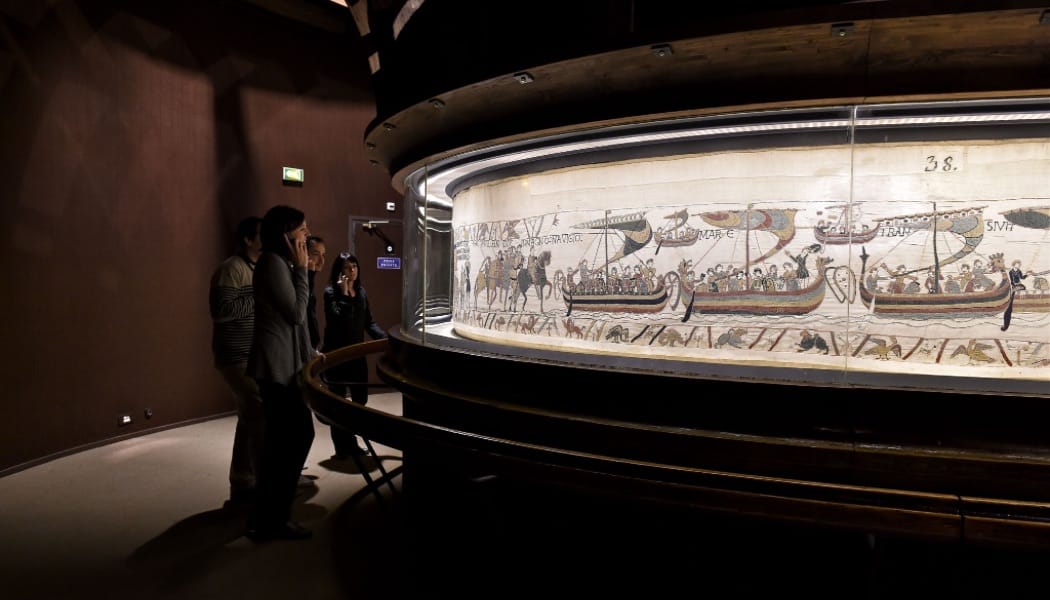
This year saw confirmation that a plan for The Bayeux Tapestry to be loaned to the British Museum is to go ahead, after negotiations which began in 2018. The loan will mark the first time that the medieval tapestry, which chronicles the Norman Conquest of 1066, will be displayed in the UK in nearly 1,000 years. The tapestry will be displayed in the The Sainsbury Exhibitions Gallery of the British Museum in London between September 2026 and July 2027.
The 70 meter tapestry has been displayed at the Bayeux Museum in Normandy for the last 42 years. The tapestry is to be returned to the Bayeux Museum after a two year refurbishment.
In return, the British Museum will loan the Sutton Hoo collection and the Lewis Chessmen to museums in Normandy.
French President Emmanuel Macron said the loan exchange marked a new era for global politics. PM Keir Starmer said the exchange would “bring us together, to remind us of our shared history, but also the common bonds that ensure across languages, borders and cultures.”
But the plan was not celebrated by everyone. A petition urging Macron to reverse the loan garnered nearly 60,000 signatures, citing fears over its fragility during transit. And the MP for Hastings and Rye called for the tapestry’s exhibition to extend to the historically relevant area.
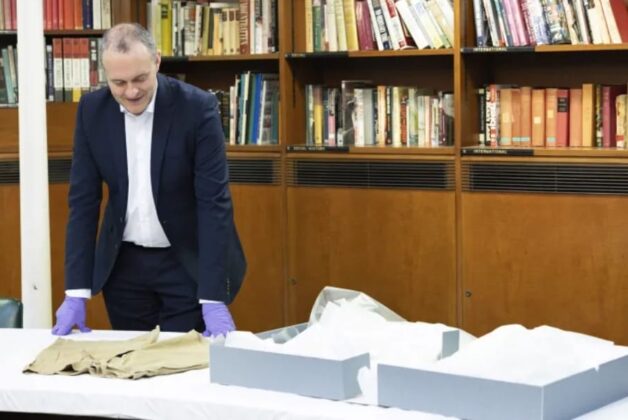
In September, its relocation began, as Bayeux Museum staff were shown carefully folding and placing the tapestry into temporary storage ahead of its journey to London.
Debut openings
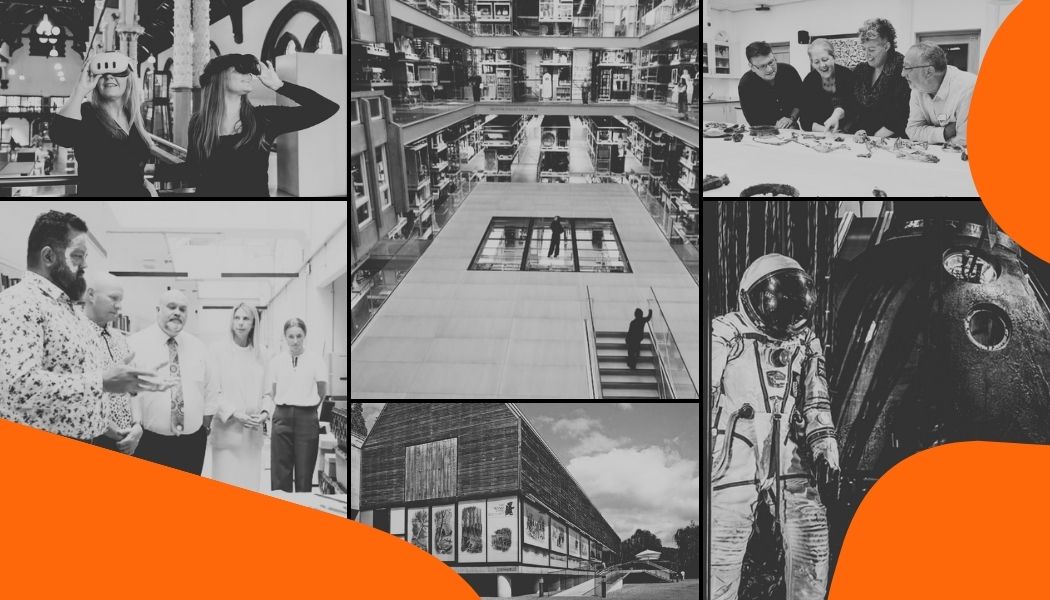
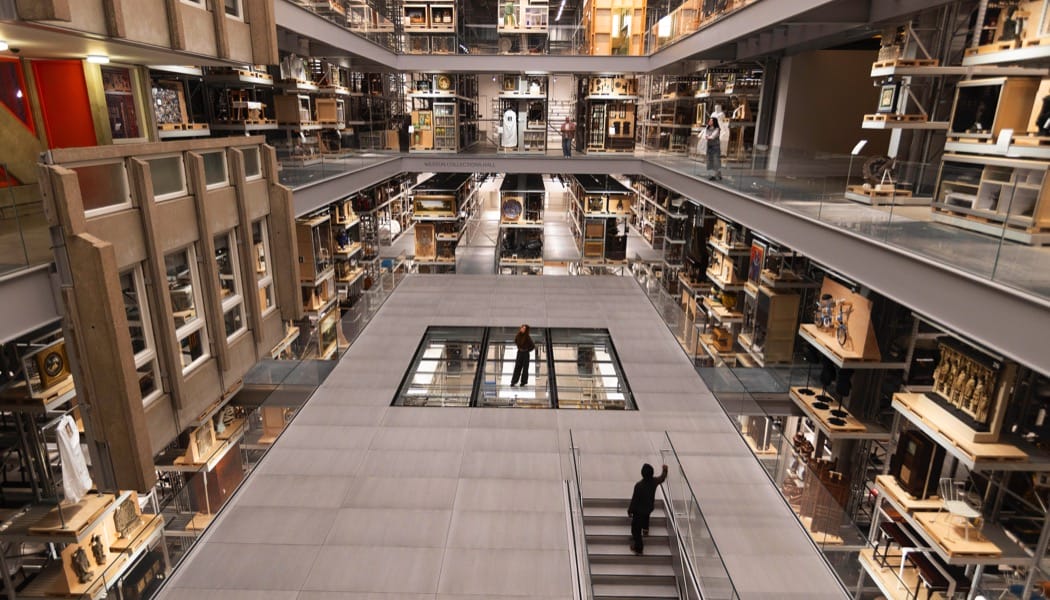
In May, the V&A opened V&A East Storehouse, a 16,000m² working museum store in Queen Elizabeth Olympic Park. Designed by Diller Scofidio + Renfro in the former 2012 Olympics Media Centre, the facility houses over 250,000 objects, 350,000 books and 1,000 archives.
The “Order an Object” service allows visitors to book free appointments to view any item from the collection, with a 1954 Balenciaga evening dress proving the most popular request. Large-scale displays include Frank Lloyd Wright’s 1930s Kaufmann Office and the 10-metre-high Picasso-signed Le Train Bleu stage cloth from 1924.
The David Bowie Centre, housing Bowie’s archive, opened at the venue in September.
Norwich Castle Keep reopened on 7 August following a £13m restoration that transformed the 900-year-old Norman royal palace with reinstated medieval floors and rooms. The project made it Britain’s most accessible castle with lifts to all five floors and includes a new Gallery of Medieval Life showcasing nearly 1,000 medieval artefacts in partnership with the British Museum.
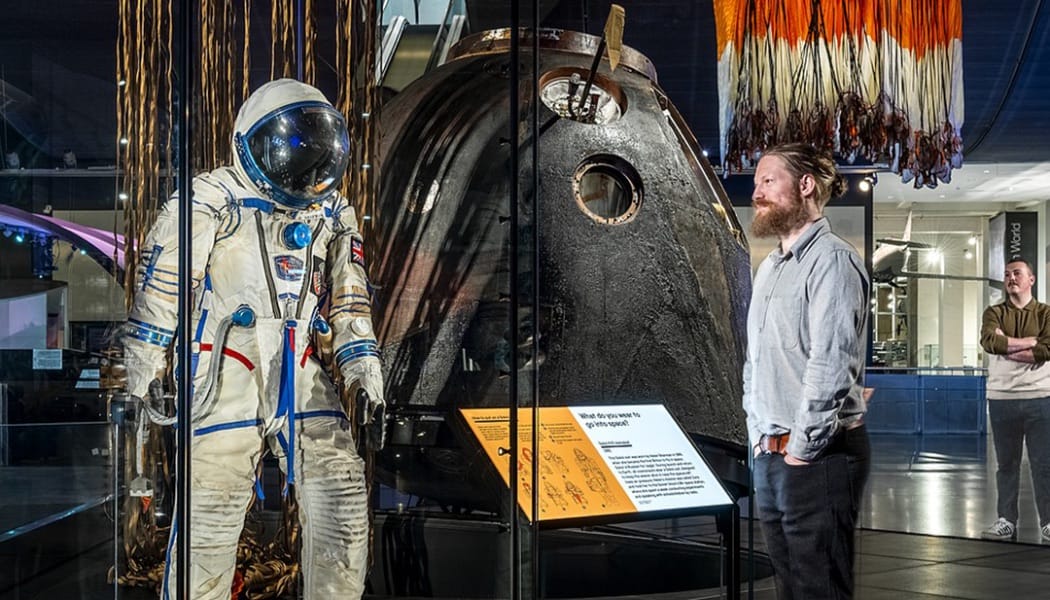
The Science Museum’s new Space gallery opened on 20 September, displaying Helen Sharman’s Sokol KV2 spacesuit for the first time following conservation, Tim Peake’s Soyuz TMA-19M Descent Module, and the Apollo 10 command module that orbited the Moon in 1969. The gallery also features UK space sector technology including prototype propulsion systems and a Moon rover.
The Harris Museum in Preston reopened on 28 September following a £16m restoration after closing in 2021. The project included asbestos removal, conservation of the building, infrastructure upgrades and the introduction of new exhibitions, learning spaces and a café.
The Shoemakers Museum opened in Somerset in September to coincide with Clarks’ bicentenary. Run by the Alfred Gillett Trust, the museum combines a 16th century manor house, 17th century barn and contemporary glass extension, with four permanent galleries housing hundreds of previously undisplayed objects from the Clarks archive.
Poole Museum reopened on 5 November following a seven-year, £10m heritage-led regeneration project that conserved and restored three historic listed buildings whilst more than doubling public space without new construction.
The National Science and Media Museum’s Sound and Vision galleries opened on 10 July, completing a £6.8m transformation of the Bradford museum. The permanent galleries span two floors and showcase collections of photography, film, television, animation, gaming and sound technologies.
Jewry Wall Museum in Leicester opened on 26 July as ‘A Real Roman Experience’, featuring the remains of a 2nd century Roman bath house and displaying over 100 locally discovered Roman artefacts including mosaics, wall plasters, jewellery, pottery and bronzework. The attraction is housed in a refurbished Grade II-listed former college.
Industrial action
Over 300 PCS union members at the British Library went on strike from 27 October to 9 November, with further action currently underway from 8-12 December over pay disputes. The union has called for inflation-proof pay rises, with concerns heightened after Chief Executive Rebecca Lawrence’s departure.
Over 150 PCS members at Tate Britain, Modern, Liverpool and St Ives voted 98% in favour of strike action (87.72% turnout), walking out from 26 November to 2 December over a 2-3% pay offer, demanding above-inflation increases and restoration of benefits including staff canteens and subsidised meals.
More than 40 UNISON members at the National Coal Mining Museum, including mine guides and former 1984 miners’ strike veterans, began striking on 20 August over pay, with action now extended through to January 2026. The museum’s first patron, Wakefield Council Leader Denise Jeffery, resigned in November citing conflict of interest.
Outsourced Wilson James security staff at the Natural History Museum, Science Museum and V&A went on strike last October, then escalated to month-long action in February, demanding £16 per hour, sick pay from day one and parity with directly employed staff. Guards from V&A East and Young V&A joined the campaign. The guards paused their strike in late February after promises of a pay offer, and in June secured pay rises ranging from 13% to 23%, adding up to £8,000 per year to salaries. In November, Science Museum security guards won union recognition through the Central Arbitration Committee.
Technology and AI
The Arts Marketing Association announced ‘Goose’ in July, an AI platform specifically designed to support heritage organisations with marketing and audience development. Backed by a £250,000 grant from The National Lottery Heritage Fund, the platform will provide an “AI-powered 24/7 mentor, coach and virtual colleague” to address the marketing skills gap in the sector. The platform was set to begin testing in autumn 2025 before launching in early 2026.
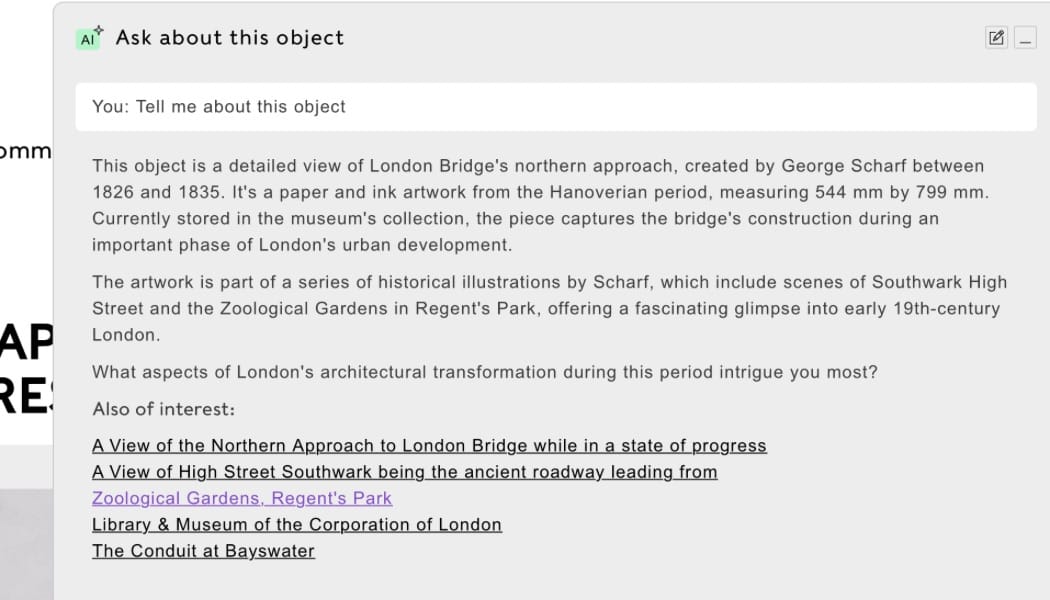
London Museum launched ‘Clio 1.0’ in July, an AI chatbot that answers questions about its collections. Described as an experiment to see how audiences engage differently with museum content, the chatbot uses natural language processing and was trained exclusively on London Museum’s data rather than wider internet information. The museum noted that 500-1,000 messages to Clio roughly equals the energy used to boil one kettle of water.
The Head of Digital Innovation at London Museum discussed AI innovations with Advisor in October, following its Museums + Heritage Awards win.
Bletchley Park opened ‘The Age of AI’ exhibition on 4 February, featuring interactive exhibits including AI voice recreation technology, hands-on demonstrations distinguishing AI-generated content, and case studies on AI-assisted 3D printing. The exhibition showcased pioneering work from Bletchley Park codebreakers Alan Turing, Irving John ‘Jack’ Good and Donald Michie, alongside contemporary AI developments including the first AI generated film, “The Frost”, and a prototype energy efficient data chip from IBM.
Bristol science centre We The Curious appointed Tom Betts as chair of trustees in March. Betts, a specialist in machine learning and AI with a master’s degree in informatics from the University of Edinburgh, had previously served as a board member since 2019 and brought experience as Chief Data Officer at the Financial Times.
Other appointments in 2025 included:
Major appointments
In January, the Design Museum announced three senior appointments including Josephine Chanter as deputy director and Lycia Lobo as chief operating officer.
Historic England appointed Claudia Kenyatta CBE and Emma Squire CBE as joint chief executives in April following Duncan Wilson’s retirement, marking the first job-share arrangement at this level. The leaders spoke to Advisor last month.
The Fitzwilliam Museum appointed Dr Ladan Akbarnia as head of curatorial in May, bringing experience from the British Museum and Brooklyn Museum, whilst Oxford University’s Museum of Natural History welcomed Dr Gavin J. Svenson as director in June.
September saw Baroness Jan Royall, former Labour Cabinet Minister, appointed chair of ALVA, and Abigail Pogson named chief executive of the Barbican Centre, with the latter set to take up her role in January 2026.
📨 Looking for more round-ups?
If you’ve enjoyed this news round-up but don’t want to wait a year, M+H Advisor‘s weekly ‘Museum Moves’ feature might be just what you are looking for. It’s featured every week in our free newsletter.
Closures
The River & Rowing Museum in Henley-on-Thames announced its permanent closure in July, closing to the public on 21 September after averaging £1m annual losses. The trustees cited an endowment depleted by essential building works and significant increases in operational costs. Chair David Worthington said the venture was “too ambitious” – six galleries, multiple public spaces, two classrooms, a 5,000 square foot storage facility and a 35,000-item collection proved beyond the scale sustainable for a specialist museum in a small market town.
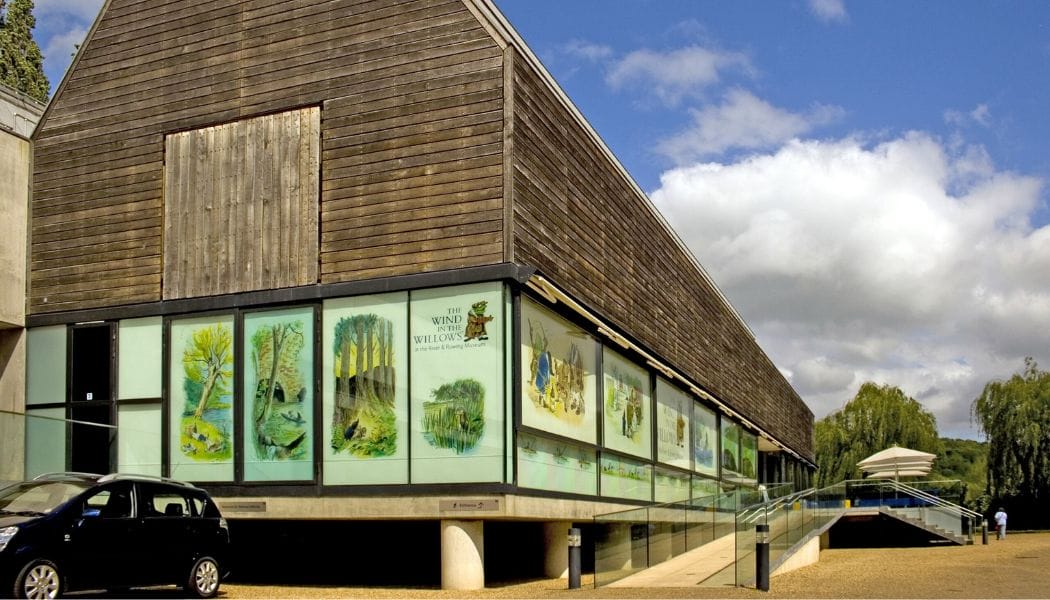
The museum is now seeking new homes for its collections, which include the Henley, River, Rowing and John Piper collections. Expressions of interest from accredited museums and public bodies are due by 6 February 2026.
The Migration Museum closed its Lewisham Shopping Centre base on 30 March after four years at the location. The museum is searching for a temporary venue before its permanent home opens in the City of London in 2027, in partnership with real estate company Dominus in a student accommodation development.
Ceredigion Museum closed 19 May for structural repairs to the Grade II listed building in Aberystwyth. The work includes a new roof, suspended ceiling repairs and replastering of damaged interior walls. The café, tourist information centre and shop remain open during the closure, with reopening expected in spring 2026.
Fashion Museum Bath launched ‘Fashion Unpacked’, a mini museum housed in “The Trunk” – a wardrobe-like construction designed by illustrator Lesley Barnes and furniture maker William Warren – while the museum moves to its new home.
A survey of 40 small independent museums conducted in January found three in five fear closure. The survey, conducted by Kids in Museums, revealed 58% said overall income has not returned to pre-Covid levels, while 22% have reduced programming and 17% have cut opening days. Alison Bowyer, Executive Director of Kids in Museums, said small museums were facing “the most challenging period for the sector that we have ever seen”.
Restitution and Repatriation
A delegation of Naga representatives visited the Pitt Rivers Museum in Oxford in June to discuss the repatriation of 41 ancestral remains and 178 objects containing human hair. The museum holds the world’s largest collection of Naga material, much of it collected by colonial administrators in the early 20th century. Professor Dolly Kikon from the University of California, Santa Cruz, described the visit as “an act of healing, of returning sovereign decision making, and reclaiming the dignity of our ancestors”, and said the partnership was crucial to address colonial violence and rewrite museum labels that had cast the Naga as “primitives, savages and head-hunters”.
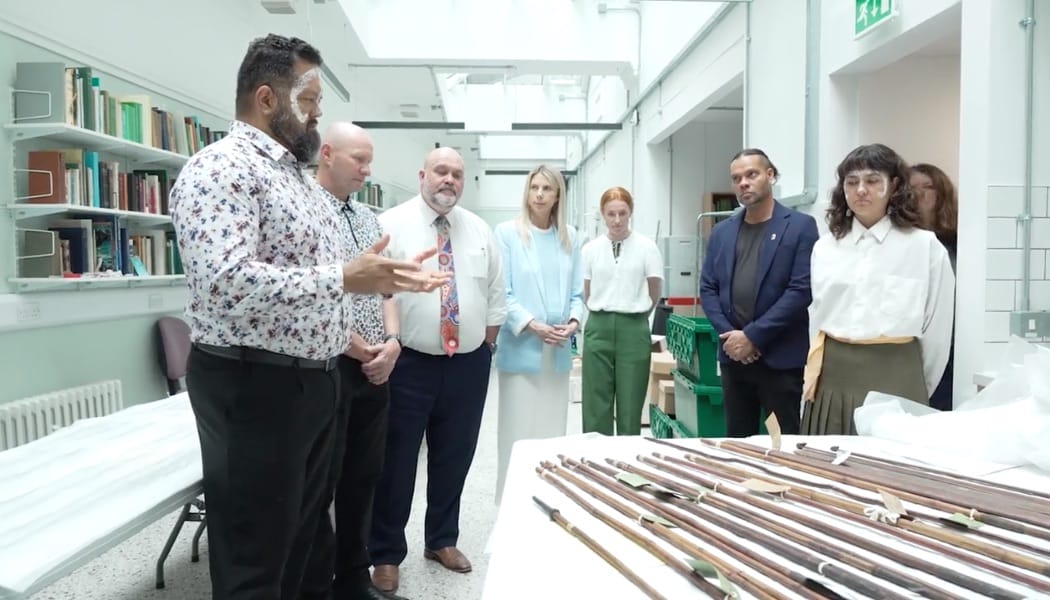
Bristol Museum returned 33 objects to the Larrakia people in September via Australia’s repatriation programme. The objects will be displayed at the Larrakia Cultural Centre in Darwin, scheduled to open in 2026. Mark Motlop, chairperson of the Larrakia Development Corporation, called it “an extremely important milestone for the revitalisation and maintenance of Larrakia culture”.
The Horniman Museum formally transferred 10 Warumungu artefacts in April following a request made in May 2023. The Charity Commission endorsed the decision in February 2024, noting the trustees’ “moral obligation”. The objects, which include a marttan (knife) and murkutu (sheath), are now housed at the Nyinkka Nyunyu Art and Culture Centre in Tennant Creek.
In March, the UK’s All-Party Parliamentary Group on Afrikan Reparations published a report calling for an end to the display of human remains in UK museums without consent. The report recommends that the UK government legally recognise colonial genocide as grounds for reparations, establish an independent Human Remains Advisory Panel modelling the UK Spoliation Advisory Panel, and remove distinctions between human remains, modified human remains and cultural material in repatriation decisions.
New research
Historic England commissioned research published in May identified significant barriers faced by disabled people in heritage settings. The study by specialist disabled-led consultancy Direct Access found one in five respondents had left heritage sector jobs due to health and disability reasons. While three quarters of disabled heritage workers said their line managers were aware of their access needs, only a third had been offered workplace assessments. Half received no disability-related training and only 7% used Access to Work support. The findings were presented at the Museums + Heritage Show.
A four-year research partnership led by the Research Centre for Museums and Galleries at the University of Leicester secured £1.49m from the Arts and Humanities Research Council in December to examine how museums can reduce inequalities in visitor demographics. The ‘Addressing the Museum Attendance and Benefit Gap’ project will work with Birmingham Museums Trust, University of Birmingham and UCL to develop evidence-based approaches. The research addresses the fact that educational attainment remains the most significant predictor of museum visiting.
The Annual Museum Survey 2025 published in October reported that visits to England’s museums have returned to pre-pandemic averages. The survey of 692 museums found that overall staff numbers and full-time employment proportions are slightly higher than pre-pandemic levels, whilst over 60% of museums report increased or sustained project investment. The sector’s combined economic impact is estimated at £1.17bn annually. However, 65% of museums report higher expenditure due to ongoing cost of living pressures.
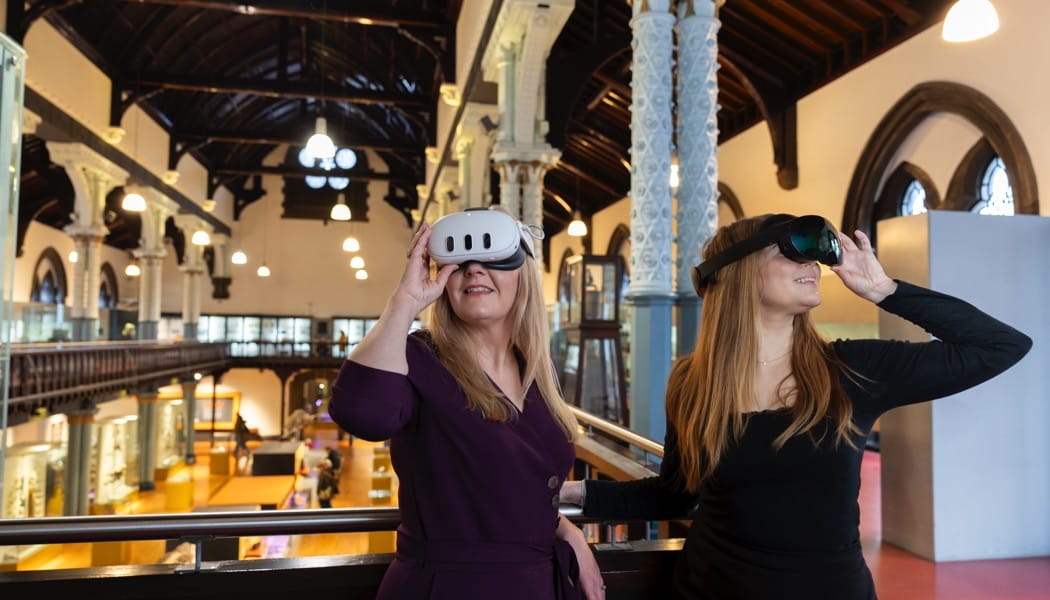
A global survey of more than 2,000 ‘cultural heritage enthusiasts’ conducted as part of the £5.6m Museums in the Metaverse project found 79% expressed interest in using digital technology to explore collections currently inaccessible to the public. The research, published in January, reported 77% would be interested in using VR to access cultural heritage collections. The project, based at the University of Glasgow and funded by the UK Government’s Innovation Accelerator programme, completed its XR platform in March 2025.
The British Museum retained its position as the UK’s most visited attraction with 6.4m visitors in 2024, according to figures published by ALVA in March. The Natural History Museum was second with 6.3m visitors. Collectively, UK’s leading visitor attractions welcomed 157.2m visits in 2024, representing a 3.4% increase on the previous year, though still 8.8% behind pre-pandemic levels. Bernard Donoghue described 2024 as “a year of steady but not significant growth”.
The National Trust reported a 39% increase in new members aged 18-25 in September, with over 40,000 new Gen Z members joining between March 2024 and February 2025. The young membership cohort continued growing with a further 16% increase from March to July 2025.
A Heritage Alliance report presented at the Museums + Heritage Show in May explored how heritage sites boost the creative sector. The research highlighted examples such as the Old Naval College, which boasts over 300 credits in productions including Bridgerton and Les Misérables, demonstrating how heritage sites provide “backdrop for culture creativity” and act as gateways for young people entering arts industries.
Historic Houses published research in November showing 91% of heritage organisations completed Culture Recovery Fund projects within budget and on time. The report, published five years after the UK Government’s £1.57bn investment, surveyed 89 member sites that received a total of £12.5m. Across 35 businesses, 775 jobs were protected, whilst 57% used funding for restoration works.
Museums + Heritage Awards 2025
The Museums + Heritage Awards 2025 ceremony took place on 15 May at Hilton Park Lane, London, recognising excellence across 18 categories including the inaugural Visitor Accessibility Award. Winners ranged from major national institutions to small volunteer-led organisations, demonstrating the breadth of innovation across the sector.

Advisor spoke to several winners in the months following the ceremony this year. Wellcome Collection took the first Visitor Accessibility Award for deaf-led programming and organisation-wide accessibility commitment. London Museum won Best Use of Digital – UK for its AI-powered website and Clio chat agent. Stourbridge Glass Museum shared Sustainable Project of the Year for creating the world’s first carbon neutral glass studio. Suffolk Archives won Community Engagement Programme of the Year for its migration project engaging over 13,000 people. Attenborough Arts Centre’s SENsory Atelier programme won Learning Programme of the Year for its work with special schools, whilst Anoxart Ltd won Innovator of the Year through a sector-wide vote for its pest eradication technology.
➡️ The Museums + Heritage Awards 2026 is now open for entries
What were the most important stories to you this year?
Have we missed a major story that was important to you? Let us know.