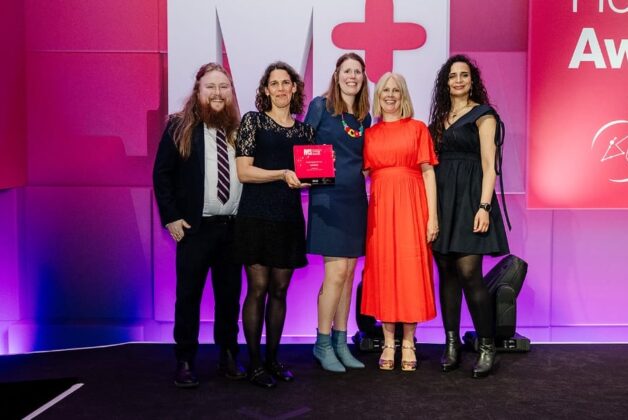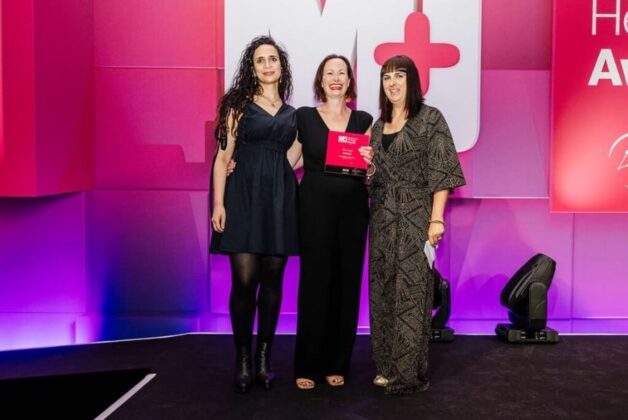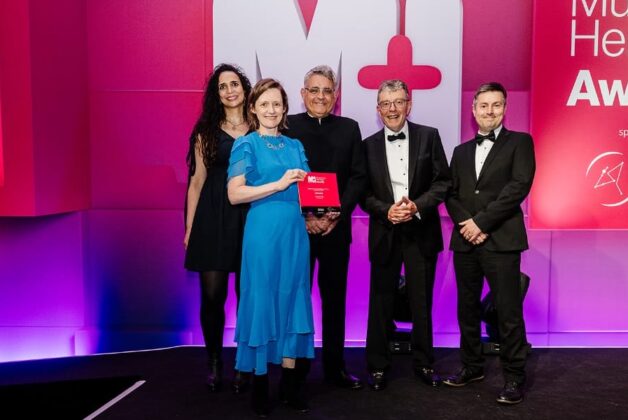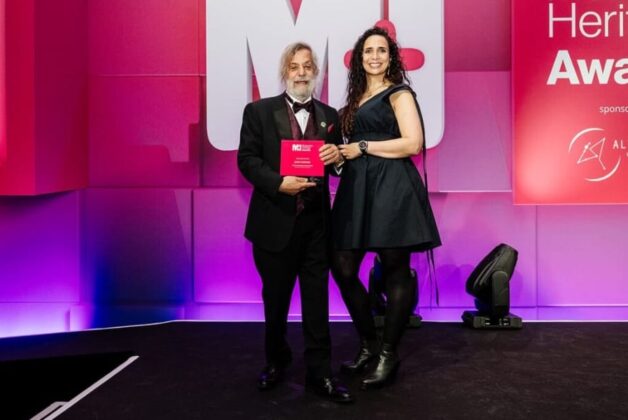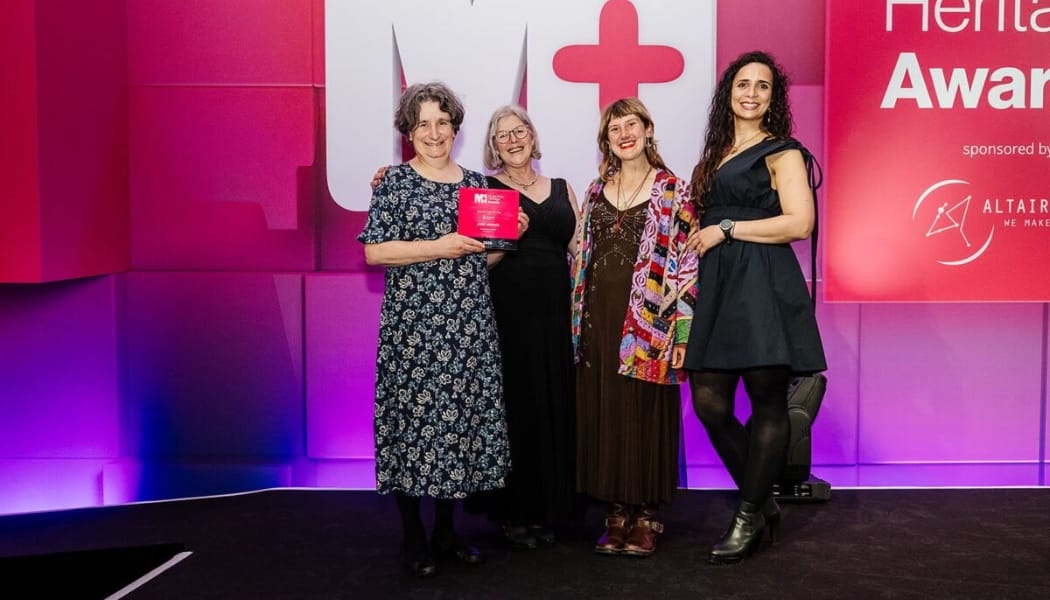
Alistair Hardaker | Image: Heather Forbes (left) receives the award at the Museums + Heritage Awards 2026
Gloucestershire Archives transformed its building through unconventional choices, community gardens, and 12,591 catalogued environmental records to show what embedded sustainability looks like
When Gloucestershire Archives won the Sustainable Project of the Year award at the Museums + Heritage Awards in May, the recognition was in part for the tangible achievement of moving their building from energy rating G to A.
But the story of how they did it involves more than technology, in a wider story of community, research, and purpose.
The transformation of the building required both technical expertise and willingness to challenge conventional thinking.
Managed by Gloucestershire County Council, Gloucestershire Archives looks after the archival records for both Gloucestershire and South Gloucestershire. The archives are situated on Alvin Street in Gloucester, a site that has recently been rebranded as the Gloucestershire Heritage Hub.
“We were using a huge amount of power for air conditioning,” explains Heather Forbes, who led the Green Pledge Project. Working with specialist Nick Grant from Elemental Solutions alongside the council’s project engineer, the team installed solar panels and replaced failing equipment.
“As an archive service, we really need to understand how our building works.”
One decision on climate control exemplified the approach. “We’ve replaced failing equipment in our photographic store with wine cellar technology, which is tiny compared to the monstrosity we had before.”
The wine cellar cooling technology is being piloted in the building. While it is a relatively new way to control the climate in a photographic archive, Forbes says “it’s worth trying these things. You can’t lose anything.”
And the results justified the experimentation. The building now hosts visits from other organisations seeking to understand how the changes work. “We’re hosting visits from other people about what we’re doing so they can come and see how it’s working with us,” Forbes explains.
Why Partnerships Made the Difference
The energy rating improvement was part of something larger. “Whenever we do project works, we tend to work in partnership because we find that the impact is far greater if you work with other people,” Forbes notes.
That philosophy shaped everything from building retrofits to community engagement. The community garden partnership with Project Grow and Wiggly proved transformative in unexpected ways.
Project Grow, a community urban food and farming collective, took on the archive’s community garden and made it into “a very productive space for organic vegetables”.
“But the main thing is that they provide opportunities for people who want to return to work or who are living with mental health problems. It’s now a safe space for volunteers to benefit from learning how to grow things in a supportive environment, and spending time with nature. And all of that in the middle of a city.”
The garden project expanded beyond the archives site into Kingsholm Primary School and the Bishop of Gloucester’s Garden. And it continues in all those areas. An artist created a garden shed decorated with archive images that now sits at Kingsholm Primary School. “That is continuing after our project,” Forbes notes.
Entries for the Museums + Heritage Awards 2027 open on 31 October 2026 — don’t miss your chance to be recognised among the sector’s best.
Be first in line with entry details, deadlines, and insider tips to strengthen your submission.
12,591 Environmental Records
Alongside the building work, the archives catalogued environmental records at scale, with 12,591 catalogued during the project, and work continuing, “because clearly once you’ve raised the profile, we do continue to receive environmental archives.”
Work has continued beyond the project funding period, including completing cataloguing records from the Gloucestershire Wildlife Trust, building a fuller history of environmental action.
“Gloucestershire has had quite a major impact as a county on developing environmental responses to the climate crisis. So that was really the driving force as to why we actually did the project in the first place.”
The records revealed environmental concern, and approaches to environmental action spanning the centuries. Some which remain, and some which are gratefully a thing of the past.
Forbes described records which revealed churchwardens would encourage young boys to go and collect hedgehogs, then considered vermin, “and would pay them to bring them in.”
Elsewhere, environmental conversations continue. “There are things that have got better but also issues that people have been arguing about for a long time; not having fertiliser as it could ruin the biodiversity of local areas. So it goes a long way back.”
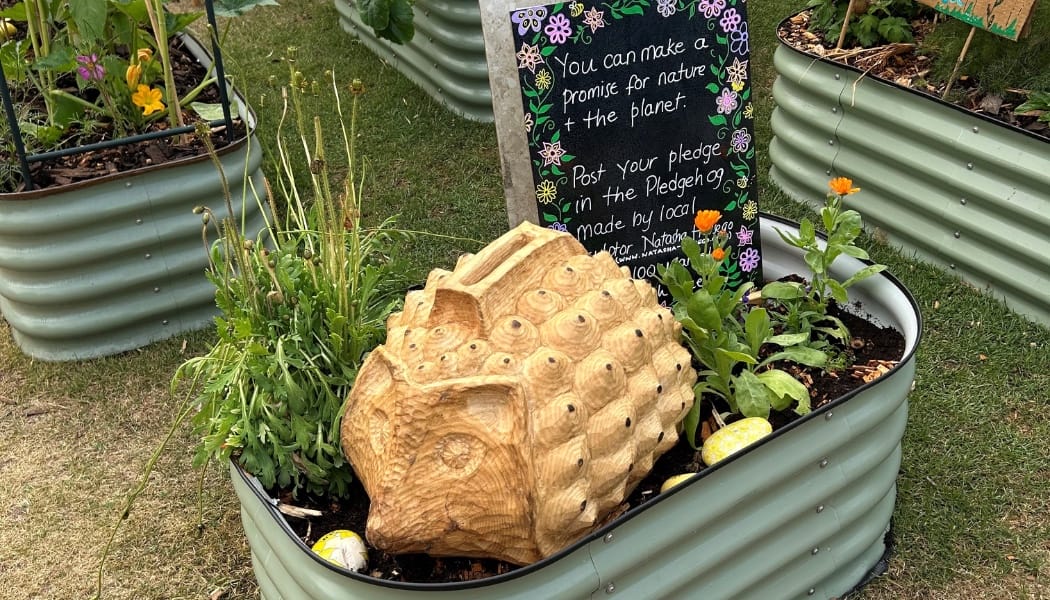
The ‘PledgeHog’ and Public Engagement
The archive’s travelling exhibition reached communities beyond its walls, at its heart was a carved wooden hedgehog with a slot in its top. It collected signed public pledges as the ‘pledgehog’. It was an object that cleverly connected environmental activism to archival history.
Alongside the story of the churchwardens, “the hedgehog linked back to medieval bestiaries when people used to think that hedgehogs would roll on their back in order to impale apples.
Visitors could commit on paper to recycle, upcycle, switch off machines, opt for a hedge rather than a fence, and grow plants up walls for wildlife.
The response was significant. “Quite a lot of folk [736] made personal environmental pledges through our pledgehog.”
Embedding Sustainability into Practice
Six months after funding ended, the work persists. “Once you’ve started on this route, you can’t turn the clock back.”
A post-project green team now meets quarterly. “Our caretaker and two other staff who were on the project, we’ve managed to give them permanent jobs.
“We meet quarterly to discuss further ideas and to make sure we’re implementing our green environmental policy and also our action plan.”
Work also continues on the archive’s boilers, which are now fifty years old and the final major energy drain.
Raising the Archive Profile
On winning the Sustainable Project of the Year Award, Forbes said: “Archives don’t always have a high profile, either locally or nationally. So we thought it was an opportunity to raise the profile of what we’d been doing and the impact archives could have.”
“We couldn’t believe it when we saw who we were shortlisted with and thought we didn’t stand a chance but were delighted to be joint winners with Lambeth Palace Library.”
Winning was unexpected. “I personally was extremely surprised. I really wasn’t expecting it, but it was a real pleasure, and we had such fun on the evening.”
Gloucestershire Archives was one of two Joint Winners, alongside Lambeth Palace’s Harmonising Heritage and Sustainability project.
Entries for the Museums + Heritage Awards 2027 open on 31 October 2026 — don’t miss your chance to be recognised among the sector’s best.
Be first in line with entry details, deadlines, and insider tips to strengthen your submission.