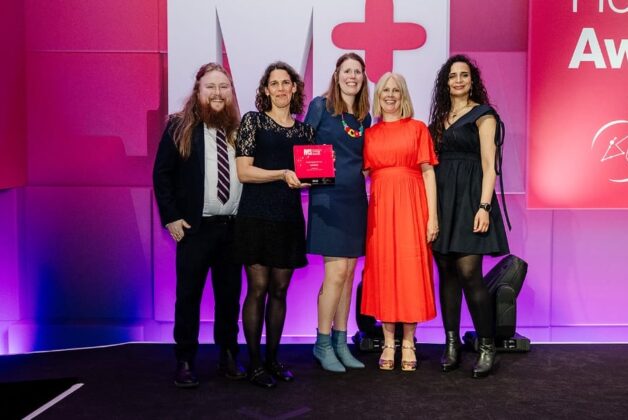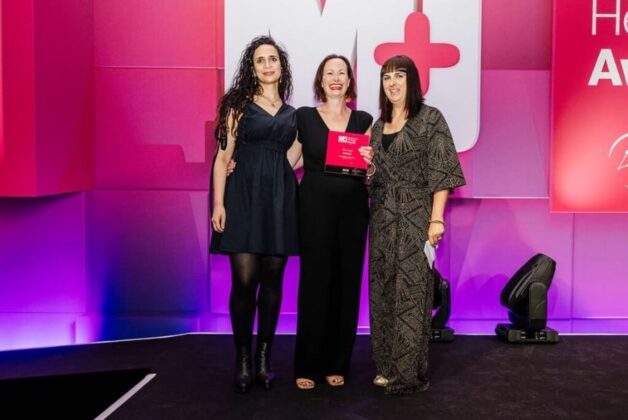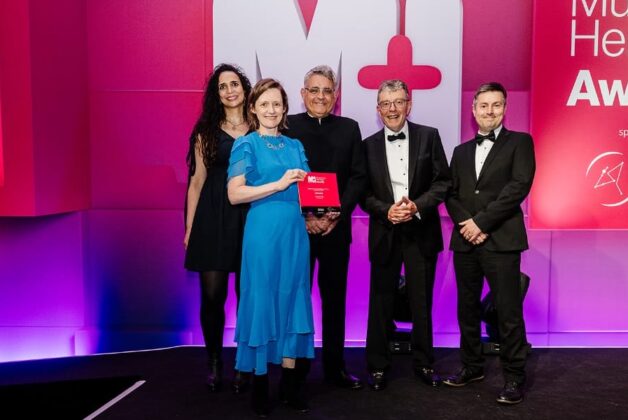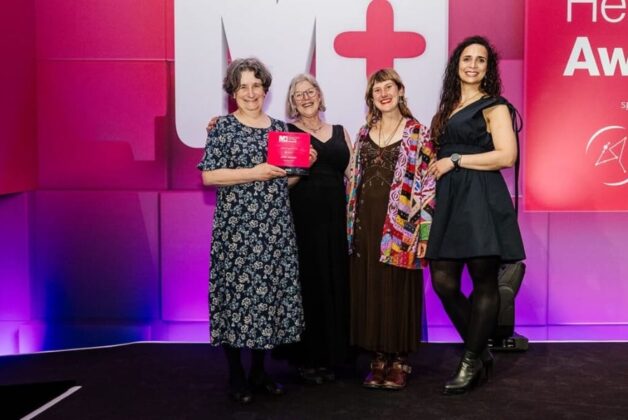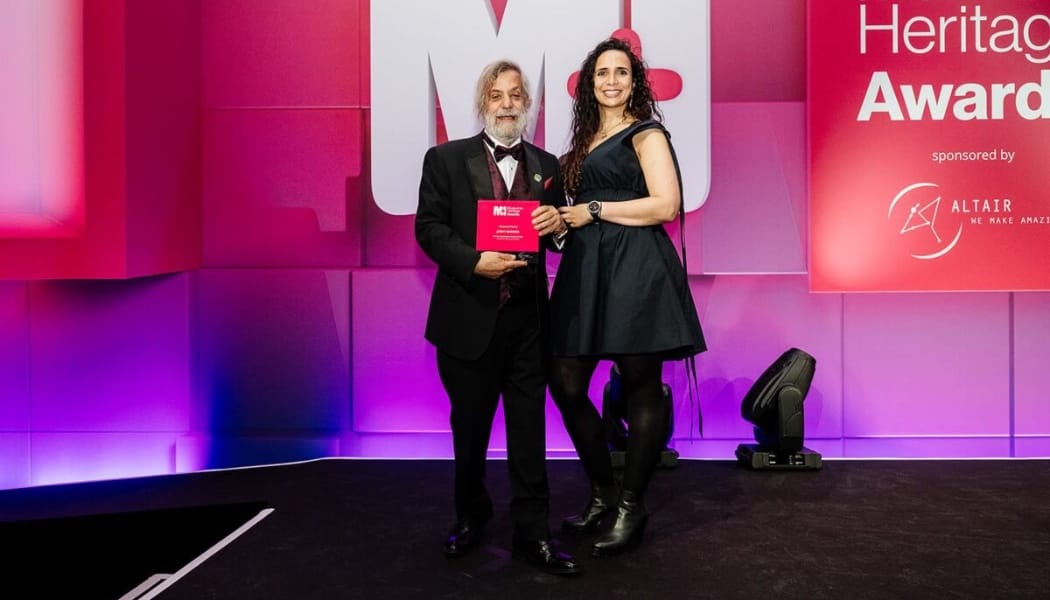
Alistair Hardaker | Image: Nick Ezra receives the award at the Museums + Heritage Awards
Volunteer awarded Museums + Heritage Award’s ‘Volunteer of the Year Award for time taken to recover, name by name, a previously lost history
When Dr John Burke, Senior Research Historian at the Commonwealth War Graves Commission, started the Punjab Registers project, he faced a seemingly impossible task.
15,935 names listed as dead in historical registers needed checking against the CWGC’s database of more than 74,000 Indian casualties. The scale demanded a volunteer-led approach, but finding the right person mattered as much as finding the right system.
Nick Ezra, who won the Museums + Heritage Award for Volunteers of the Year in May, checked all 15,935 names in just six months. But the story of how that happened reveals something broader about volunteer motivation, quality control, and historical justice.
The wider context
The CWGC Non-Commemoration Programme, of which the Punjab Registers project formed a part, emerged from a specific historical moment. “In late 2019, there was a documentary on Channel 4 which highlighted a series of commemorative issues, in particular across East Africa.
That documentary, and the research which underpinned it, helped spur the Commission to undertake a broader review of its early history.” This quickly led to the publication of a report by a Special Committee in April 2021, and a programme of work to address the past inequalities in commemoration experienced by African and Indian First World War soldiers.
The fundamental principle of the CWGC is that all those who died in Commonwealth service in the First and Second World War are commemorated by name. However, this work showed that tens of thousands of African and Indian soldiers, labourers and carriers were not commemorated equally in the aftermath of the First World War.
“The Commission established the Non-Commemoration Programme, a five-year programme, that was tasked with trying to further understand why these issues occurred in the past and to try and rectify and correct any of the mistakes as best as we could. A fundamental part of this was searching for the names of those who were historically excluded from named commemoration.
Why the punjab registers mattered
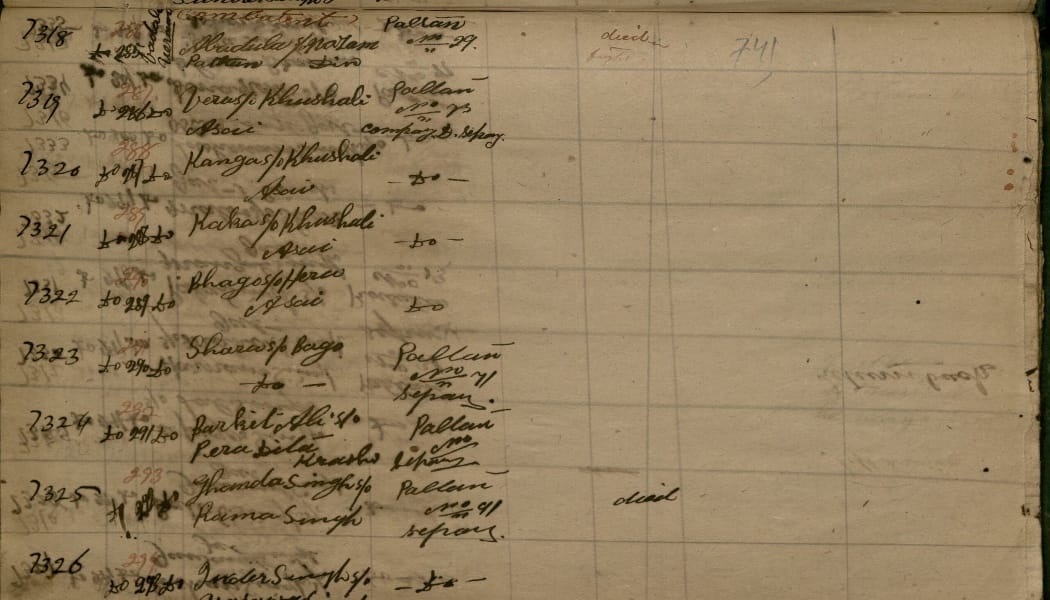
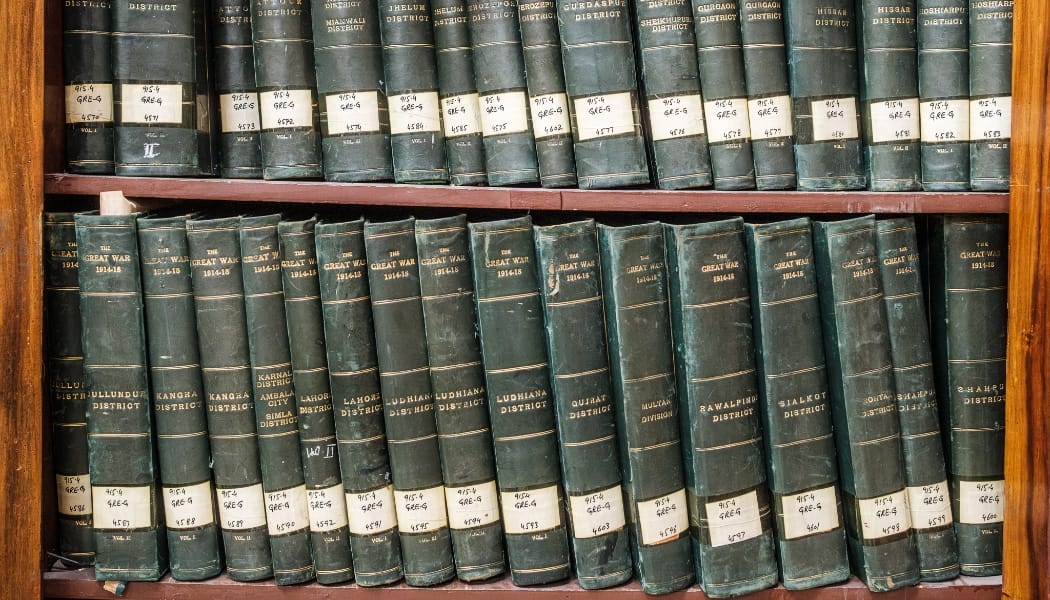
The registers, held at the Lahore Museum, contain a unique historical record. These registers contain the names of thousands of men from the Punjab who served, and in many cases died in the First World War, Burke explains. Their significance became clear from the very outset once they were brought to the Commission’s attention by Amandeep Madra of the UK Punjab Heritage Association.
We know that Indian record keeping during the First World War had many issues. Given the size of the Indian army, with over 1.4 million men serving across all the main theatres of the war, their administrative department struggled to keep up with the number of casualties they were suffering.”
This had major ramifications for the Commission, as they needed these records to undertake their commemorative work. “
Historians at the CWGC now know the Commission consistently pushed for records to be sent, and when they did finally receive documents from the British Indian authorities, they were said to be “so ridden with errors and omissions that they’re almost unusable.” As a result, they had to create what they called a composite list from theatre casualty records and regimental rolls, which they accepted was imperfect and had potential gaps”.
Even more significantly, the British Indian authorities did not grant full war graves status to those who died in non-operational zones within India. This decision, now overturned, likely excluded thousands from named commemoration”. The Punjab Registers offered a potential way to fill some of those gaps.
The scale and response
Comparing 15,935 names against 74,000 required resources the CWGC did not have internally. Dr John Burke’s response was to turn to volunteers:
“We knew we could utilise volunteers to support this quest. We know there’s a great deal of interest in these records and a lot of the people that came forward from our general call have a strong interest in the Indian Army and in commemoration.”
“Speed mattered too. With dedicated time to a task, volunteers could go through this work much faster than we could internally. It was a really useful way to do this work and do it quite quickly, which we thought was a really important aspect.”
But releasing detailed historical records to volunteers required confidence in both the system and the people. The CWGC made a general call for volunteers and received responses, but not all stayed on.
Burke says some volunteers were likely put off by the sheer scale of the project, as even when the records were split into chunks of 100 names. “[They] would see these big daunting spreadsheets and think, oh, this is quite a lot of work!”
Building confidence through stages
Quality assurance employed multiple layers. Each record would need to be checked by two sets of eyes via a double-blind approach to ensure accuracy. “As it turned out, Nick was one set of checks, and then the other 19 volunteers would be the other set of eyes on the records.” Burke notes.
Beyond volunteer checks, the team also used computer models to parse and cross-check records, alongside a final verification process by the CWGC historians. “We ran the overall methodology of the project past some Indian Army experts, and they all signed off on it as well.”
Why Nick stood out
Nick Ezra has worked as a ‘Eyes On, Hands On’ volunteer, tasked with inspecting and maintaining war graves across the UK, since 2021. When Burke brought him into the project in 2022, something became immediately apparent.
“I sent him a list of names that we needed to check against our casualty database, and he came back within a few weeks. This was hundreds of names that he checked… we were expecting him to take a few months to do it, but he came back so quickly,” Burke recalls. “So I think from very early on, we realised that he was really good at what he did.”
When the Punjab Registers project needed a test case for a new scoring system, Nick proved essential. George Williams, a PhD candidate at the University of Greenwich, had created a nine-point comparison framework, but it needed validation before deployment. Given his experience at analysing historical documents and undertaking crosschecks with our casualty database, the obvious thing to do was for Nick to stress test this new approach..
“He went through this scoring system, which had never been tested before, and he highlighted some ways that it could be improved. For example, if you take the list of names as they’re written, they’re not in alphabetical order, but a simple tweak suggested by Nick was to alphabetise the names, which sped up the comparison considerably. This might sound small but, given the sheer number of names we needed to check, it led to huge benefits in the long term.”
A growing body of volunteer work
Nick’s efforts soon ballooned into thousands of names checked. “The fact that he checked almost 16,000 names within six months was a remarkable achievement that nobody saw coming,” Burke reflects.
Yet Nick never sought credit or additional incentive. “I never expected him to do them all. But he would finish one spreadsheet and say: ‘if you’ve got any more, send them to me’”.
“He was a gift to us”, said Burke of the winning volunteer, “he has a real passion for the commission and the work that we do. He wants to ensure that these men – who should have been commemorated a century ago – are commemorated now.”
“Over the years he has worked with us, Nick’s efforts have led to thousands of names being added to our casualty database. All these names represent individuals who should have been commemorated over a century ago but, for a variety of reasons, were not. Through his tireless efforts, Nick has played a huge part in helping us to correct this historic omission,” Burke added.
What drives volunteers
Burke reflects on why the work attracts passionate people like Nick to volunteer their time. “We are here to commemorate those who served and died in the First and Second World Wars. Although these conflicts have, or are increasingly moving beyond living memory, people still have strong family connections to them. Those that volunteer for the CWGC will often not only have a passion for history and historical research, but also a strong interest in the two world wars,” he explains.
But the work offers something beyond historical interest. “What [volunteers] are doing now will have a direct impact on what the Commission does, not only now, but in the future, as we commemorate those who died in perpetuity. It is also important to remember that each name added to our casualty database was an individual, much like us, who had families and loved one’s they never returned home to. In many cases, they could still have relatives alive today. So, what all the volunteers have done is undertake history with a direct impact, as they have helped create a resource which will allow for these names to be identified by those who wish to look, which I think is hugely important.” Burke added.
What comes next
The Punjab Registers project itself is complete. The CWGC has added 9,909 new names to its system.. But the work continues.
“We are always on the lookout for new records, as while the Non-Commemoration Programme has officially ended, the work that we started continues as a fundamental part of our everyday activities. Over the last few years, we have added over 20,000 new names to our casualty database. However, we also know that thousands more died in service across Africa and the Middle East, for whom no records have yet been identified. So we will continue to look for these records and tell the stories of those who served and died in order to ensure these casualties receive the recognition they deserve.”
To everyone’s relief, Nick remains as active as ever. “Nick is actually currently working through some more records for us, linked to the Indian Army casualty appendices from the First World War, to see if there’s any potential further names that we could draw out,” Burke explains. “So, I’m pleased to report that we haven’t sickened Nick off just yet… he still is active and passionate as ever, which is great news.”
Award recognition and broader meaning
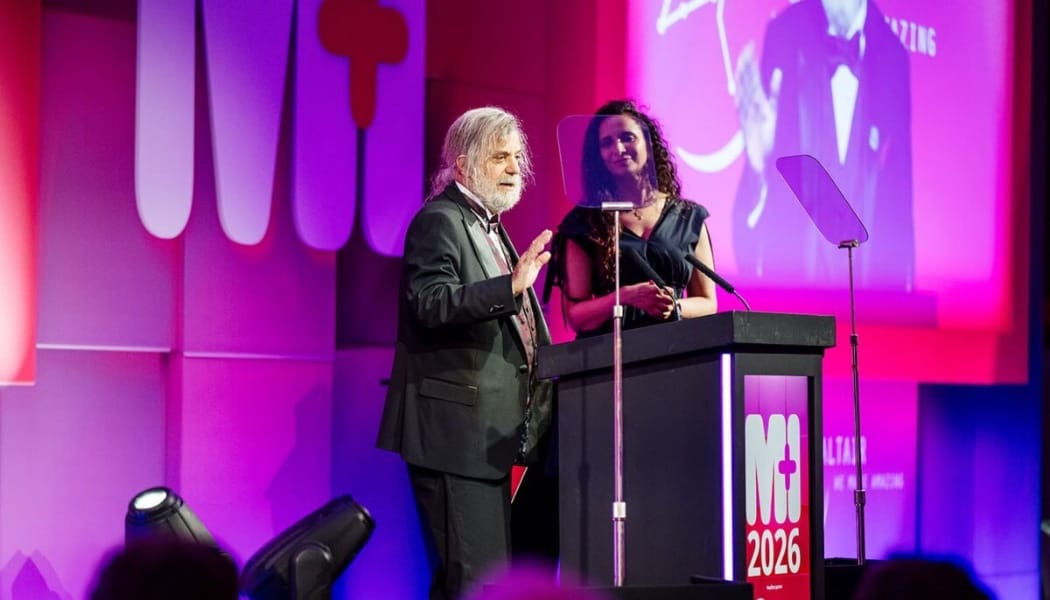
In May, Nick Ezra received the Volunteer of the Year Award at the Museums + Heritage Awards. Burke said: “To see that he won was brilliant. He thoroughly deserves it.”
Burke’s pride in Nick’s award extends beyond individual achievement. “It’s recognition for not only what he did, but as a symbol for all of the work undertaken by the 19 volunteers active on the Punjab Registers project” he reflects.
“The fact that he was able to get that public recognition is hugely important and it was great to see,” Burke concludes. “He thoroughly deserves the recognition that he gets because he’s more than happy to sit in the background and work through these records, send them back to us, and then ask for more. I know that Nick does not seek out attention for what he does. Rather, he does it because he is passionate in ensuring that the historical wrongs of the past are put right wherever possible. Because of that, I can think of no better recipient for this award”.
As Nick himself said: “I am proud on behalf of the whole volunteer community, and I am proud of the CWGC. It really is an important thing that we are doing, both staff and volunteers, because I was not alone. It is a different part of the United Kingdom’s heritage, and it is very important to do it.”
The award recognises not just one volunteer’s exceptional effort, but the structure that identified and supported him, and the thousands of names that will now be commemorated as a result.
The Commonwealth War Graves Commission currently has 2,500 active volunteers across the UK, Canada, Iceland, Belgium and Malta. The Punjab Registers project added 9,909 names to the CWGC’s commemorative database.
The Commonwealth War Graves Commission was one of two Joint Winners, alongside The Hovercraft Museum CIO’s ‘Rising Above: 45 Volunteers Delivering a Nationally Significant Museum’