
Arising from the presentation at the ICMM Congress, Australian National Maritime Museum. Sydney 2026
What fundamentally makes a maritime museum different from all the others? Ships are an obvious answer. And so is the sea. Both are fundamental, but neither quite completes the definition. A maritime museum may have no historic ship at all, and the sea is more than the blue space upon which maritime history happens.
More than twenty years ago Robert Hicks asked What Is a Maritime Museum? He described a distinctively maritime “waterview”, a perspective from sea rather than land, in which seafaring is inseparable from its natural and cultural environments. He also argued that no other type of history museum places the natural environment so prominently in human cultural development.
I would take that idea one step further. Perhaps a [1] maritime museum is a museum that interprets the world from the water. Here are my seven ideas that make maritime museums special.
The sea connects; it does not respect borders.
Maritime history is the history of movement. For most of human history, water has carried people, goods, technologies, beliefs, languages, power and ideas. These movements have created prosperity and innovation, but also empire, enslavement, exploitation, warfare and displacement. The sea was the great mechanism by which much of the world encountered itself.
Follow almost any maritime object far enough and, sooner or later, it takes you somewhere else. That outward instinct is built into our subject. Maritime history is not simply a history of ships. It is a history of movement, connection and encounter. And;
Every port is both local and global.
South Street Seaport Museum in New York demonstrates the point particularly well. Its current Maritime City exhibition starts from the proposition that New York City as we know it “arose from the sea”,connecting the growth of the city with its waterways, shipping, labour and the immigrant families who came through the port.[2]
Today, New York City says that one in three New Yorkers is foreign-born and that more than 800 languages are spoken in its homes and streets. The maritime museum in Lower Manhattan is therefore not preserving an [3] interesting specialist history sitting awkwardly among the skyscrapers. The skyscrapers, the commerce and the extraordinary human diversity around them are, in part, consequences of the history it exists to interpret. The global became local, and the local became global. And;
The sea is a highway, a workplace, a resource, a battlefield and an ecosystem.
That breadth is one of the maritime museum’s great strengths. The sea is a route of trade and migration, but it is also a workplace, a source of food and energy, a contested space and a living environment. People have shaped the sea, but the sea has always shaped people.
Claire Sutherland has recently argued for greater “oceanic thinking” in maritime museums: moving beyond treating the ocean principally as a site of human exploration and exploitation, and recognising maritime space as dynamic, connected and inseparable from questions of climate breakdown, pollution and resource use. Environmental [4] interpretation should not be an extra subject bolted onto maritime history. The environment is part of the maritime story.
The Australian National Maritime Museum’s Shaped by the Sea exhibition shows what this can mean. It deliberately brings modern science and archaeology into conversation with Indigenous knowledges. More than 40 Aboriginal and Torres Strait Island language regions are represented, and curator Matt Poll has described its central installation as a “philosophical recentering” of the museum’s permanent exhibition space[5]. Land, water, sky, people and knowledge are connected rather than compartmentalised .
Maritime museums do not preserve a dead world. They interpret a world that is still happening.
More than 80 per cent of international trade in goods is still carried by sea [6]. Yet the maritime systems on which daily life depends have become increasingly remote from public view. The 2017 Manual of Maritime Curatorship described this continuing loss of visibility as “sea-blindness”: our relationship with the sea becoming less visible, more remote and increasingly arcane.
That gives maritime museums a present-day responsibility as well [7] as an historical one. Shipping, fishing, migration, naval power, subsea infrastructure, coastal change, pollution and climate are not remnants of a vanished maritime age. They are part of the world now.
That should affect what we collect. At Greenwich in 2019 the National Maritime Museum displayed the Extinction Rebellion boat Polly Higgins only nineteen days after she was collected from a protest site. The project deliberately challenged perceptions of what belonged in a maritime museum and used the object to open discussion about the climate and ecological crisis.
We should not always wait for maritime history to become old [8] before deciding that it matters.

Other museums can tell global stories ; Maritime museums cannot avoid them.
A ship is a connection made physical
Most museum objects may move during their lives. A ship was made to move. Where she went, what and whom she carried, the communities she connected and the consequences of those connections are intrinsic to her meaning. Historic ships are also among the largest, most complex and demanding objects any museum can care for. They force unusually difficult questions about fabric, function, operation, authenticity and use. Sometimes preserving function requires operation, while operation itself consumes fabric.
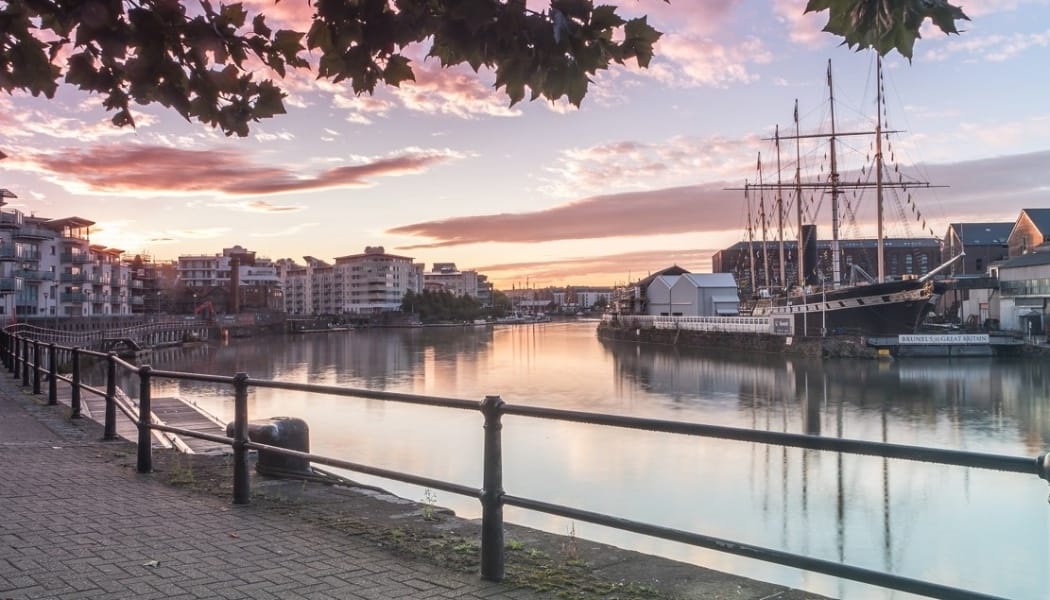
The SS Great Britain exemplifies both the opportunity and the challenge. Her conservation required an environmental solution on the scale of the ship herself, deliberately integrating conservation with public access rather than treating the two as opposing activities. Historic [9] ships can become inhabited environments, allowing visitors to enter the object itself and encounter the lives once lived within her.
No maritime story belongs entirely to one museum.
The horizon matters. A ship may survive in one country, have been built in another, crewed by people from many more, and have carried cargoes and passengers whose histories belong elsewhere again. Maritime collections resist neat national boundaries.
That should affect how we interpret, collect and collaborate. Local community engagement should continue to enlarge the stories we tell, but not shrink their horizons.
Our responsibilities extend to communities immediately around us, but also to people elsewhere whose histories are embodied in our collections, and to histories whose originating communities may now be distant, dispersed or no longer locally visible.
Maritime museums should be bolder about what they are and what they are for.
They are not simply repositories of ships, paintings, models and nautical technology. Nor are they memorials to a maritime world that has passed. They interpret living [3]
relationships between people, places and planet; between local experience and global systems; between past, present and future. Maritime museums are museums of connection.
Dr Matthew Tanner MBE, Chief Executive of the SS Great Britain Trust from 1997 to 2023, is a maritime heritage consultant and partner in Compass Heritage, part of Tandem Consulting LLP. He is a former President of the International Congress of Maritime Museums and Chair of the Association of Independent Museums.
Sources
[1] Robert D. Hicks, “What Is a Maritime Museum?”, Museum Management and Curatorship 19(2) (2001), 159–174, DOI 10.1080/09647770100401902.
[2] South Street Seaport Museum, “Maritime City”, current exhibition page. The Museum states that the exhibition shows how “New York City, as we know it today, arose from the sea”, that its global identity is rooted in its origins as a seaport, and that the displays include the working people of ships and local industries together with emigrant workers and immigrant families who came through the port.
https://southstreetseaportmuseum.org/maritime-city/
[3] New York City Mayor’s Office for International Affairs, homepage, “Welcome”. The current official wording states: “With one out of three New Yorkers foreign-born, and over 800 languages spoken in our homes and on our streets…” https://www.nyc.gov/site/international/index.page
[4] Claire Sutherland, “From colonial conquest to climate crisis: reframing French maritime museums”, International Journal of Heritage Studies 30(10) (2024), 1250–1262, DOI 10.1080/13527258.2024.2386693. The article develops “oceanic thinking” as an alternative to a predominantly national and anthropocentric framing of maritime museums.
[5] Australian National Maritime Museum, “Shaped by the Sea – stories of deep time Australia”, exhibition and media material. The Museum states that the exhibition reveals deep-time history through modern science and archaeology alongside Indigenous knowledges.
[6] UN Trade and Development (UNCTAD), Review of Maritime Transport 2025, launched 24 September 2025. UNCTAD states: “Over 80% of the volume of international trade in goods is carried by sea”. This formulation is used rather than older, higher percentages which often use different measures.
https://unctad.org/meeting/launch-review-maritime-transport-2025
[7] A Manual of Maritime Curatorship, Section A: Introduction, 2017, Foreword by Dr Kevin Fewster, pp.5–6 of the section.
[8] Laura Boon, case study “Extinction Rebellion: Polly Higgins blue boat at the National Maritime Museum”, in Ellie Miles, Susanna Cordner and Jen Kavanagh (eds), Contemporary Collecting: An Ethical Toolkit for Museum Practitioners (2020), Theme 3, pp.17–20.
[9] David Watkinson and Matthew Tanner, “SS Great Britain: Conservation and Access – Synergy and Cost”, Studies in Conservation 53, supplement 1 (2008), 109–114, DOI 10.1179/sic.2008.53.Supplement-1.109.