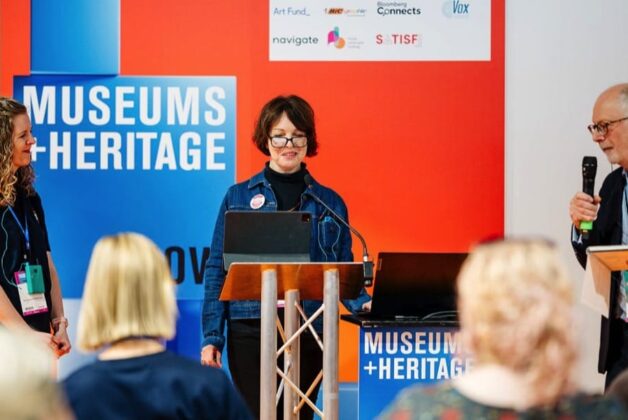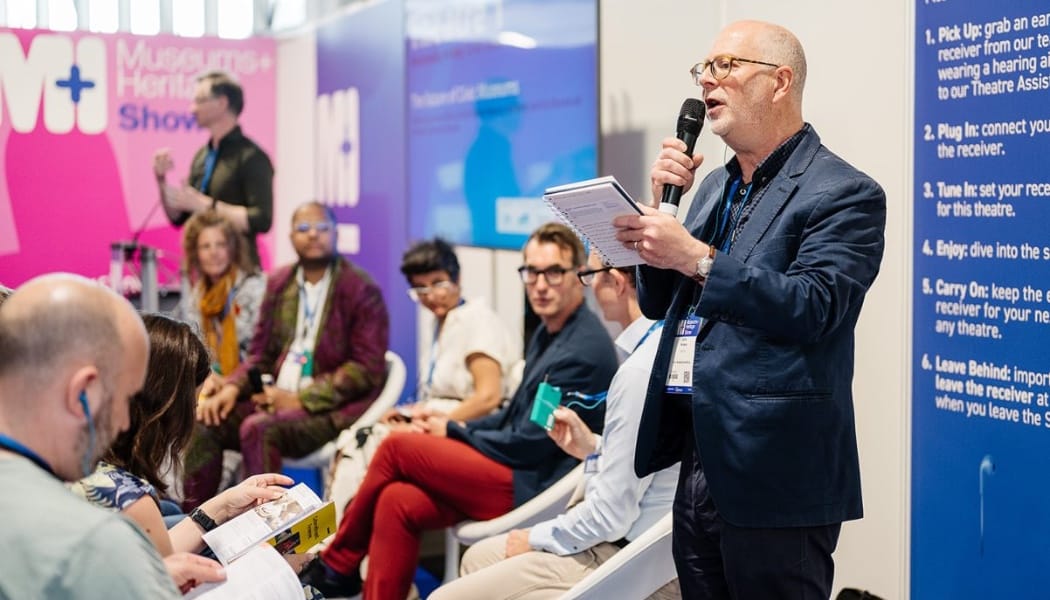

M+H Show partner, Colin Mulbergpreviews the sessions that he is chairing in Theatre 2 on the second day of the Show.
Though the sessions across the day are wide-ranging, a central thread running through all the talks is how they explore work that pushes the boundaries of what is possible in museums and heritage venues.
Each session presents a powerful example of working with and deeply engaging a specific audience. Most of the projects also demonstrate the value of fostering partnerships across and outside the sector.
Black South West Network present their UnMuseum project that explores what meaningful engagement with heritage looks like for Black and Radically Minoritised communities and how to radically reimagine heritage practice through community leadership (Session 6). The project worked with a cultural network, built relationships with cultural institutions and laid the groundwork for a long-term, community-led cultural infrastructure. This is an important case study that offers practical strategies for identifying and overcoming key challenges and embedding equity and community-led practice
The Vagina Museum also drew on partnerships to co-curate their Black History Month programme ‘(Re)producing Justice’ (Session 4). This addressed the history of medical racism, focussing on the field of gynaecology. Working with the UCL Sarah Parker Remond Centre as well as organisations working in the area of productive health with communities of colour, the project aimed to lay the groundwork for a more thorough and long-term engagement.
Indigo Dunphy-Smith focusses on how to expand the stories told in heritage spaces to include LGBTQ+ histories (Session 5). Based on a case study at The Georgian House, Edinburgh, the session will walk through a toolkit for overcoming issues and challenges to deepen the visitor experience and extend the stories that heritage can tell.
The Sensational Museum project outlines how to transform the visitor experience through embedding multi-sensory thinking in working practices to move beyond the traditional reliance on sight, to benefit all visitors as well as those with a disability (Session 3). The session will map the lessons from a range of pilot museums and how the project’s open access tools and resources can be used to develop welcoming spaces and inclusive multisensory interpretation.
Two sessions showcase working with the SEN/D community. Attenborough Arts Centre share the key lessons from their SENsory Atelier project (Session 7). This established project embeds artists within classrooms to create multi-sensory experiences and environments that engage curriculum themes in the most accessible and playful ways and supports the whole spectrum of SEND provision. The programme is a partnership with local businesses, schools, artists, children and young people, families/carers and the wider community.
The Design Museum partners with a local charity to provide work experience for SEND students aged 16-25 (Session 1). They discuss their experience of hosting interns to help build their confidence, develop practical skills and gain insight into the working world and how hosting can lead to better support and communication with disabled and neurodivergent people.
The Roman Baths explores their Sanctuary programme that supports people seeking refuge (Session 2). The programme is co-produced with Bath and North East Somerset Council Resettlement Team and other partners and the session will analyse the lessons of working in partnership and the importance of building in feedback and consultation to meet community need.
For further details on the talks and to see the full 2026 Museum + Heritage Show programme visit the Programme page.
Colin will be at the M+H Show on both days, so feel free to chat with him about your work or to arrange to meet through the Colin Mulberg Consulting website.