Image: Hayley Bray | Words: Alistair Hardaker
Live updates from Day Two of the Museums + Heritage Show 2026, covering onsite revenue, work with refugee communities, the future of museum learning, AI governance, and Black-led heritage practice.
Day Two of the Museums + Heritage Show 2026 is underway, picking up from yesterday’s focus on workforce, collections and infrastructure to turn its attention to the audience question. Throughout the day, we’ll be covering sessions on how visitors spend onsite, museum work with refugee communities, the future of museum learning after the curriculum review, governance for AI avatars, and how Black-led heritage organisations are challenging mainstream practice. Updates will appear below as the day unfolds, so do keep refreshing.
Where visitors spend onsite
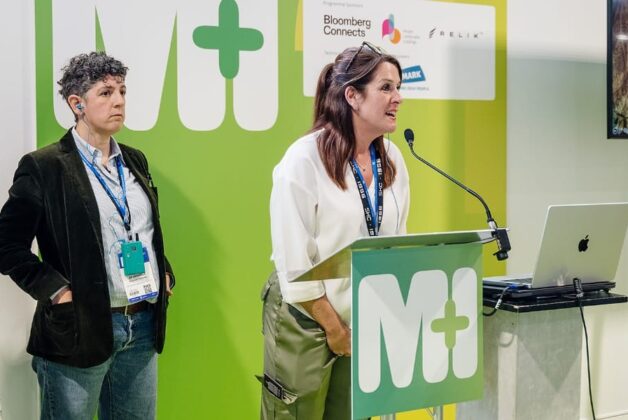
The day opened with V&A South Kensington’s Head of Front of House Jonathan Curzon and Senior Front of House Manager Nell Guy presenting the museum’s onsite revenue strategy. The session covered ticket strategy, the member-versus-walk-up split for paid exhibitions, and how the team monitors and adjusts its commercial mix.
Curzon shared how its teams are responsible for every transaction onsite; ticketing, donations, sales.
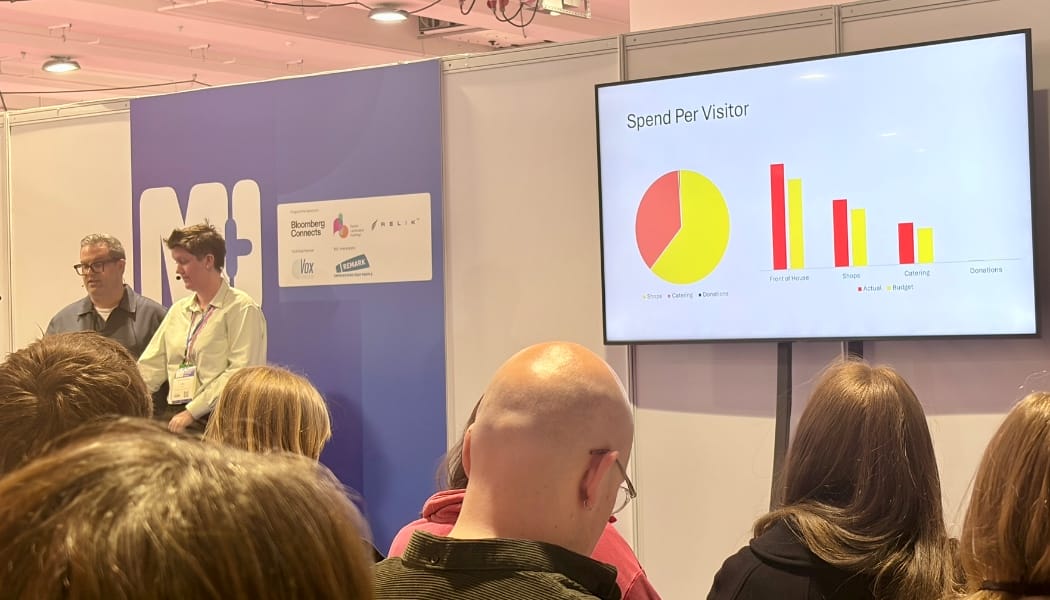
Guy said over 200 assistants are onsite in SK, with a range of different skill levels and approaches. An external agency was used to standardise the approach, which resulted in the three experience standards: anticipate, connect, personalise. The standards have since been expanded into a three hour training programme. Guy said a good visitor experience results in word of mouth, which boosts visits.
Exit surveys showed that the building navigation and orientation, inside an old building “with quirks” resulted in navigation and wayfinding were falling behind the positive experience of staff.
Part of the approach was to remove an overt commercial ask on entry. Guy said “we prioritised having staff visible on entry”.
Guy said ‘blockbuster exhibitions’ were defined at the V&A in part as those which might not allow visitors a ticket precisely when they would like.
Prioritising members with tickets when they typically arrive. The strategy has seen it double membership base in the last few years.
Curzon explained how it uses a Spend Per Visitor metric to budget and track visitor income. A ‘commercial barometer’, which has preceded three record years for spend, even when visitors are not at record levels.
Guy said some of the new income streams didn’t work as expected; guide books were not as successful as hoped. However tote bags and exhibition catalogues have continued to show dividends.
Curzon concluded that experience is still key as the team looks forward, small incremental growth in services such as self service lockers can make gains, and a Christmas at V&A which is even more ‘V&A’ will provide new opportunities.
Guy asked the audience at the conclusion of the session: “What can you do to be more deliberately commercial?”
From Bluesky
Looking forward to this talk at the Museums and Heritage show!
“What does the Curriculum Review mean for Museums and Heritage?”
— WardArchaeology (@ward-archaeology.bsky.social) 14 May 2026 at 10:10
I had such a great time at the Museums + Heritage Show today! Some great talks and conversations, plus I was greeted at the door by a little robot Stegosaurus (courtesy of Rentadinosaur).
#museums #heritage #heritagesector #expo #museumsandheritageshow
— Dr Edward Scrivens (@edwardscrivens.bsky.social) 13 May 2026 at 19:57
On my way to the Museums and Heritage Show again today at Olympia #MandHShow
— Andrew Martin (@familytreeuk.co.uk) 14 May 2026 at 08:58
Three views on the future of museum learning
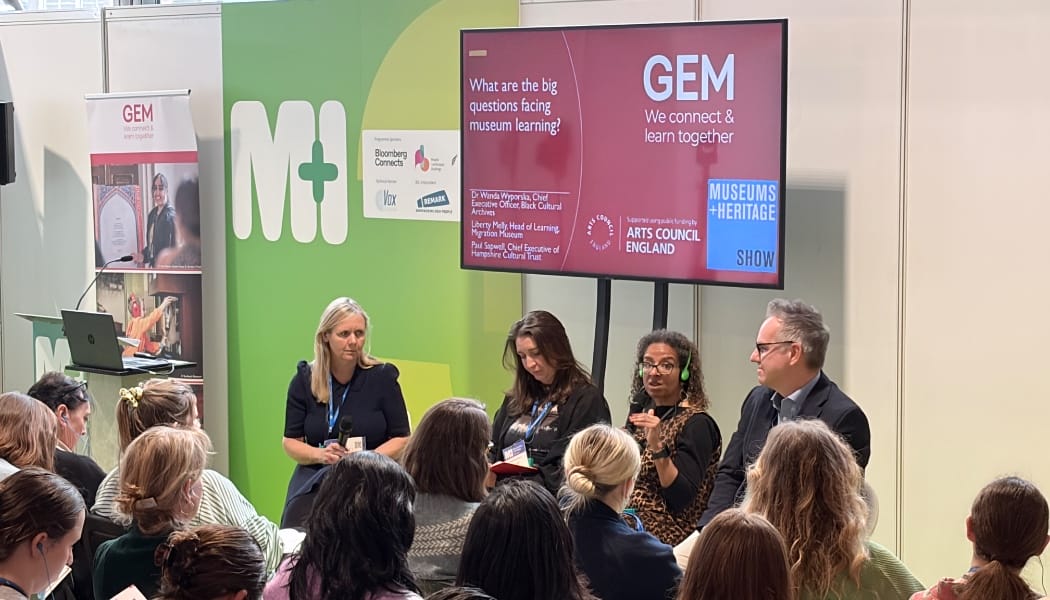
Dr Wanda Wyporska, Chief Executive of the Black Cultural Archives, Liberty Melly, Head of Learning at the Migration Museum, and Paul Sapwell, Chief Executive of Hampshire Cultural Trust, each named the biggest question facing museum learning today.
The panel was asked about the biggest challenges for museum learning. Sapwell said teachers don’t have time and capacity to go to museums, and said relevance was a growing challenge; learning programmes and exhibitions programmes have to evolve, Sapwell said.
“What we did 30 years ago we can’t continue to do today”.
Melly said the big issues were “more existential”, highlighting more misinformation, polarisation, culture wars, and issues of national pride. Museums and heritage organisations must look at what expertise they hold, and recognise that they “hold part of the solution” to identity, alongside a valuable offer of physical space. Melly asked the audience “How can we do this together?”
Dr Wyporska said a challenge was the content landscape; “I still don’t think museums and heritage organisations are anywhere near where they needs to be in terms of presenting content”, displaying historic biases and even borderline offensive.
Dr Wyporska urged organisations to ask “What do your teams look like? How are you telling stories? What expertise is required?”
Black Cultural Archives has acquired objects where it has to find provenance, and as a historian, perspective is something to be mindful of, Wyporska said, but these and knowledge gaps can be filled.
“There’s no harm or shame in saying I don’t know, and asking for help from other professionals.”
The panel were asked how a new museum strategy might be used to advocate for learning.
Melly said leaning should be seen as embedded, rather than an afterthought. “Seeing learning as a core part of the strategy would be welcome.”
Sapwell said it is a welcome development, the idea we need a national programme is “a long time coming”, adding, “it all starts when you’re young. If we underinvest in learning we don’t have a pipeline of key museum folk who can help in the future.”
Dr Wyporska said it was important to be proactive, accepting that some visitors are harder to reach; “there are people who will just not come, and we have to go to them”.
The amount of time it takes a teacher to organise and find funding makes museum visits prohibitive, Wyporska argued and again more proactive approaches are needed. “How do we get to people rather than waiting for them to come to us”
Asked about new opportunities for learning, the panel agreed collaboration was key.
Dr Wyporska said the amount of content now online is an opportunity in itself, and that experts in this content might not have official qualifications. Even Game of Thrones helped to increase interest in history, bringing it to mass audiences. “How to link in with that?” she asked, recognising that there’s growing competition for visitor’s time.
Sapwell agreed citing work with game developer Ubisoft, reflecting that game developers are “focussed and ‘geeky’” in very similar ways. This created synergy during the partnership.
Missed out this year? There's always 2027...
Want to be first to get Museums + Heritage Show and Museums + Heritage Awards updates, before they’re announced anywhere else? Join the thousands already subscribed to our newsletter, which also features exclusive weekly heritage news and insights.
It’s all completely free, but only if you’re on the list…

Live updates: New information may be added to this page. Refresh.