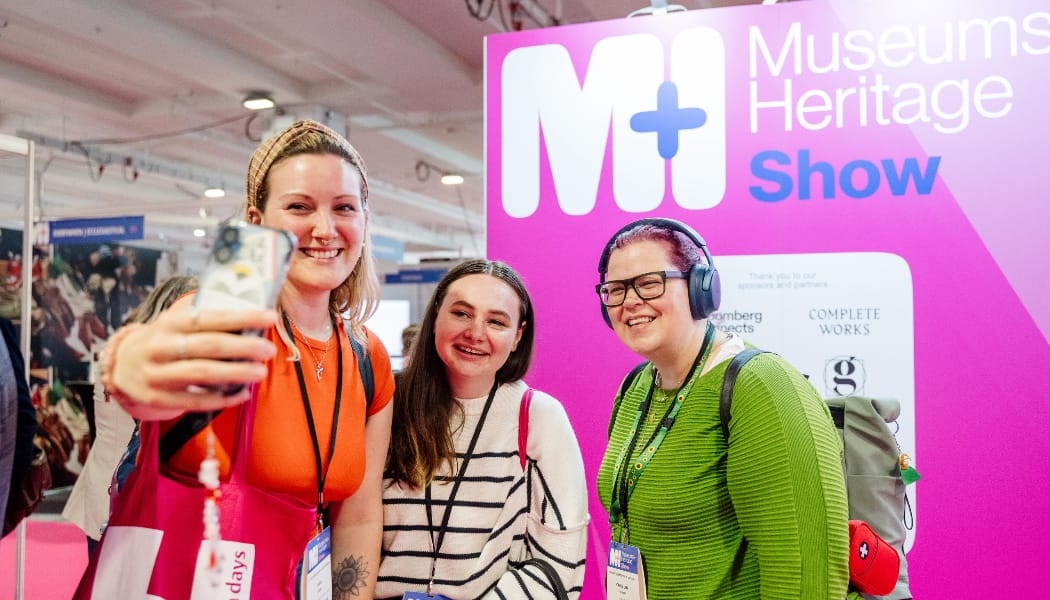
Alistair Hardaker | Images: Hayley Bray
The first day included sessions on social media strategy, AI-powered exhibits, a sustainability toolkit for touring exhibitions, and heritage accessibility.
Day One of the Museums + Heritage Show 2026 opened with sessions on volunteering, collections care, digital infrastructure, the financial mechanisms underpinning the sector’s net zero ambitions, and class inequality across museum work.
The day tackled some of the museum sector’s most pressing structural questions; how a national institution redesigns its volunteer model across multiple sites, how a regional museum can respond to the archaeological archive crisis from a high-street shopfront, how the National Gallery thinks about the threshold between street and collection, how the sector might fund retrofit at scale, and how class still shapes who gets to do museum work. Sessions ranged from the V&A’s reset of its volunteer programme to research from Royal Holloway and Museum As Muck on inequality across the sector.
Three new sites, one volunteer model
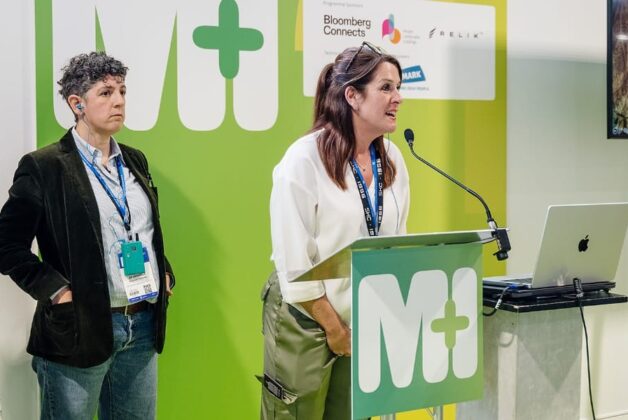
The day’s opening session brought together Stephen Hill, head of volunteering at the V&A, and volunteering advisor Francesca Goff to discuss how the institution is rethinking its volunteer programme as it expands across three new sites.
Hill said that in 2020, with three sites set to open in three years – each with their own target audience – the V&A had a plan to connect with new audiences through new volunteers.
“Volunteering has had to respond to the flexibility of people’s lives”, in recent years said Hill, as has the professionalisation of volunteer management.
With no one team with explicit oversight for all volunteers, a redesign project was set up in 2021 to meet that need, which Hill joined. The team’s task was not day-to-day management, but strategic, centralised practice.
Hill said the results of a major piece of research into volunteering suggested that “not only is creativity important but it’s fundamentally important to our personal and social wellbeing.”
“What if volunteering is not about doing it for everyone… but with everyone… that becomes the gold thread running through it all”.
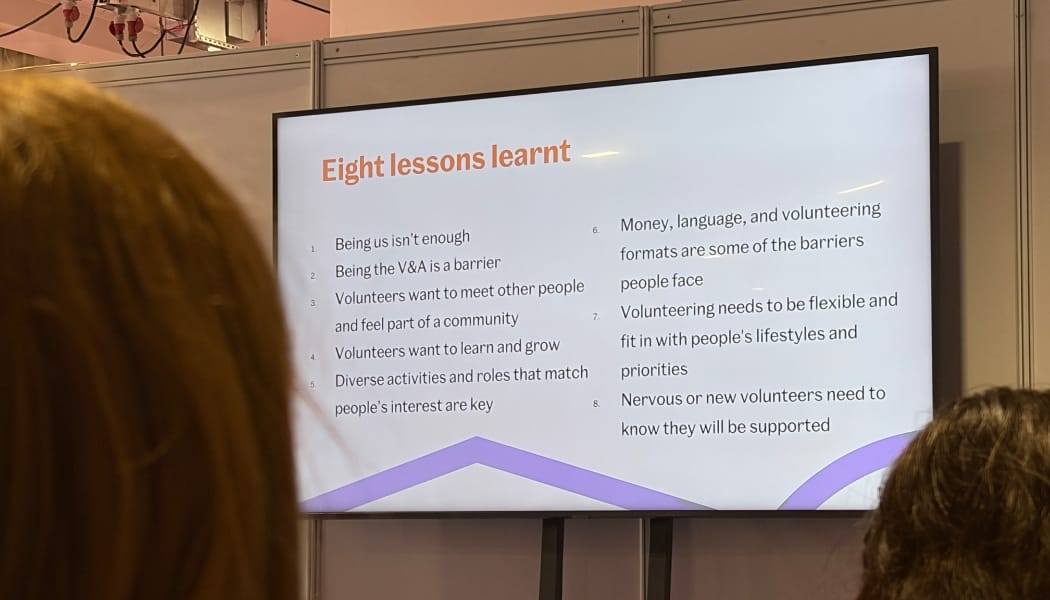
The decentralised model was the result of this thinking.
Goff outlined the way it works, with three stakeholders: a volunteer; a named volunteering contact, managing the specific volunteer programme and acting as a first point of contact; and the volunteering team, in which Goff and Hill sit, with oversight over all of the V&A volunteering, offering consultancy to teams and shaping strategy.
The goal was to create a “single source of truth” across sites and teams, said Goff. This involved rewriting and refining a single universal volunteer intranet – a single system for volunteer management, documents, reports, an internal newsletter, a Teams channel, blog and events.
HIll said the programme, five years on, “now we have a solid foundation to build on”, with stronger process and policies, built with users voices’ a the centre.
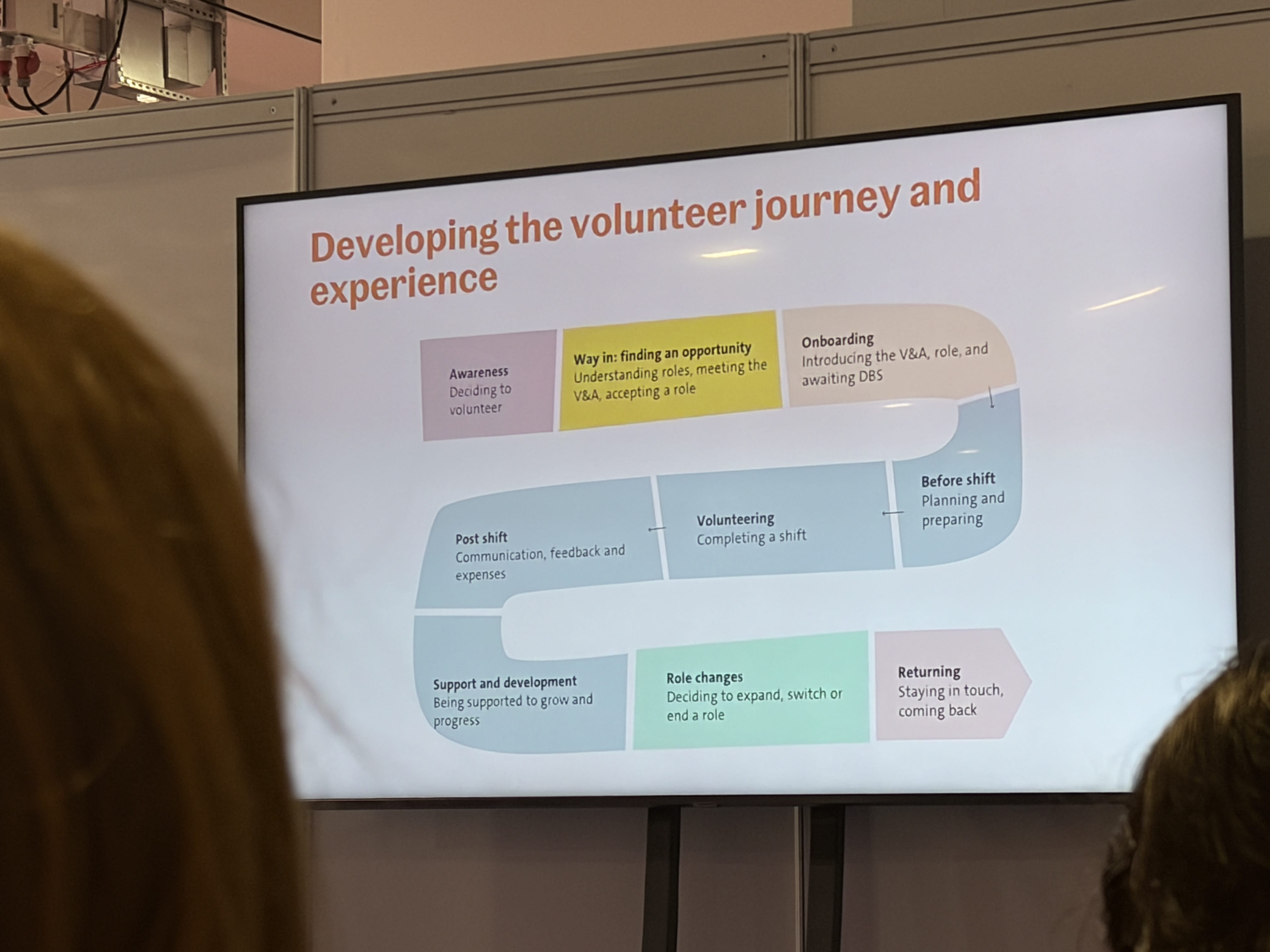
“The work continues”, said Hill, but volunteers now say they feel they are part of a community. The V&A’s three new sites, alongside South Kensington, now have more than 500 volunteers, some in multiple roles, across twelve teams.
“When we’re not sure how to move forward with volunteers, work with them; ask them”, said Hill, and “never underestimate sharing a cup of tea”.
The session set the tone for a day focused on the structural redesign work happening across the museum sector.
Make Every Visitor Experience Memorable – Meet Bloomberg Connects at the M+H Show
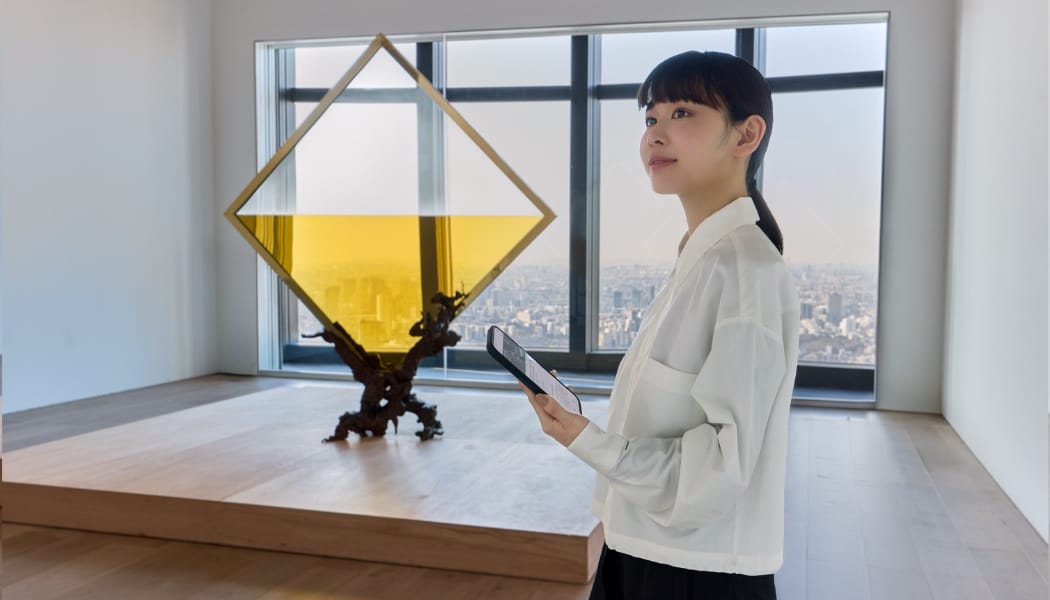
Day one is a wrap!
With an inspiring programme, passionate attendees, and plenty of opportunities to connect, we’re thrilled to support the Museums + Heritage Show for the third year in a row.
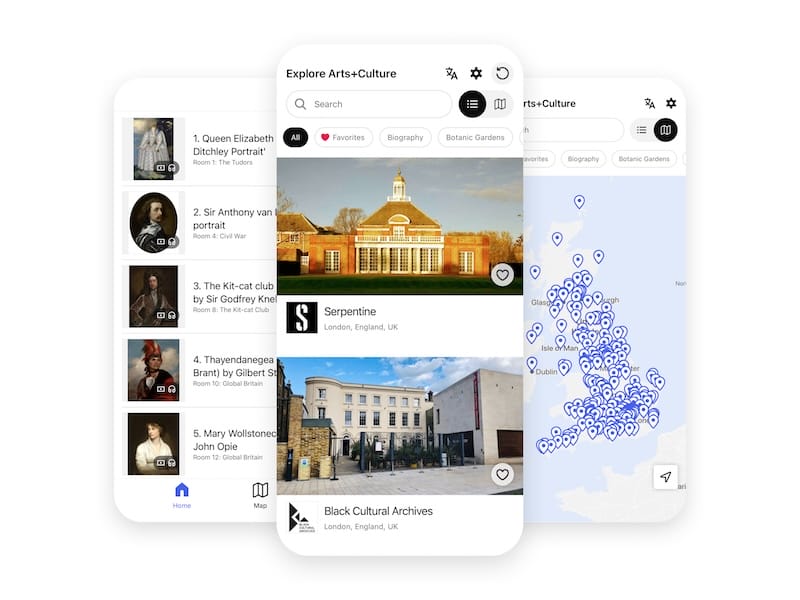
We’re Bloomberg Connects – the free app helping more than 1,400 museums, galleries, historic sites, and cultural organisations around the world deepen audience engagement. As part of Bloomberg Philanthropies’ longstanding commitment to digital innovation in the arts, we provide visitors with audio guides, wayfinding, and accessibility tools, all within a free, easy-to-use platform.
Visit Our Booth (J5)
It was great to see so many new and familiar faces at today’s panel, where our colleagues from the Design Museum and East Bank shared insights on how they are using Bloomberg Connects and the existing community of Connects partners to promote their programming and engage visitors through dynamic content. If you missed it – or would like to continue the conversation – visit us at booth J5 and explore the app’s interactive content, translation capabilities, and more. See you tomorrow!
Not at the Show? Stay Connected.
Bloomberg Connects is available to cultural organisations worldwide, helping reach new audiences through free, interactive digital guides. See how we collaborate with organisations like yours to shape engaging visitor experiences:
Rewriting the Accreditation standard
Sarah Hartshorne, senior manager for museums and cultural property at Arts Council England, set out how the next iteration of the standard, due to publish in late 2026, is being drafted around a user-centred definition of what makes a museum well-run.
Hartshorne said redesign of the scheme, which began in 1988, happens every 8 years, with a new version expected this year.
The ambition now is to update the process, which was made in a ‘non-digital’ world, said Hartshorne.
“We want an evolution of the standard and a revolution of the process”, she said.
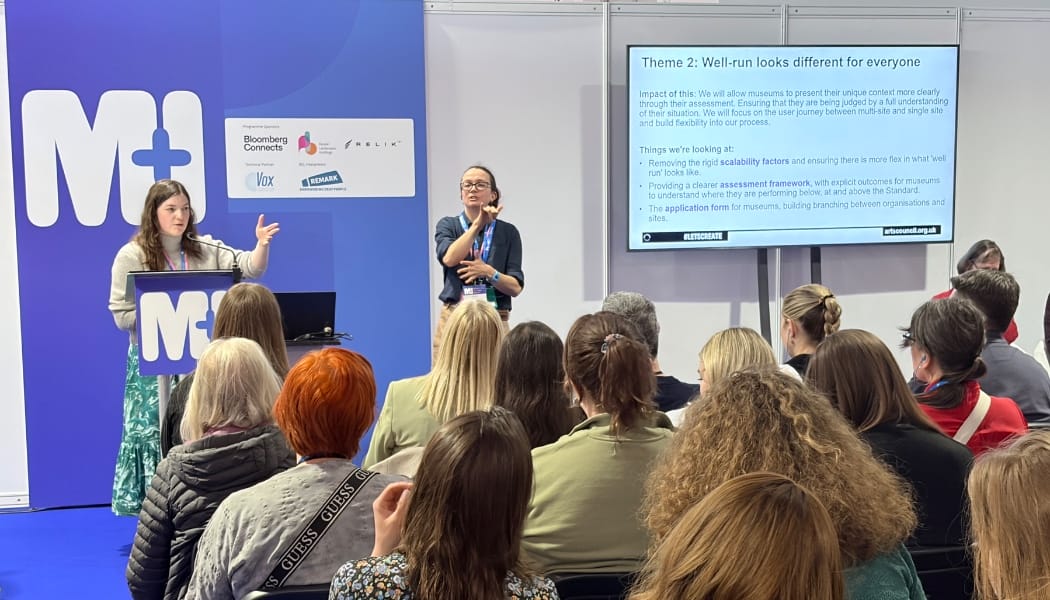
Hartshorne and team are using the government service standard, which sets out how to build a digital service.
A ‘Sprint’ or agile process, which ACE calls its ‘short feedback loop’ is currently in process, with real museums joining in a test group.
The museum test group included 10 museums, and a collective 75 hours of testing which concluded last week.
The 10 participants were the Art Collection, University of Stirling; Bassetlaw Museum; Beamish Museum; Emsworth Museum; Hampshire Cultural Trust; Irish Linen Centre & Lisburn Museum; National Trust; Royal Museums Greenwich; Royal Welch Fusiliers Museum Regimental Trust Ltd, and Three Rivers Museum.
Hartshorne said conversations across the museums fell into three themes.
The first, “adapting to diverse circumstances”, acknowledged that change — both positive, such as capital development, and negative — is a constant for museums, and that the scheme needs to reflect this nuance. Hartshorne said the assessment model would be built so museums could demonstrate change easily as a standard feature, and that the team is looking at how a proportionate process might sit between full assessments, where currently only a significant change process exists.
The second theme, “well-run looks different for everyone”, concluded that governance type and visitor numbers, while relevant, are not on their own sufficient indicators of whether a museum is well-run, and that multi-site organisations need to be able to demonstrate compliance at both organisation and site level. In response, ACE plans to remove rigid scalability factors, build branching into the application form for multi-site bodies, and provide a clearer framework with explicit outcomes for performance below, at and above the Standard.
The third, “policies in practice”, recognised that policies are only one tool museums use to be well-run — with the Collections Development Policy a notable exception, reflecting the sector’s USP and the area where uniformity is most valued. Disposals, Hartshorne said, remain a key concern.
Next steps include sharing the draft Standard in the summer ahead of publication later in 2026, reviewing the Collections Development Policy template, and piloting the new scheme process before the end of the year. The team’s next public “show and tell” is on 4 June.
Reimagining the digital gallery experience
At a talk titled “Reimagining the digital gallery experience,” Lawrence Chiles, Head of Digital at the National Gallery, and Matt Wade, designer, academic author and founder of the Office of Future Interactions, walked through how the Gallery has rethought its digital visitor experience. Their focus was on expanding content creation, integrating large-scale digital infrastructure, and turning the entrance into a space that orients, inspires and connects visitors from the moment they arrive.
The centrepiece of that work is a 14-metre “connected canvas” of high-resolution Samsung MicroLED screens, installed at the heart of the redesigned Sainsbury Wing entrance that opened to the public on 10 May 2025. The Wing itself had been closed since February 2023 for a redesign by New York-based Selldorf Architects, working with heritage architects Purcell. The new entrance was conceived as a digital project as much as an architectural one, with content production, network capacity and visitor flow all developed in parallel. The work sits within a longer arc. Digital storytelling and innovation had been a focus for the Gallery over the previous five years, supported by Bloomberg Philanthropies as digital partner for NG200, the Gallery’s Bicentenary programme. Chiles described a year-long effort that also included a 20-minute experience projected onto the gallery walls and the launch of a network of digital creators, now in its second year.
Several of the resulting projects came up in the talk. NG Stories is a series of digital experiences telling the story of the Gallery and the people who have shaped its 200-year history. The Imaginarium is a free, browser-based experience that invites users into a digital space inspired by works in the collection, with a soundscape by artist Nick Ryan and an introduction by poet Sir Ben Okri. And Keeper of Paintings is an augmented reality game, now in its fourth edition, co-created with children and embedded across the new Roden Centre for Creative Learning. The National Gallery + 2
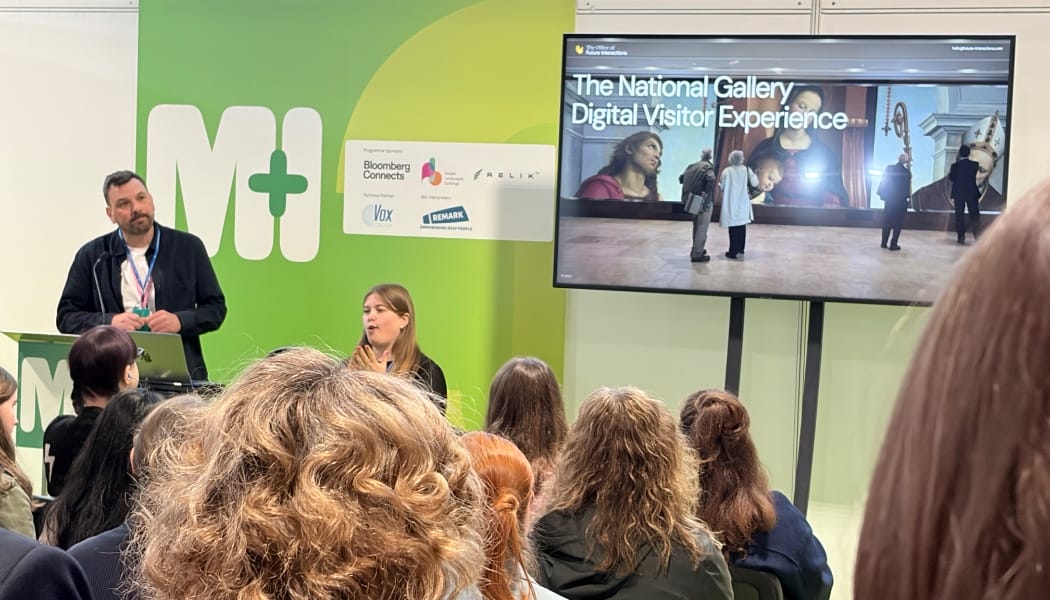
Wade used his portion of the talk to share the design frameworks behind the work. A “hierarchy of visitor needs” helped the team articulate why, as he put it, “you don’t want to start selling to someone as soon as they walk in.” A sense of meaning has to be established first. A second tool, “wow, show, flow,” shaped how content is sequenced for visitors as they move through the space. Wade was candid that “there’s no such thing as a perfect journey,” and described mapping a set of micro-journeys instead, eight of which were treated as key and tested in detail.
Service blueprints were used to pressure-test ambition against reality: “do you have the technical and human infrastructure to do this?” A digital map showing that a room is closed, for instance, looks simple but depends on humans being trained to keep it updated. To tie the physical and digital together, the team also introduced a family of wayfinding colours that match the art shown on the screens.
The technology is doing a lot of heavy lifting. “We’re running a massive media space on a museum budget,” Wade noted. Chiles called the MicroLED resolution “incredibly brilliant,” and explained that super-resolution scans from the Gallery’s photographic department let the screens reveal details that are hard to see with the naked eye. He cited a figure that has clearly shaped the team’s thinking: the average time a visitor spends in front of a painting is about 15 seconds. The screens are designed to slow people down and contextualise works before viewing, rather than compete with them.
A year in, the conversation has shifted from launch to stewardship. The rollout moved through talks, meetings and stakeholder engagement before opening to the public, and recent visitor research suggests people now arrive better orientated than they did before. “We’ve had the gallery and the screens open for a year,” Chiles said.
“What does it mean for us as a team now?” Much of the content is being made in-house, and the team is starting to explore what that capability unlocks, including takeover nights, when the screens are used for other purposes entirely.
The session closed on a question the speakers left open: whether an approach built around a 14-metre MicroLED canvas, an in-house production team and a five-year digital strategy is replicable for smaller museums working below blockbuster scale.
More updates to follow tomorrow.
Missed out on Day 1? Register for Day 2 at the Museums + Heritage Show
This is the final opportunity to register for a ticket for the second day of the Museums + Heritage Show, taking place today, 14th May 2026 in London.