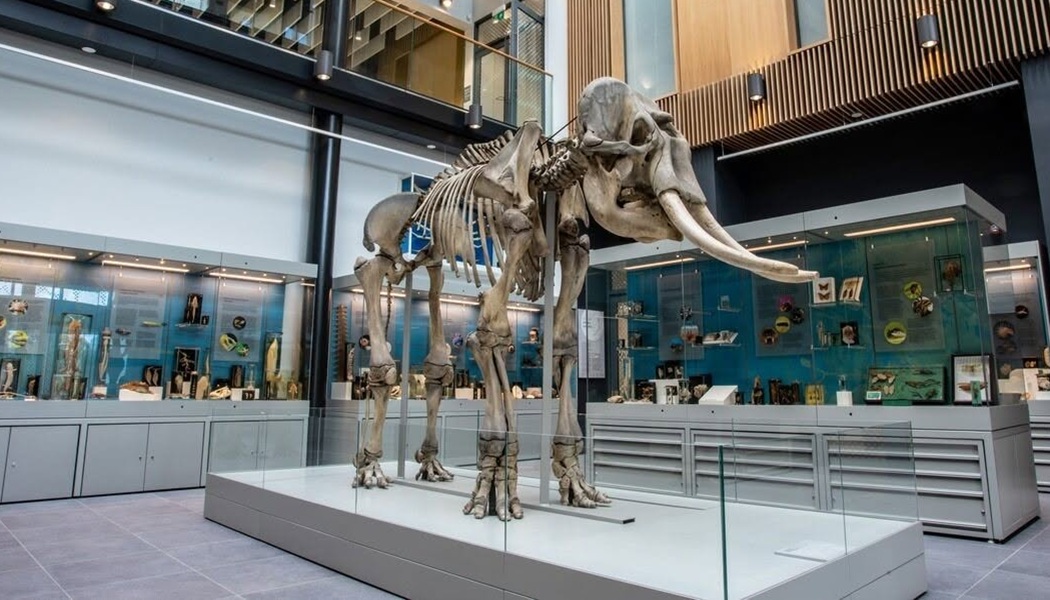
Image: Cole Museum of Zoology, University of Reading.
Professor Parveen Yaqoob, Deputy Vice-Chancellor and Pro-Vice-Chancellor for Research and Innovation, University of Reading writes:
As the University of Reading celebrates its centenary, I’ve been thinking a great deal about what the next 100 years of research will require from us.
The questions we face are becoming increasingly complex. Climate change, biodiversity loss, environmental degradation and rapid technological change cannot be understood through a single discipline, institution or dataset.
I believe the future of research will increasingly depend on our ability to connect.
To connect disciplines and expertise. To connect physical collections with digital technologies. To connect data held across institutions and borders. And to create research infrastructure that allows people to ask questions we cannot yet anticipate.
That is one reason why I believe museums, archives and collections are becoming more important than ever.
Collections have always been more than static records of the past. But now they are becoming a new form of research infrastructure.
The evidence needed to address some of society’s greatest challenges is often hiding in places people least expect: in museum specimens, fossils, archives and archaeological objects; in collections assembled over decades, or even centuries.
These collections provide baseline evidence for understanding how ecosystems respond to change. They help track biodiversity through time. They preserve records of extinct worlds and vanished environments. And increasingly, they allow researchers to ask new questions using technologies that had not even been imagined when many of the collections themselves were assembled.
Digitisation, AI, advanced imaging and new analytical techniques are transforming what researchers can discover from the past. Historical collections are becoming datasets. Physical specimens are becoming sources of new evidence. Objects collected for one purpose are helping answer entirely different questions.
Crucially, the greatest opportunities increasingly emerge when collections become connected.
Research today is rarely confined within a single organisation. The same is becoming true for collections. When collections, data, expertise and technology can be connected across institutions, entirely new forms of discovery become possible. Researchers can work at greater scale. New collaborations emerge. Knowledge becomes more accessible. And evidence can be brought together in ways that help us better understand change and plan for the future.
That is why partnership matters.
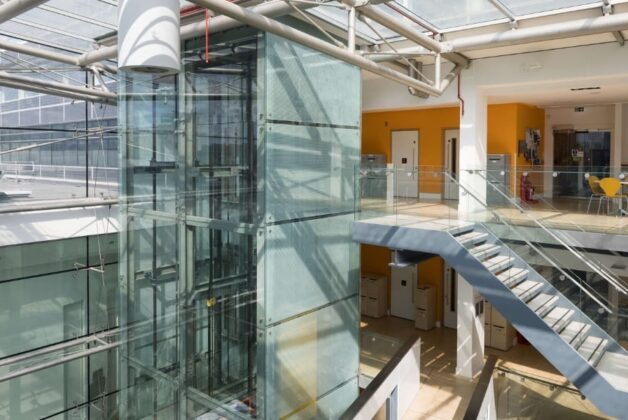
At Reading, our own internationally significant museums and collections sit within a growing concentration of collections, research expertise and infrastructure. Alongside our strengths in climate science, environmental research, archaeology, ecology and biodiversity, we are seeing the emergence of something unique.
Through our ownership of Thames Valley Science Park and our museum partnerships, Reading is helping create one of the most significant collections and research clusters anywhere in Europe.
Within the next five years, the site will become home to more than 30 million specimens and objects. The Natural History Museum’s new Science and Digitisation Centre will bring around 28 million specimens to the site, while the British Museum Archaeological Research Collection (ARC) is already creating new opportunities for object-based research and learning.
Together with Reading’s own collections and expertise, this is creating something much bigger than a collection store. It is creating an ecosystem; a place where collections, digitisation, environmental science, archaeology, heritage research and innovation can come together in one place.
Importantly, this isn’t simply a story about preserving collections. It’s a story about unlocking greater access, deeper collaborations, important discoveries and new ways to understand our rapidly changing world.
These are precisely the themes we’ll be exploring on 7 August when I chair Fossils to Futures: How Deep History is Informing Future Research Systems.
Bringing together colleagues from the Natural History Museum, the British Museum, the Network of European Museum Organisations (NEMO) and the University of Reading, the discussion will explore a question I believe will become increasingly important over the coming decades:
How do we build research systems that allow the evidence of the past to help us answer the questions of the future?
Whether your interests lie in museums, collections, heritage, climate research, archaeology, biodiversity or research infrastructure, I hope you’ll join us for what promises to be a fascinating conversation.
Fossils to Futures: How Deep History is Informing Future Research Systems
7 August 2026, 14:00 BST