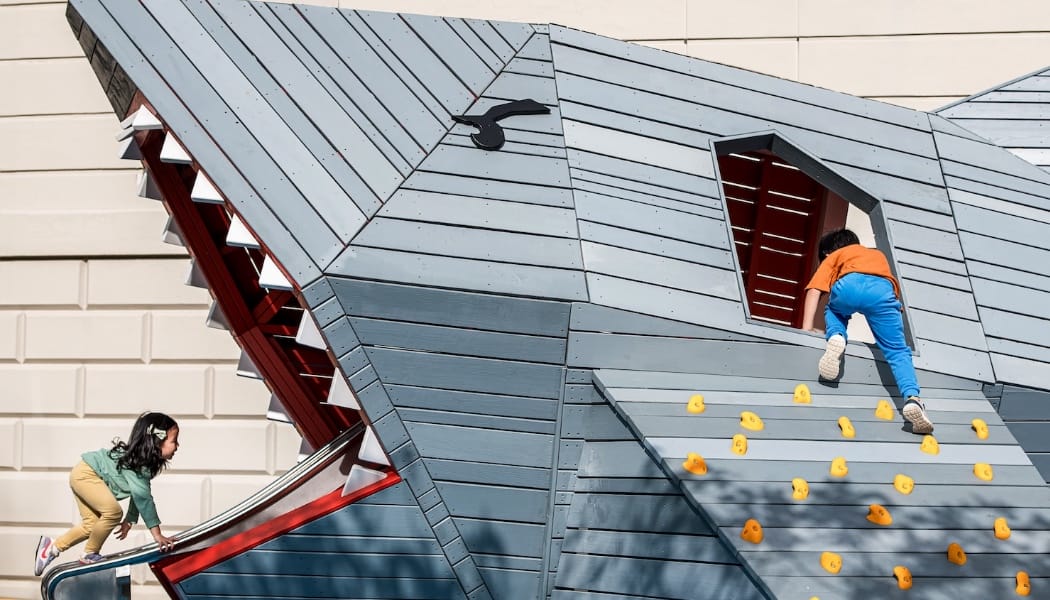
CAP.CO links adventure play in museums to increased dwell times, revisit rates and spending.
There’s a strange kind of immortality in the mundanity of the everyday things we do. The way you hold a door open, the patience you show when something breaks, the questions you ask when you don’t understand something. None of it dies with you. It gets copied, quietly, into the next generation. Your children will probably parent the way you parented, at least in part, whether either of you intended it or not. Skills, habits, manners, curiosity itself are all inherited far more often than they are taught.
Play works the same way.
The parent is the first curriculum
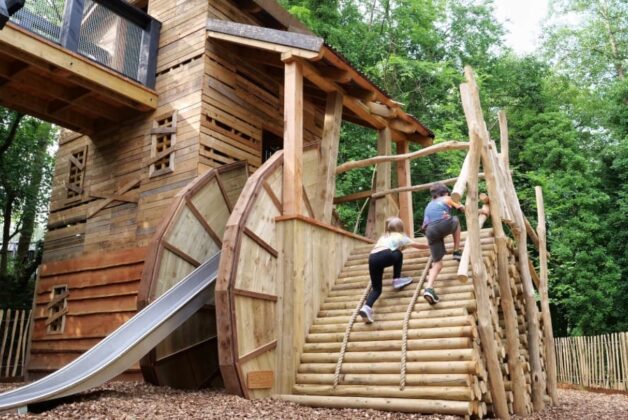
Watch a parent at the bottom of a climbing net, not lifting their child up, not calling them down, just present, occasionally asking “what happens if you put your foot there?” rather than “be careful,” and you’re watching a transmission in progress. Children raised by adults who take them into the trees, who let them balance along a log or judge a jump for themselves, tend to grow into people who are inquisitive, resilient and comfortable with independence. Not because anyone sat them down and explained resilience, but because they lived it, in their own bodies, in hundreds of small moments of manageable risk that added up.
This is the part that’s easy to miss. Nobody remembers being taught to assess a risk. It isn’t a lesson. It’s a residue, left behind by every wobble that didn’t become a fall, every height that got a little more comfortable, every time a parent held their nerve instead of intervening.
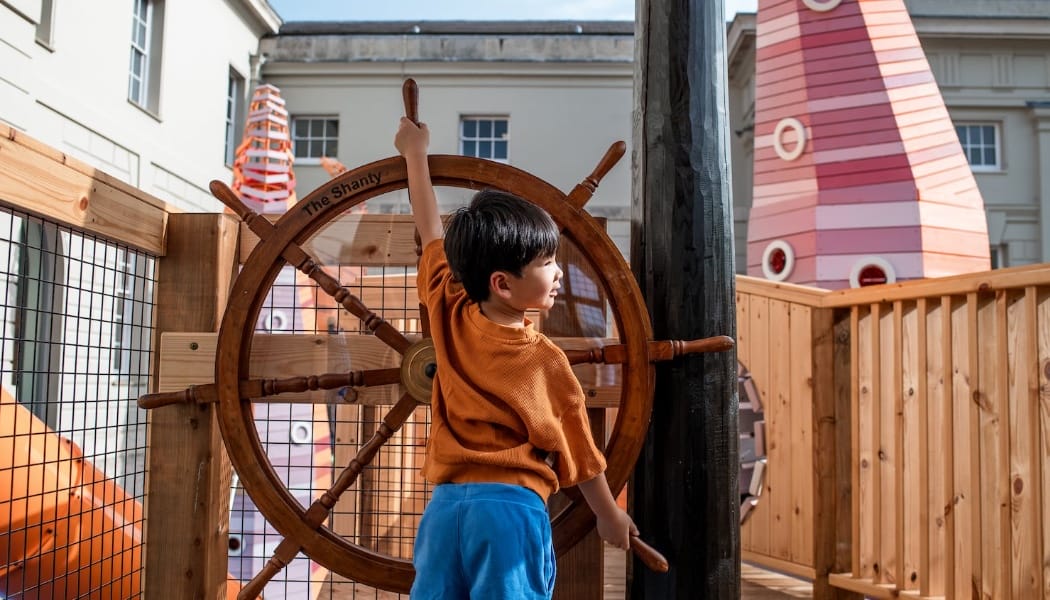
Why this matters to museums
Museums and adventure play design are, on the surface, unrelated. One preserves the past, brings it to life and makes it relevant to the next generation. The other opens opportunities, builds skills and teaches resilience for the future.
Their work is covering two sides of the same coin. Both are in the business of passing knowledge, ideas and inspiration from one generation to the next, inside a space designed to enable and encourage that.
A gallery alone is a one-way transmission. Information moves from the exhibit to the visitor. Add real adventure play, the kind with a background built from the exhibit. Plus, height, movement, texture and a bit of genuine risk in it, and something else happens. A child scrambling over a trail inspired by that specific gallery, isn’t just burning off energy between rooms. They’re physically rehearsing the themes of the collection. Exploration, endurance, ingenuity, survival. And they’re doing it alongside a parent who’s encouraging them and occasionally watching with extreme white-knuckles, which is exactly the shared, embodied experience that makes learning stick rather than fade.
That’s not a soft benefit. It shows up in the numbers museums actually track. We often see the following three benefits
Longer dwell times, because a family with a trail to complete or a structure to conquer doesn’t leave after the first gallery – unless it’s poor or irrelevant.
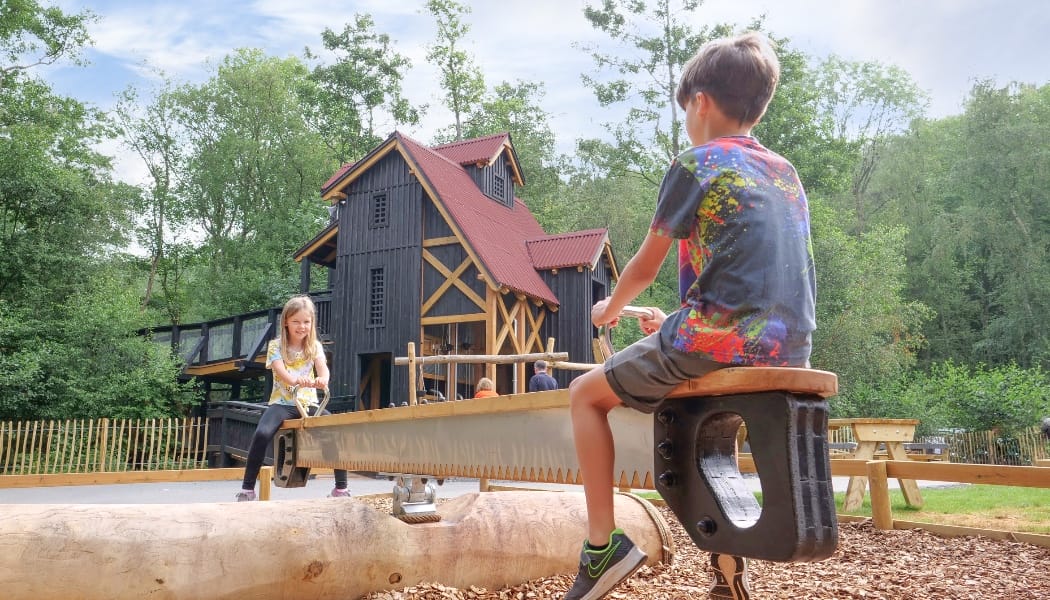
Higher revisit and membership rates. Because a child remembers the log balance, the saw see saw or the rope bridge far more vividly than any single exhibit, and asks to go back
Increased F&B spend, the natural consequence of families staying outdoors. Or just staying longer is their working up an appetite, and turning a two-hour visit into one with meals, drinks or snacks.
Learning that becomes habit
Information fades. Physical experience doesn’t. Not in the same way anyway. A fact read once on an information board may well be forgotten within the week. The feeling of climbing higher than you thought you could, with a parent below you trusting you to manage it, has a habit of resurfacing years later as an instinct rather than a memory. A willingness to attempt the difficult thing, to trust your own judgement, to get back up. That’s the mechanism worth designing for. Not “what will visitors learn today” but “what will visitors carry with them, in their hearts and minds, without necessarily realising they’re even carrying it.”
Great adventure play does this by design, using height, challenge and a graduated sense of risk to give children something to test themselves against and parents something to encourage them through. It turns the museum spaces, both indoor and out, from a space you observe into a space you aim to conquer, together. And in doing so, it quietly does what every generation before it has done. It hands something down.
Play on words
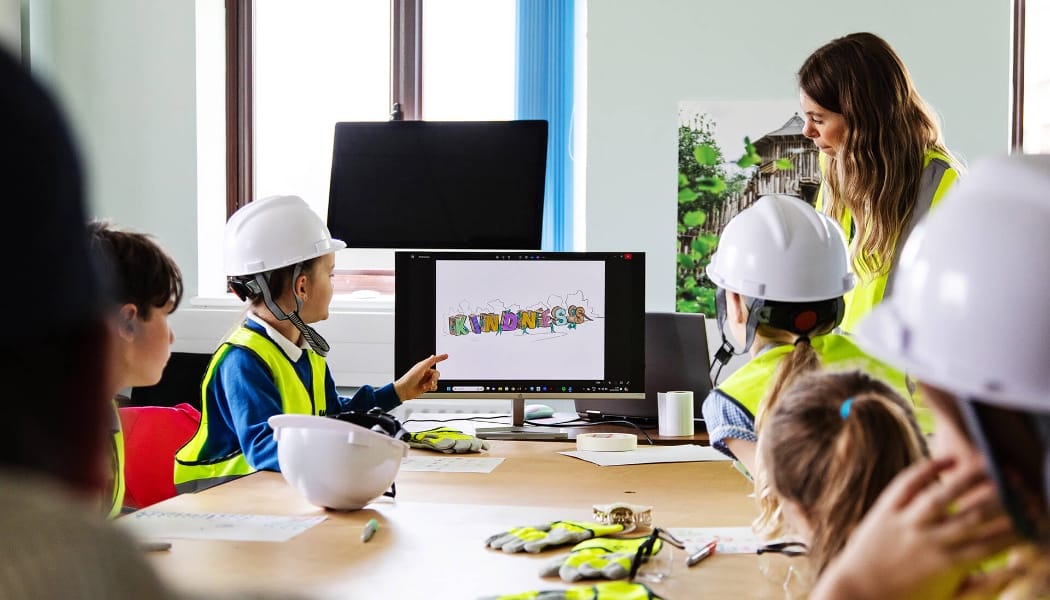
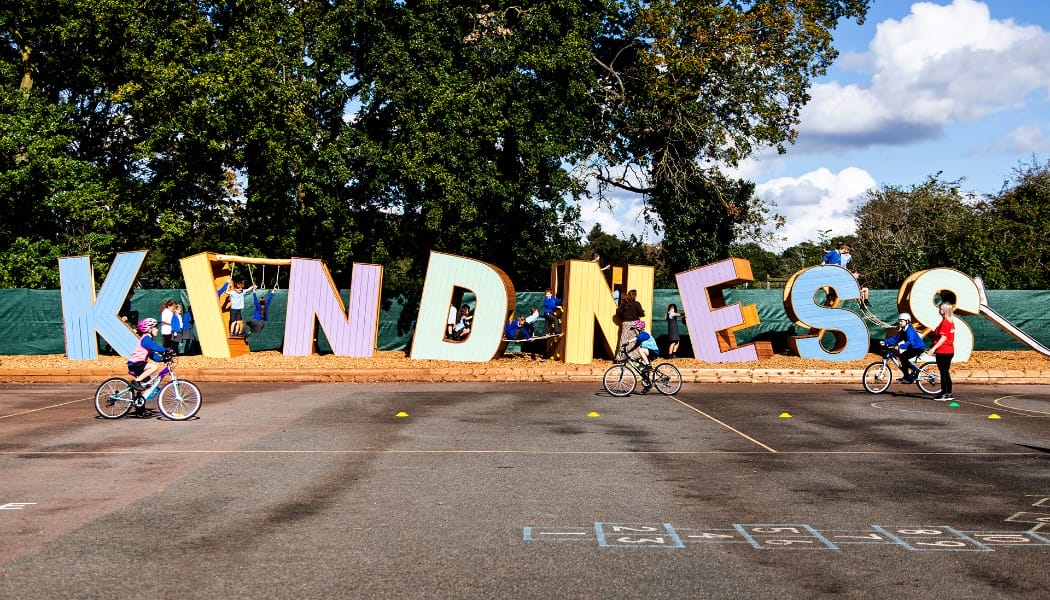
In one recent education sector project, the brief was to create a play scheme based on the values of the school itself. We spent real time consulting with both the kids at our workshop, the teachers and their parents. Play on Words and the Kindness project was born. It’s a flexible system that can be used to allow children to play on almost any message.
The school followed up to measure its effect and there was a clear change in the understanding of the school’s values and better still, the behaviours of the children too.
Playing with history
Chillington Hall is a Grade I listed Georgian country house near Brewood in Staffordshire. It’s been home to the Giffard family for over 800 years. The site is famous for being the place King Charles II escaped to after losing the Battle of Worcester in 1651. The young King sought refuge with the Catholic Giffard family, who owned both Chillington hall and Boscobel House.
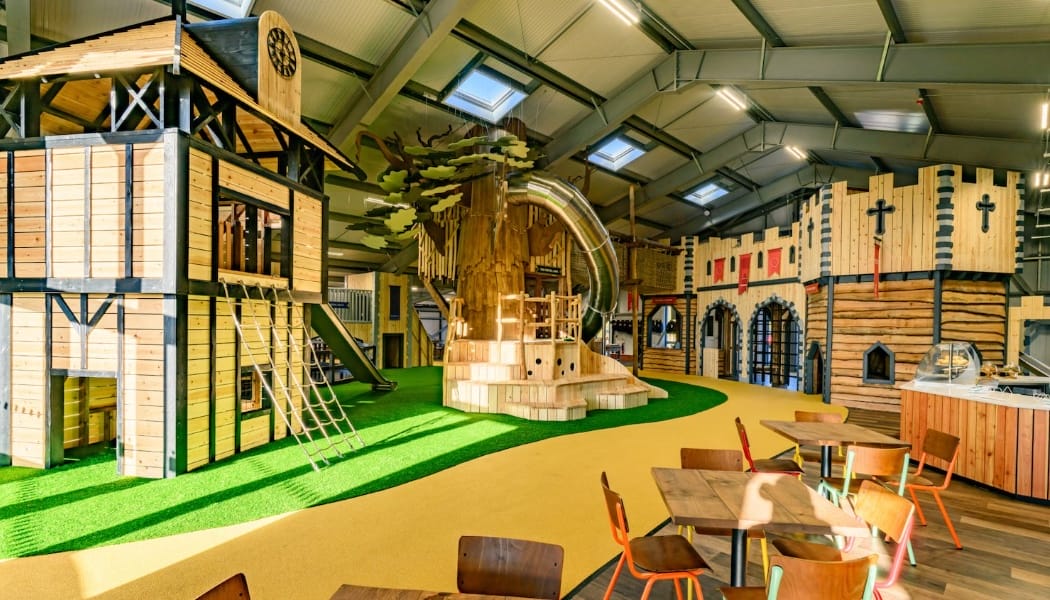
The House is the site of legendary Royal Oak tree that the King hid within to evade the pursuing Parliamentary roundhead soldiers. So, this became our brief to create the play for Hockerhill. And what could possibly deliver a story better than playing inside a newly created and playable Oak tree on the site of the original Royal Oak. Children can climb up inside to hide and when they are ready to make their escape, slide down to continue their play in the timber battlements that surround it, with not a ball pit in sight.
The work we’re both doing
We build spaces where children take risks and parents learn to let them. Museums build spaces of meaning. But the underlying job, priming children and parents to explore side by side and turn a single visit into a lasting habit of curiosity and self-belief, is identical. Great adventure play doesn’t compete with the collection; it gives visitors somewhere to physically live out what the collection is trying to teach, and sends them home with something no exhibit alone ever could. The remembered confidence of having tried, wobbled and made it across.
That’s worth designing for and what we believe we deliver, like no-one else.
If you’d like to talk about truly unique play that works within your own indoor or outdoor museum space, please call us on +44 800 009 6907 Or email us at [email protected]