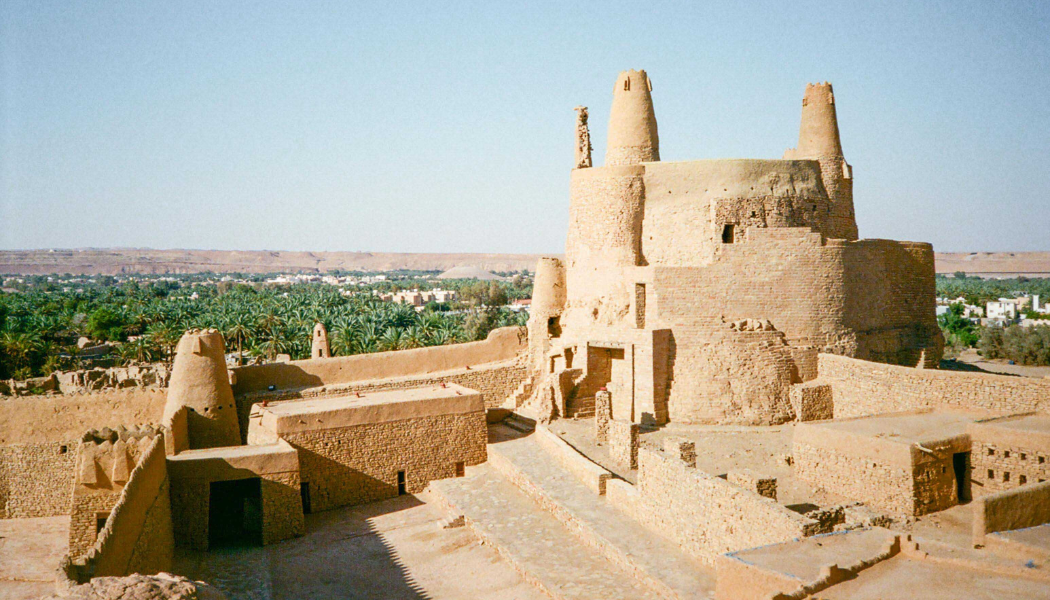
Becca Warren, Lead Designer at Luci and founding member of Luci London explains how a weaving collective, camel herders and a heritage site shaped gallery design for a Middle East museum project.
As Lead Designer and a founding member of Luci London, I’m helping establish the practice’s first studio outside the US, and it’s made me reflect on our responsibilities as museum and experience designers. Working internationally provides opportunities to keep learning, challenge our thinking, and build relationships with new people in new places.
It’s also made me think more about what it means to design beyond borders. How do we ensure our work remains rooted in the places and communities it’s made for, while creating an impact that extends beyond the spaces themselves?
People and Place
This takes me back to a research trip I went on for a project in the Middle East, before I joined Luci. Our international team was tasked with designing for a domestic and regional audience, so understanding the relationship between people, landscape, and culture was an important part of the process.
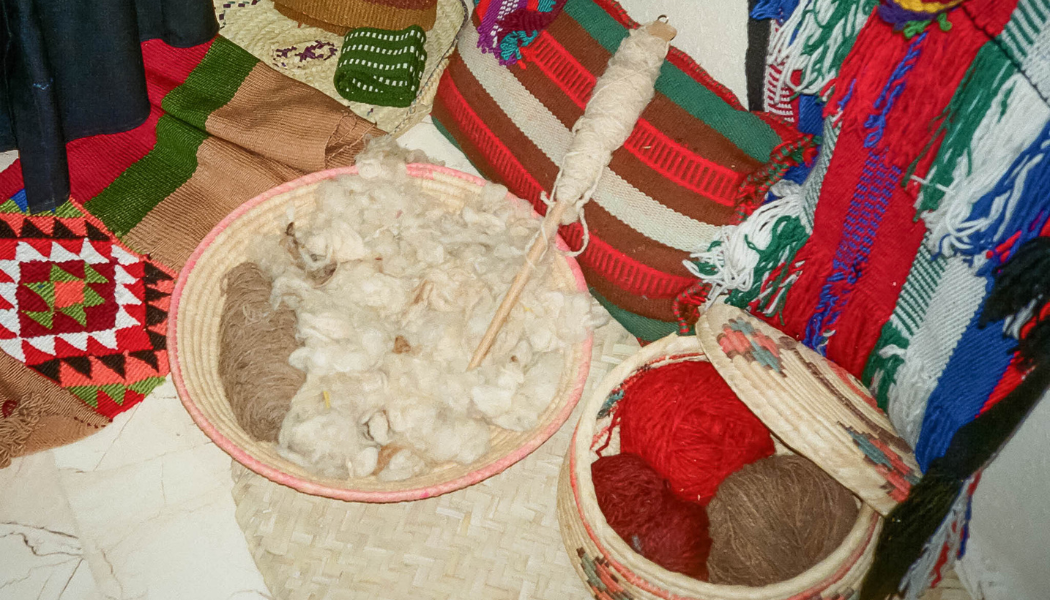
The trip began with a visit to a local weaving collective supporting widowed, orphaned, and divorced women. Here, we learnt how camel hair is spun into wool through traditional and modern techniques, how wool is used to make fabrics, and how local identity is represented through regional patterns and colours. Beyond the craft itself, the collective gave the women a sense of belonging and played an important role in the wider community.
This encounter inspired much of the museum’s graphic language, giving each gallery its own distinct identity. Together, these elements formed a tapestry of interconnected spaces that reflected the community at the heart of the project. Our conversations went beyond patterns, colours, and graphic panels, exploring how raw materials and waste from the weaving process could be incorporated into the museum itself, embedding local craft into the fabric of the galleries.
Conversations with local camel herders and a visit to their herd offered us an intimate view into their everyday lives. Through personal encounters, we gained a deeper appreciation of local traditions, culture and the profound, deep-rooted relationship between humans and camels. This bond is reflected in the museum’s collection through art and poetry but witnessing it firsthand was a pivotal moment in the trip. It brought these cultural narratives to life, enriching our understanding through the personal perspectives and lived experiences of those who maintain these traditions today.
This informed the fluid, organic forms of the galleries, physically representing the close, intertwined relationship between people and camels. These forms were balanced with more rectilinear elements, whilst creating a sense of openness inspired by the warmth and hospitality we experienced, and by local traditions of gathering and storytelling.
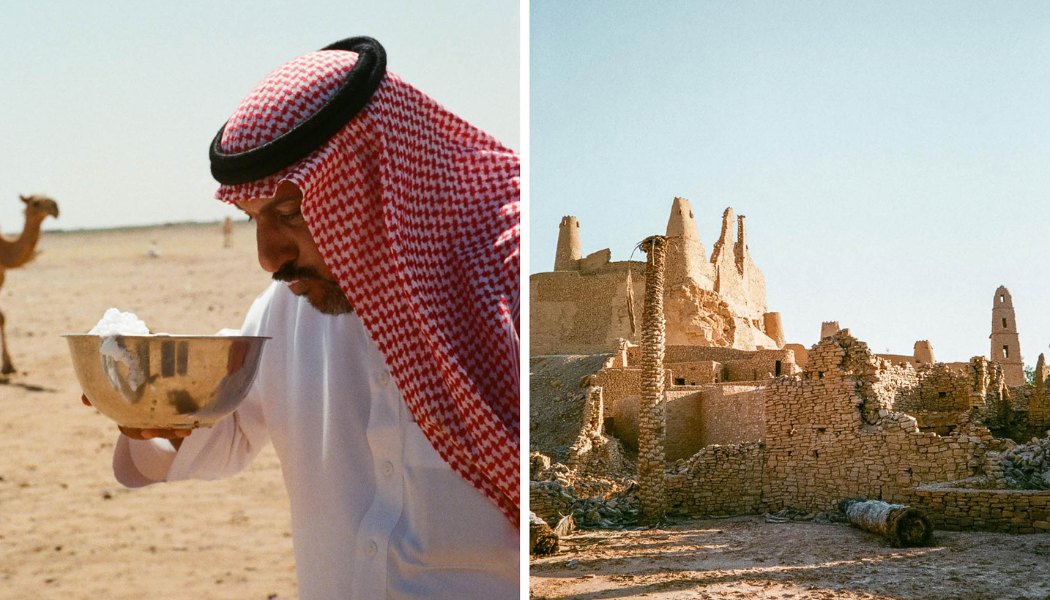
A visit to a local heritage site offered a valuable insight that helped shape the project’s design. Our guide’s infectious enthusiasm brought the history to life. Despite the language barrier, he eagerly used his phone to translate, leading to fascinating discoveries and some amusing moments of misinterpretation along the way.
As we explored, we saw how time and weathering had worn away the structural stonework beneath the smooth rendered walls. The contrast between rough, exposed textures and refined surfaces became a key influence on the galleries’ materiality, expressed through textured plaster bases and smooth, refined setworks. Together, these created a cohesive, timeless aesthetic.
These three key moments in our trip fundamentally informed the design of the gallery spaces. The material palette drew on the natural hues of camels and the surrounding landscape, complemented by the tones and patterns of the local weaving community. Taking the time to listen and learn was essential to developing a design that feels rooted in its local context.
The Importance of Collaboration
As designers, it’s easy to become so invested in our own vision that we forget to listen. But our role goes beyond designing museums and exhibitions. It’s about understanding the architecture, landscape, people, and cultural context, and translating those experiences and stories into meaningful physical spaces.
Whether we’re working in London, Chicago or elsewhere, every place has its own identity, and that should shape our approach.
At Luci, collaboration extends beyond a tick-box exercise; it reflects our belief in shared responsibility and the value of different perspectives. For us, ‘co’ is more than a prefix. It defines our approach to co-design, co-stewardship and co-authorship, shaping experiences together with partners, communities, and clients rather than in isolation.
As we continue building the London studio, I believe we have a responsibility to challenge our assumptions and let new perspectives shape not only how we design, but what we create. Design is not simply about creating spaces that look as though they belong. It is about designing places rooted in their context, responsive to the people who use them, and capable of establishing a genuine connection between people, place, and architecture.