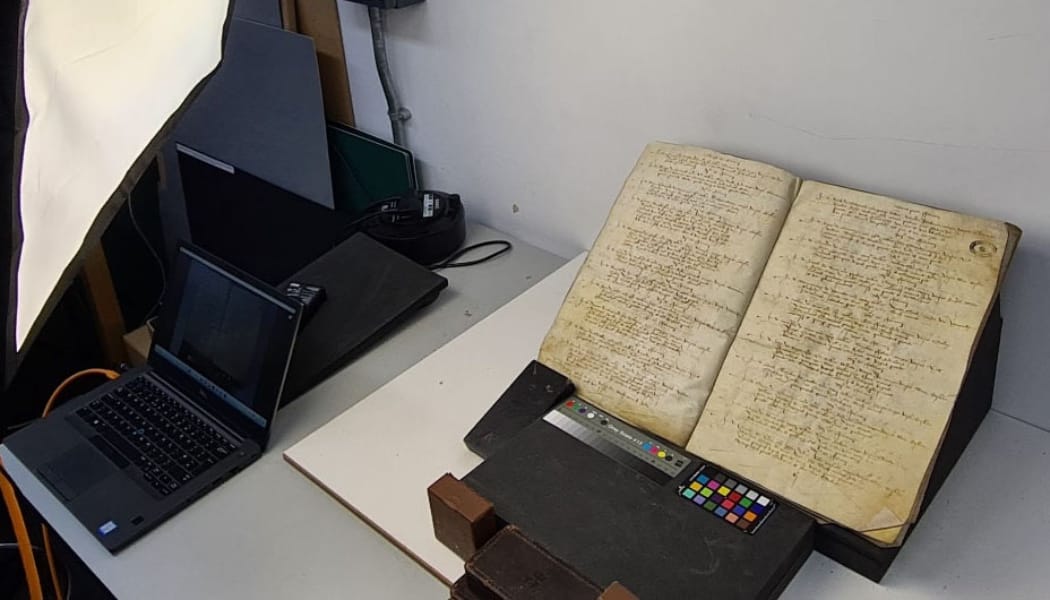
Alistair Hardaker | Image: AI training on archive documents
Historians use AI to read hundreds of thousands of pages from centuries of historical port books
Historians have used AI to scan thousands of hand-written pages from books held at the National Archives in Kew, developing a database of Britain’s merchant shipping past.
The University of Southampton project used AI to transform the information from the ‘port books’ into the database and online interactive map.
The books, which chart the country’s growth during the late-16th to mid-18th century, were scanned and interpreted by the AI to chart an unbroken 200-year record of individual voyages, ports, ships, shipmasters, and cargoes from 1565 onwards.
The researchers recorded hundreds of thousands of voyages, including information about ships, ports, sea routes and goods.
The University of Southampton describes how specialist software was used to recognise the text, learn, and compile information about who was trading what, with whom, when, and where.
“This was a massive task, completed on a scale not seen before,” said historian and lead researcher Professor Craig Lambert of the University of Southampton.
“Without AI extracting and organising the data, this would have taken years. It still needed manual checking, but it sped up the process enormously.
“We taught AI to read the unique handwriting belonging to many different port officials and also the change in spelling of words across the decades.”
The historians worked with Southampton’s GeoData Institute to create a database that forms the basis of the interactive map.
The completed map now allows users to explore maritime trade through time and from multiple points of interest and angles.
“We wanted to make the information as accessible as possible to the general public, scholars and citizen historians. People can easily explore the data for different periods, trading hubs, ships, goods, routes and more,” comments GeoData’s Professor Jason Sadler.
Among the findings from the records is a large variety of traded goods, including children’s toys from China, sheep guts, bowstrings, exotic animal skins, clock cases, and Venice treacle, a famous early modern remedy believed to cure almost any ailment.