Alistair Hardaker | Images: Chelmsford City Council
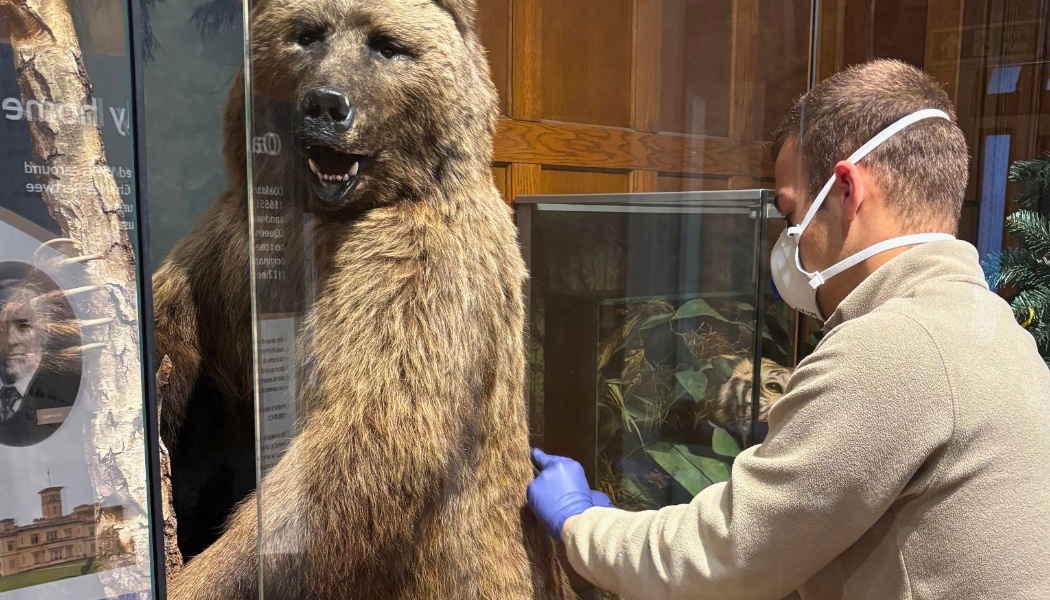
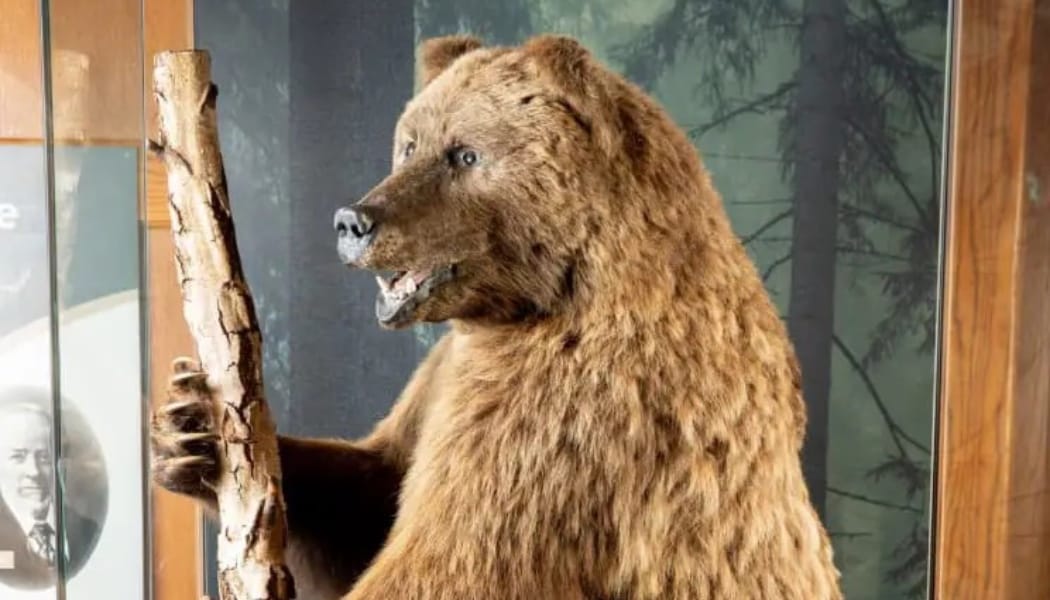
Hair from ‘Boris’, a 120-year-old taxidermy brown bear at the Museum of Chelmsford, has been analysed for a study into bear poaching.
A 120-year-old taxidermy brown bear at the Museum of Chelmsford has provided hair samples for a University of Staffordshire research project into wildlife crime.
The bear, known as Boris, has been part of the museum’s collection since 1932. He was among a collection of 300 taxidermy specimens donated after the death of local GP and big game hunter Dr Salter. Much of that collection has since been destroyed by pests, but Boris remains one of the few pieces to survive.
In late 2025, forensic science student Hayden Leigh contacted the museum to request a sample of the bear’s hair to support research into wildlife crime and animal hair analysis. The research aims to develop a way to profile animal hairs to help identify and trace the poaching of brown bears in parts of Europe. After considering the bear’s condition, the museum agreed to open its case and grant access to retrieve a few hairs for forensic analysis.
Hayden Leigh, student researcher at the University of Staffordshire, said taxidermy samples from museums can play a valuable role in the research of animal hair within a forensic context.
“Taxidermy collections such as this therefore offer a wide range of opportunities for scientific investigation, providing researchers with valuable biological material while also preserving the animal itself.”
Councillor Jennie Lardge, cabinet member for culture and leisure at Chelmsford City Council, said taxidermy could be considered a controversial part of museum collections, but the collections can now help to protect animals from being hunted.
“Today we condemn wildlife trafficking and poaching for sport, and some of the species found in museums across the world are now considered endangered or extinct due to excessive hunting.
“But how wonderful it is that historic taxidermy specimens like Boris could now help protect future animals from illegal hunting. It highlights the scientific value of historic taxidermy collections in museums in 2026, and we are delighted that the Museum of Chelmsford has been able to support this important project.”
The project will feature in a talk at the Museum of Chelmsford on 26 September, ‘Behind the Case: A Bear Poaching Investigation’, with Leigh and their tutor Claire Gwinnett, examining the science behind wildlife crime investigations.