
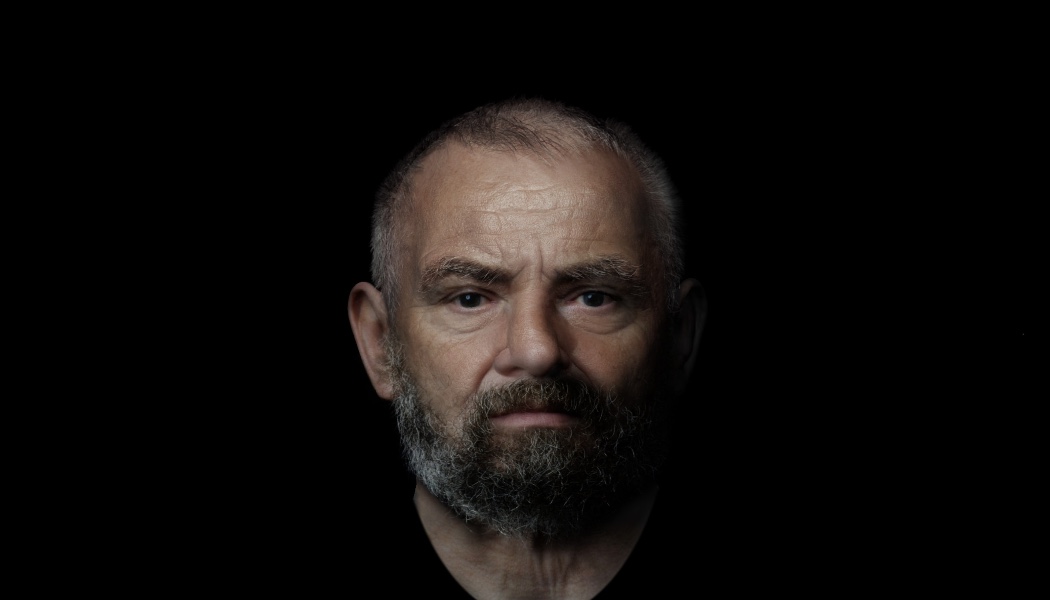
Alistair Hardaker | Image: Facial reconstruction of man from Inveresk. Image © Chris Rynn
A team of experts have worked on the face of the man who travelled hundreds of miles from southern Britain before his burial
National Museums Scotland has reconstructed the face of a man who died on the Roman frontier at Inveresk, near Edinburgh, almost 2,000 years ago.
The man, who had travelled hundreds of miles from his birthplace in southern Britain to the shores of the Firth of Forth in Scotland.
The reconstruction was created by a team of experts to determine the man’s genetic make-up, geographic origin and life history. He was one of a series of remarkable burials from around the Roman fort at Inveresk.
His likeness was informed by an osteoarchaeological assessment carried out at National Museums Scotland, previous isotopic analysis led by scholars at Durham University, and ancient DNA by a team based at the Department of Archaeology at the University of York and Harvard Medical School.
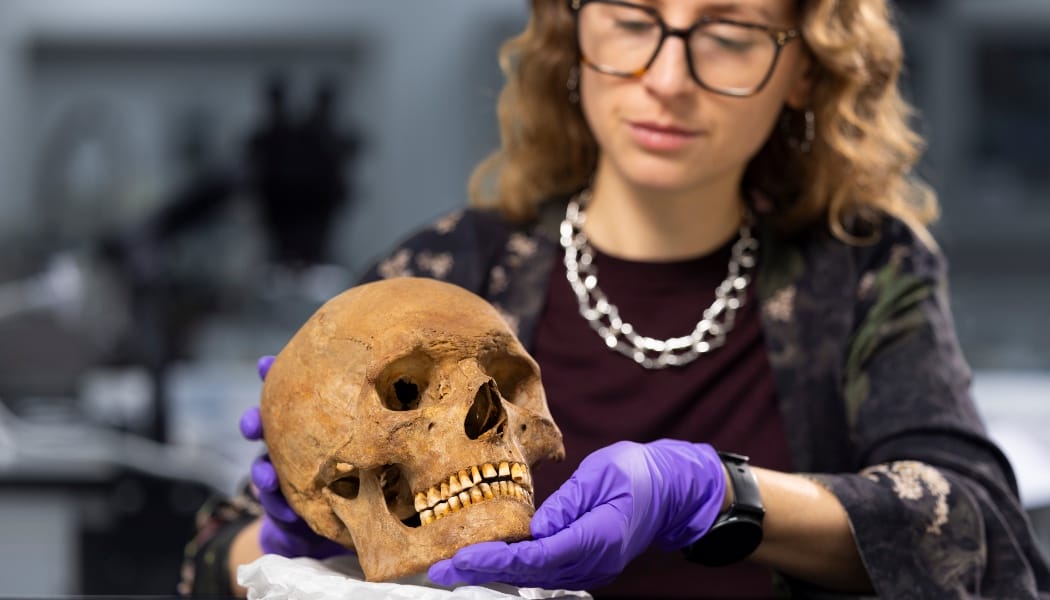
Dr Chris Rynn combined these findings to estimate the man’s appearance.
The resulting reconstruction will be featured in an exhibition opening next month, Roman Scotland: Life on the Edge of Empire, at Exhibition Gallery 1 in the National Museum of Scotland, with the man’s skull displayed alongside it.
Curator of osteoarchaeology at National Museums Scotland Dr Jess Thompson said the facial reconstruction “unites cutting-edge science with artistic vision to create an instant connection with the past, offering a dynamic portrait of what he may have looked like and who he may have been.”
Dr Fraser Hunter, principal curator of prehistory and Roman archaeology at National Museums Scotland added: “Archaeology tells us about people who had hopes and fears just like us, and it is a privilege to present a vision of this resident of Inveresk using contemporary scientific techniques.”
