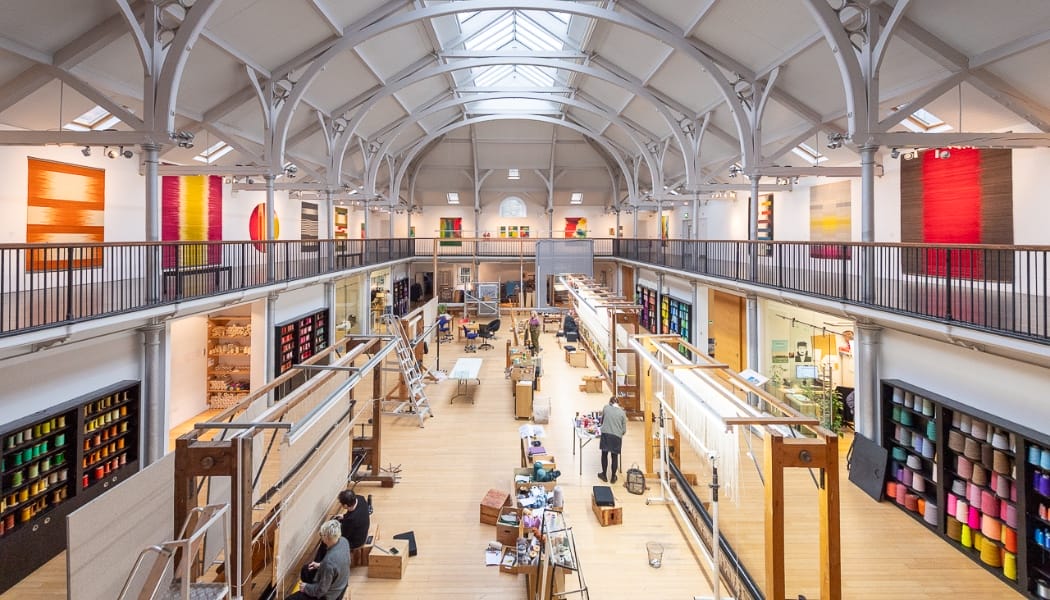
Alistair Hardaker | Image: Tapestry Weaving alongside Ptolemy Mann exhibition. Dovecot Balcony Gallery. Courtesy Dovecot Studios. Photo by Roberto Ricciuti
80% in Scotland and 74% in Wales say governments should maintain or increase museum funding as new parliamentary terms begin.
A poll commissioned by Art Fund suggests that arts and culture, including museums and galleries, are a more important part of national identity than sport in both Scotland and Wales.
The research, conducted by public opinion research agency More in Common, suggests that museums and galleries are more important than Scottish football in Scotland and rugby in Wales.
80% or respondents in Scotland say arts and culture, including museums and galleries, rank higher than Scottish football (70%) and the Scots Gaelic language (58%) for national identity.
Four in five people (80%) say the Scottish Government should maintain or increase funding for museums and galleries.
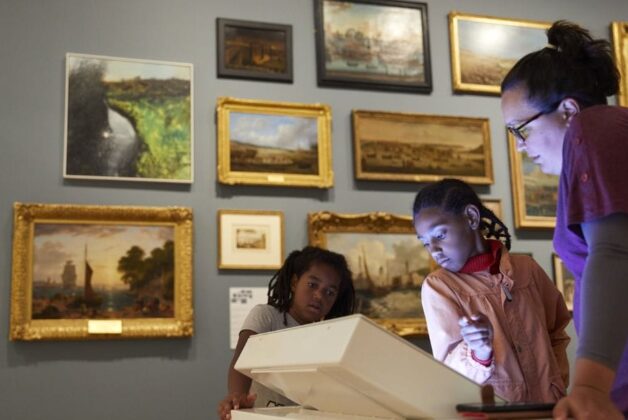
The research also shows that museums are widely used by families across Scotland.
More than half of people (54%) visit museums or galleries at least once a year, while 30% visit several times a year or more. Among Gen Z Scots, two-thirds (65%) visit museums annually, with almost a quarter (23%) visiting monthly.
Nearly four in five people in Wales (79%) say arts and culture rank higher than Welsh rugby (76%) and the Welsh language (75%). Almost three quarters (74%) say the Welsh Government should maintain or increase funding for museums and galleries.
The research also shows that museums are widely used by families across Wales. Two in five people (41%) visit museums or galleries at least once a year, while almost a quarter 23%) visit several times a year or more. Among parents, the majority (60%) say they visit museums annually.
The research is published as the Senedd and Scottish Parliament prepare for new terms.
Jenny Waldman, Director, Art Fund, said the organisation is “calling for political leaders to recognise the vital role museums and galleries play, and to commit to investing in their future so that everyone can enjoy and benefit from them for generations to come.”