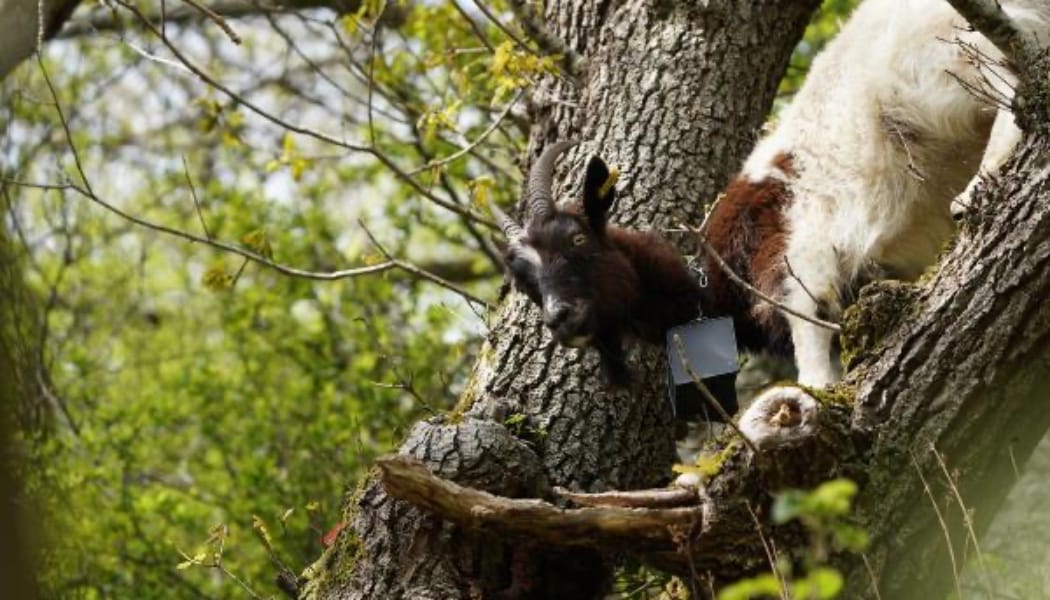
Alistair Hardaker | Image: One of the Bagot goats (Cadw)
Cadw trials conservation grazing with virtual fencing technology at Blaenavon Ironworks, deploying 18 Bagot goats monitored by solar-powered cameras.
Cadw is deploying 18 goats equipped with virtual fencing collars, as an alternative to mechanical vegetation control.
The goats have been deployed at Blaenavon Ironworks, a key component of the Blaenavon Industrial Landscape, aUNESCO World Heritage Site.
The Bagot goats will be monitored by 4G solar-powered cameras and collars, and have been provided by specialist company Grazing Management Ltd.
The goats are hoped to help manage vegetation on steep embankments where traditional maintenance methods are challenging.
The site, located at the foot of Bannau Brycheiniog, contains archaeological features that present difficulties for conventional land management.
Bagot goats favour woody and fibrous plants including bramble, bracken and hawthorn, which other livestock typically avoid. According to Cadw, this grazing pattern thins dominant vegetation, allowing increased light penetration to ground level and encouraging wildflowers, grasses and invertebrates. The organisation says this creates more varied habitat than uniform mechanical cutting.
The initiative forms part of Cadw’s sustainability strategy. The goats require no fuel or chemicals and the organisation says they reduce the carbon footprint associated with conventional site maintenance.
Dr Kate Roberts, CEO of Cadw, said Bagot goats “have been part of the Welsh countryside for generations” and will “help us care for this remarkable landscape in a way that’s sensitive to its character, better for wildlife, and kinder to the environment – and we hope visitors will enjoy seeing them as part of the site’s story.
Alex from Grazing Management Ltd said: “Blaenavon was a site of incredible innovation and it’s a privilege to bring some new innovations to help preserve this historic site.”