Museums have always interpreted people who can no longer speak for themselves.
Curators select objects, assess evidence, distinguish fact from uncertainty and decide how a life should be presented to contemporary audiences. Labels, exhibitions, audio guides and reconstructed scenes all involve interpretation.
Conversational AI introduces a powerful new form of that practice. Visitors can ask a historical figure their own questions, explore subjects at their own pace and receive answers in their own language. Instead of following a fixed narrative, they can participate in the encounter.
But this additional freedom changes the institution’s responsibility.
A prerecorded portrayal says only what was written and approved. A conversational historical figure may be asked almost anything. It can appear to offer opinions, memories and emotional responses that were never documented.
If the experience is to earn public trust, stewardship cannot end when the exhibit opens.
A convincing performance is not enough
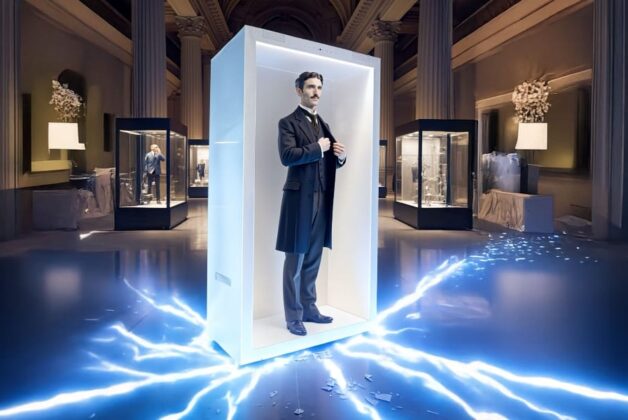
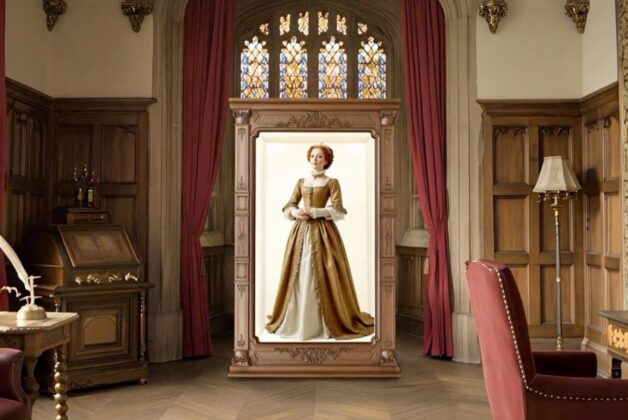
The first reaction to a historical Digital Human will often be visual. Does it resemble the person? Does the voice feel credible? Does the encounter create a sense of presence?
These qualities matter, but authenticity cannot be measured by appearance alone.
A beautifully produced representation can still be historically unreliable. It may blend established facts with disputed accounts, impose modern attitudes upon someone from another period or speak confidently about matters for which no evidence exists.
The more convincing the performance, the greater this risk becomes. Visitors may give an apparently embodied historical figure more authority than they would give an ordinary screen or text panel.
The objective should therefore not be to create an illusion of unlimited access to the past. It should be to create an engaging, clearly framed interpretation grounded in evidence.
Who has the authority to speak for the person?
For a deceased figure, authorisation may involve an estate, foundation, archive, museum or other rights holder. Different organisations may control different parts of the identity, including images, recordings, trademarks and commercial rights.
Legal permission is only one part of the process.
The project must also establish intellectual and interpretive authority. Which historians, curators or subject experts will approve the knowledge? Which sources will be treated as reliable? How will disagreements between sources be handled? What role should family testimony or an estate’s preferred interpretation play?
These questions become particularly important when the historical record is incomplete or contested.
A responsible representation should be capable of distinguishing between what is known, what is attributed and what remains uncertain. Sometimes the most authentic answer is not a polished anecdote but an honest acknowledgement that the evidence does not allow a definite response.
First-person conversation requires special care
Museums frequently use first-person interpretation. Actors and guides may speak as historical characters, drawing upon carefully researched scripts and established interpretive practice.
AI extends that tradition, but it also removes the fixed boundary of the script.
A visitor can ask a question that no writer anticipated. The system must then formulate an answer that feels natural while remaining faithful to its approved knowledge and behavioural rules.
This creates a difficult balance. If every response is cautious and institutional, the sense of meeting a person disappears. If the representation is given too much freedom, it may invent memories, speculate about motives or express views unsupported by the historical record.
The solution lies neither in unrestricted generation nor in reducing the encounter to a menu of prerecorded answers. It lies in governed conversation: carefully structured knowledge, defined interpretive principles, appropriate uncertainty and extensive testing.
Difficult histories cannot be solved by avoidance
Many significant historical figures are connected to beliefs or actions that audiences now find troubling. Others lived within societies whose language and assumptions differ sharply from our own.
A conversational experience needs a deliberate approach to these subjects.
Should the figure express the views documented in their own period? Should the system provide modern context? When should it step outside the first-person portrayal and direct visitors towards curatorial interpretation? How should it respond if a visitor uses offensive language or tries to make the figure endorse a contemporary cause?
There is no universal answer. The appropriate approach will depend upon the person, institution, audience and educational purpose.
What matters is that these decisions are made consciously and approved by the people responsible for the interpretation. They should not emerge accidentally from a general-purpose model during a public conversation.
The exhibit will continue to change
A traditional display may remain substantially unchanged between scheduled reviews. A conversational system exists within a more dynamic environment.
New scholarship may emerge. An attribution may be challenged. Language considered appropriate at launch may later require reconsideration. Visitor conversations may reveal repeated misunderstandings or questions the original knowledge base does not answer well.
The institution therefore needs an ongoing review process.
That may include sampling conversations, recording factual issues, consulting curators, updating approved knowledge and repeating tests after significant changes. It also requires version control so the institution can understand what changed, who approved it and why.
This is not simply software maintenance. It is continuing curatorial work.
The representation needs a named steward
Every historical AI representation should have an identifiable person or group responsible for its integrity.
That steward does not need to review every conversation. They do need authority to coordinate rights, historical knowledge, visitor feedback and technical change. They should know how a problem is reported, who can approve a correction and when the representation should be suspended.
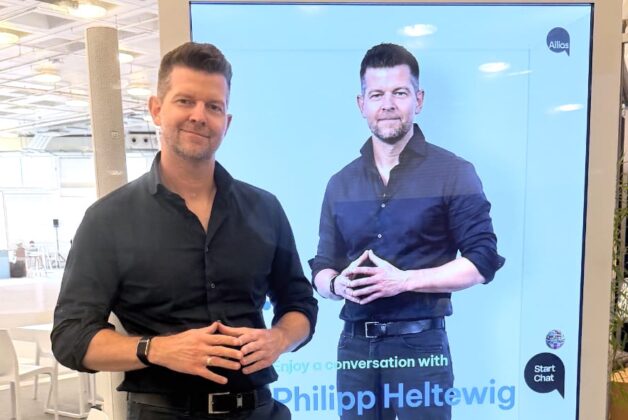
Ailias developed its Stewardship Framework because projects involving real identities repeatedly exposed this need for continuing ownership.
The framework considers rights and permissions, historical research, visual and vocal authenticity, knowledge verification, behavioural modelling, experience design, ethical governance and long-term review as connected responsibilities.
None of those responsibilities disappears when the installation is switched on.
Transparency can deepen the experience
Museums should also be clear with visitors about what they are encountering.
A historical Digital Human is not the person, nor is it a supernatural reconstruction of consciousness. It is an AI-mediated interpretation built from approved sources and creative decisions.
Explaining this need not destroy the sense of wonder. Museums routinely explain how reconstructions, conservation treatments and interpretive choices are made. Similar transparency can help visitors understand both the potential and limits of conversational AI.
It may even create a second level of engagement: not only “What can I ask this person?” but also “How do we know this answer?”
An official representation carries a continuing duty
Authorisation by an estate, foundation or institution gives a historical AI representation legitimacy that an unofficial imitation does not possess.
It also creates responsibility.
The institution is no longer accountable only for the original production. It is accountable for the interpretation’s continuing knowledge, behaviour and context.
Conversational AI can make history feel immediate, personal and accessible. Used responsibly, it can encourage visitors to ask questions they might never type into a search box or put to a guide.
But the more successfully a historical figure appears to speak again, the more carefully somebody must remain responsible for what it says.
Adrian Broadway is the founder of Ailias, a UK company creating authorised, conversational AI Digital Humans for museums, visitor attractions, events and other public experiences. His work focuses on the practical questions surrounding identity, knowledge, behaviour and long-term stewardship when AI is used to represent real people and historical figures.