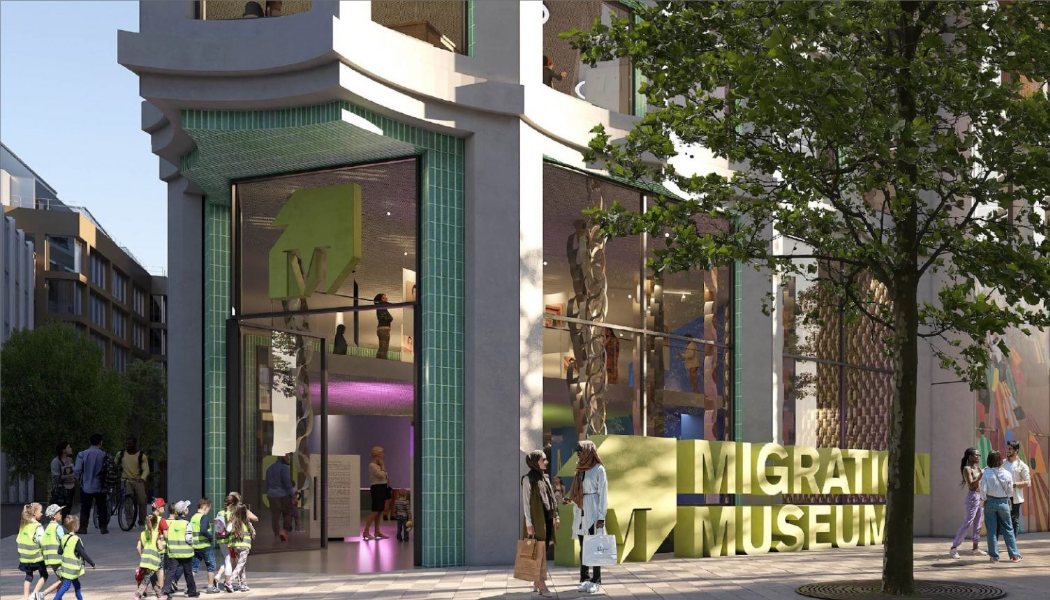
Alistair Hardaker | Image: A visualisation of the Migration Museum's upcoming building
Teaching Migration History Toolkit developed with teachers over two years, combining primary sources with practical guidance on six topics.
The Migration Museum and the British Library have launched a Teaching Migration History Toolkit designed to support teachers in addressing migration history in the classroom.
The toolkit was developed over a two-year collaboration between the learning teams of both organisations. It combines guidance from the Migration Museum’s learning team with primary source examples from the British Library.
According to the Migration Museum, the collaboration identified that creating migration history resources alone was not sufficient, and that teachers needed to be equipped with the skills to have conversations about migration and navigate the subject.
The toolkit was developed with input from teachers and covers six topics identified in response to teacher feedback: championing lived experience, facilitating difficult conversations, navigating the politics, language and terminology, dealing with racist language and imagery, and challenging myths, narratives and stereotypes.
Each section uses primary source materials alongside guidance on how to deal with these aspects of teaching migration history.
The toolkit has been primarily designed for teachers but is intended as a resource for anyone engaging with the subject. An accompanying terminology resource defines key language used when teaching about migration, with explanations of why certain terms are preferable over others.
The British Library has also produced accompanying resources including animations, timelines and additional primary sources.
The toolkit is available here.