Jessica Bradford
In March 2025 the Natural History Museum announced its first director of collections. Jessica Bradford reflects on the first year in the role.
Becoming the Natural History Museum’s first Director of Collections has meant stepping into a role that is both complex and inspiring. I feel enormously lucky to lead an exceptional curatorial team and to steward an irreplaceable collection of 80 million specimens. The sheer scale of the collection is almost unimaginable – it dwarfs that of other national museums – and its diversity is equally impressive, from microscopic wasps to whale skeletons. Reflecting on the last twelve months, the very best days have been those spent in amongst the collection, getting to know and understand the distinctive aspects of how each part of this large and diverse team works.
My background in the history of science means I am often drawn to the human stories embedded in the collection and some of the most memorable moments have been when curators reveal something about the origin story of specimens in their care. It was brilliant, for example, to see a beautiful palm-sized octopus collected by Charles Darwin, and to hear about the associated diary entries which captured his youthful excitement and curiosity – Darwin was only 22 years old when he joined the HMS Beagle expedition in 1831.
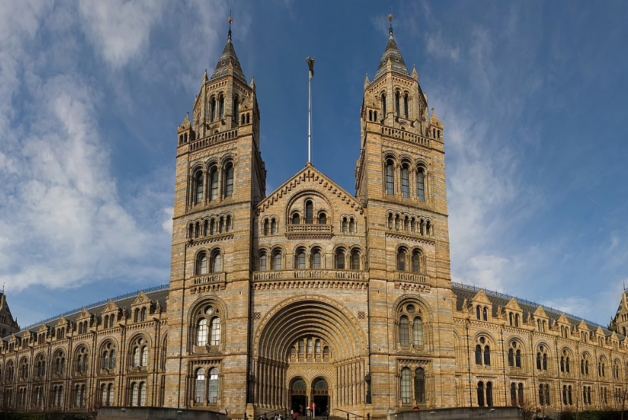
The Natural History Museum collection remains a source of wonder for the millions of people who visit our South Kensington and Tring sites each year, and it is also a globally unique scientific resource, essential to understanding the natural world and tackling the planetary emergency. Unlike the historical collections I have worked with in previous roles, one of the most energising distinctions of the NHM is the integration of hundreds of in-house scientists working daily with collection, as well has the thousands of external visitors from all around the world who use the collection every year. The range of uses of the collection, from research loans to DNA sampling, to advanced imagining and analysis, illustrate the enormous scientific value of the collection, and require distinctive and specialist management by curators and registrars. My priority, now and for the future, is to ensure the collection is brilliantly cared for, deeply understood, and increasingly relevant in a rapidly changing world.
I joined the Museum in March 2025 and was immediately struck by the depth of expertise and the culture of innovation across the organisation. From conservators refining best practice in preventive care to digitisation teams piloting robotics and AI, there is an active commitment to scaling-up, and tackling big challenges with urgency. Alongside deep subject expertise, today’s curators must be fluent in digital tools and data, comfortable working across disciplines, and confident navigating emerging ethical, political, and social questions. Increasingly, curators are also collaborators, facilitators, and programme managers: able to build partnerships, lead teams, and co-create with diverse communities. The role is evolving, and supporting curators to grow is important to me as a leader and essential to the Museum’s future.

This forward-looking ethos is embodied in NHM Unlocked, an ambitious, multi-year programme which will secure the long-term future of our collection, accelerate scientific research and innovation, and transform our public offer. Supported by £201 million of government investment, the programme will deliver a sustainable new collections, science, and digitisation centre at Thames Valley Science Park, including purpose-built storage, laboratories, digitisation suites, and workspaces. As part of this transformation, we will relocate 38 million specimens, 28 million of which will be housed at the new centre.
NHM Unlocked will also accelerate data capture for global use, release historic gallery space in South Kensington and support new research and teaching partnerships with the University of Reading. Preparing for what will be the world’s largest ever move of natural history specimens is a considerable undertaking. My previous experience supporting the relocation of the Science Museum Group Collection to the Hawking Building has been invaluable. That work reinforced the importance of meticulous planning, cross-team collaboration, and designing moves that improve the discoverability and accessibility of collections.
The role is evolving, and supporting curators to grow is important to me as a leader and essential to the Museum’s future.
Digitisation is central to the NHM Unlocked programme. Our new centre at TVSP will expand our capacity to capture, structure, and share specimen data at scale. The Museum is also leading the UK’s contribution to DiSSCo UK, part of the wider Distributed System of Scientific Collections initiative. This work aligns with the national effort to digitise 140 million specimens across more than 90 partner institutions and will accelerate the value and reach of natural science data.
As I look toward my second year, I do so with excitement and optimism. The scale of transformation across the collection team and wider museum is significant, but the opportunities it presents are equally far-reaching: to enhance care, transform access, strengthen research, expand digitisation, and support the evolving role of curators. This first year has been stretching, energising, and deeply rewarding. It has reinforced my belief that collections, mobilised with ambition, cared for with rigour, and shared with purpose, are essential to meeting the challenges of our time.