
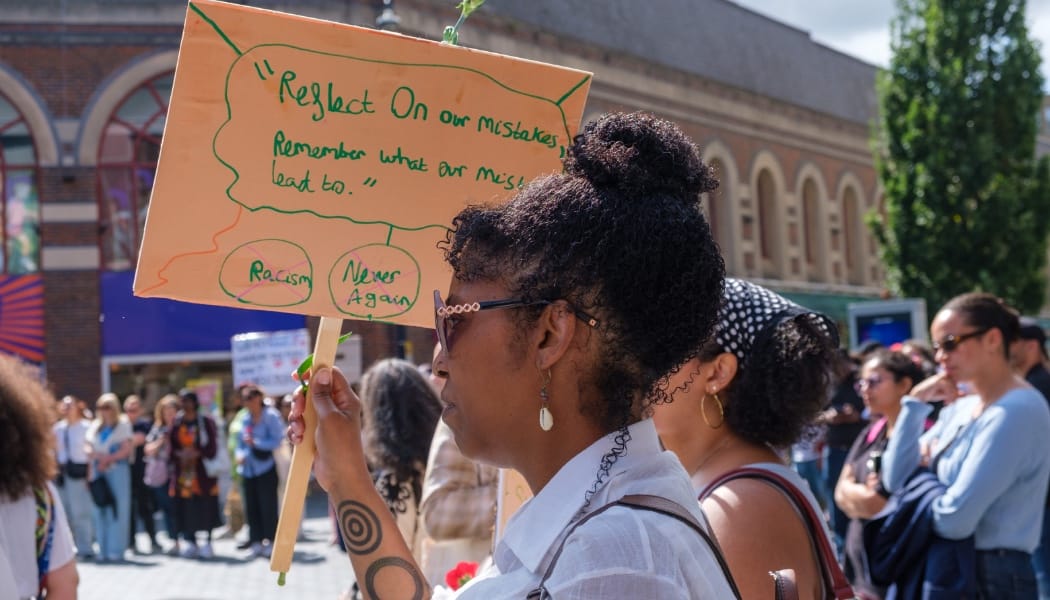
Alistair Hardaker | Image: SRD 2026 Walk of Remembrance and libation © John Dom Paiva / National Museums Liverpool
Museum head backs reparative justice principles, with redevelopment shaping a fuller account of the past ahead of 2029 reopening.
Liverpool’s International Slavery Museum has welcomed statements made by Prime Minister Andy Burnham, in which he expressed being opening to calls for a formal apology for Britain’s role in the slave trade.
Writing in The Guardian, Burnham said the government is “offering a structured dialogue with those affected by the transatlantic slave trade”, and is listening to calls for a formal apology on behalf of the British state, which “will form an important part of this process, and I am open to them.”
Michelle Charters OBE, Head of International Slavery Museum said: “For many, a formal apology represents an important and long-awaited step towards acknowledging Britain’s historic responsibility and recognising the lasting harm caused by transatlantic slavery and colonialism.”
Charters said: “The profound and enduring legacies of transatlantic slavery and Britain’s colonial past – histories in which Liverpool played a central role – continue to shape lives, communities and inequalities around the world today.
“Against this backdrop, we welcome Prime Minister, Andy Burnham’s recent comments expressing an openness to listening to calls for a formal apology on behalf of the British state.”
The museum opened in 2007 on the third floor of the Maritime Museum, and is currently undergoing a major redevelopment that will see it gain its own entrance. It is expected to reopen to the public in 2029.
Charters said the museum supports the principles of reparative justice, and that “meaningful acknowledgement must go beyond words”.
“Our redevelopment is rooted in this commitment, amplifying the voices and experiences of communities historically harmed by slavery and colonialism, fostering meaningful collaboration and partnerships, and ensuring when we reopen in 2029 that our collections, exhibitions and programmes reflect a fuller, more inclusive and truthful account of the past.”