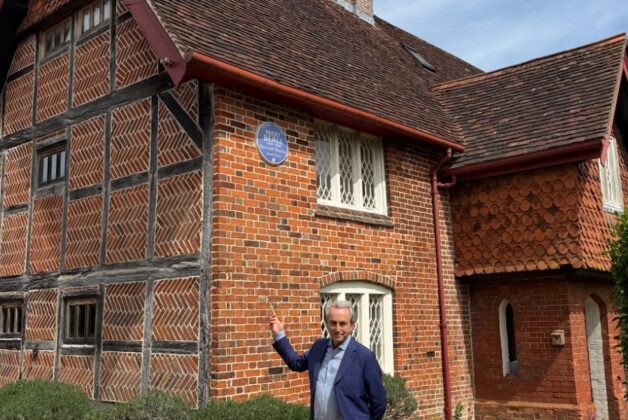

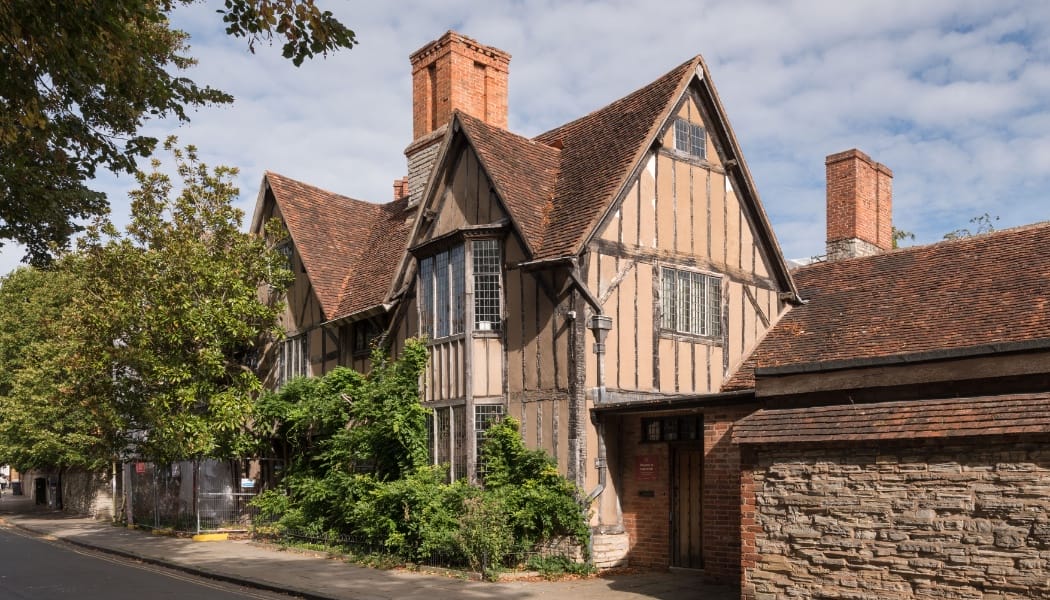
Alistair Hardaker | Image: Hall's Croft, Stratford-upon-Avon © Historic England Archive
Hastings Castle, Shakespeare’s daughter’s home Hall’s Croft and Dickens’ writing chalet among additions, as 85 sites are saved.
Historic England has revealed its Heritage at Risk Register for 2026, a list of England’s historic sites Historic England believes are at risk from neglect, decay or inappropriate development.
The annual list also counts previously at-risk sites which have since been removed from the list, having been saved and brought back into use.
In 2026 Historic England counted 197 sites added and 85 sites saved across England.
In total, there are 4,991 entries across England on the 2026 Heritage at Risk Register, which includes secular buildings or structures, places of worship, archaeology entries, parks and gardens, battlefields, protected wreck sites and conservation areas.
New additions this year include Hastings Castle in Kent, one of the first three fortifications commissioned by William the Conqueror after the Norman invasion of 1066. Historic England says the exposed setting and coastal erosion have recently caused some sections to become vulnerable.
Hall’s Croft in Stratford-upon-Avon, Shakespeare’s daughter Susanna’s historic home with her husband Dr John Hall, has also been identified as at risk .
Historic England says the building needs funding to save its exterior. The 17th century building was damaged last year, after a vehicle struck the front of the building. While its restoration has already benefited from a £1 million donation from playwright Ken Ludwig, more funds are needed for the next phase of work.
Charles Dickens’ Writing Chalet in Rochester, Kent has also been added to the Register, described as “increasingly fragile” and in need of repair. The Grade I listed chalet The council, in partnership with The Friends of Eastgate House, aims to restore the chalet as a place of inspiration, education and community engagement.
Among the 85 sites saved this year and removed from the list is Georgian terraced house, 810 Tottenham High Road in Haringey. Previously at risk of dereliction, a major restoration has since taken place, led by nearby Tottenham Hotspur Football Club, supported by The National Lottery Heritage Fund. The building is now a creative hub featuring artists’ studios, galleries and a café run by Sarabande Foundation, which was established by the late Lee Alexander McQueen.
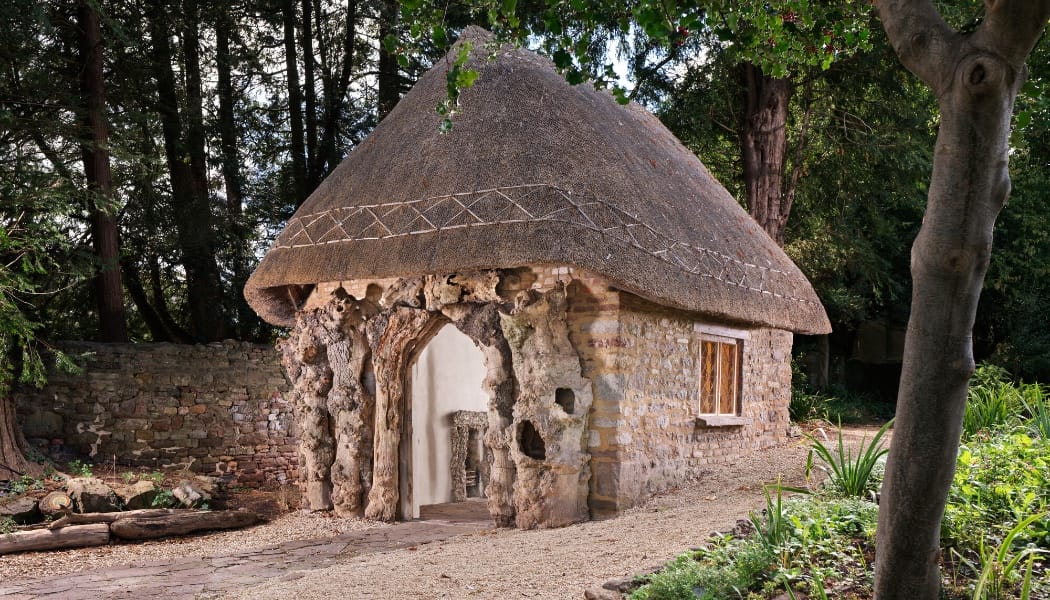
Also saved is Dr Jenner’s Hut, the birthplace of vaccination in the Garden of the Chantry in Gloucestershire. Dr Jenner christened the hut the ‘Temple of Vaccinia’ after the discovery. Funding from The National Lottery Heritage Fund was secured following its addition to the Heritage at Risk Register in 2025.
Last year, Historic England launched the five year, £75m Heritage at Risk Capital Fund, funded by DCMS, to support the repair and conservation of historic buildings and sites on the Heritage at Risk Register.
Historic England reports it spent £12.11m in grants for support and repairs to 135 sites on the Heritage at Risk Register during 2025/2026
Claudia Kenyatta CBE and Emma Squire CBE, Co-CEOs of Historic England, said: “The most effective way to protect our buildings is to bring them back into use as places that create connection and enjoyment for local people.
“The sites saved and removed from the Register this year show what can be achieved when partners and communities work together to deliver positive, lasting change.”