Alistair Hardaker | Images: © Historic England Archives
Grade I listed Victorian sculptures removed from Historic England’s Heritage at Risk Register following regeneration works at Crystal Palace Park.
The Crystal Palace Dinosaurs have been removed from Historic England’s Heritage at Risk Register following a restoration backed by £5 million from the National Lottery Heritage Fund.
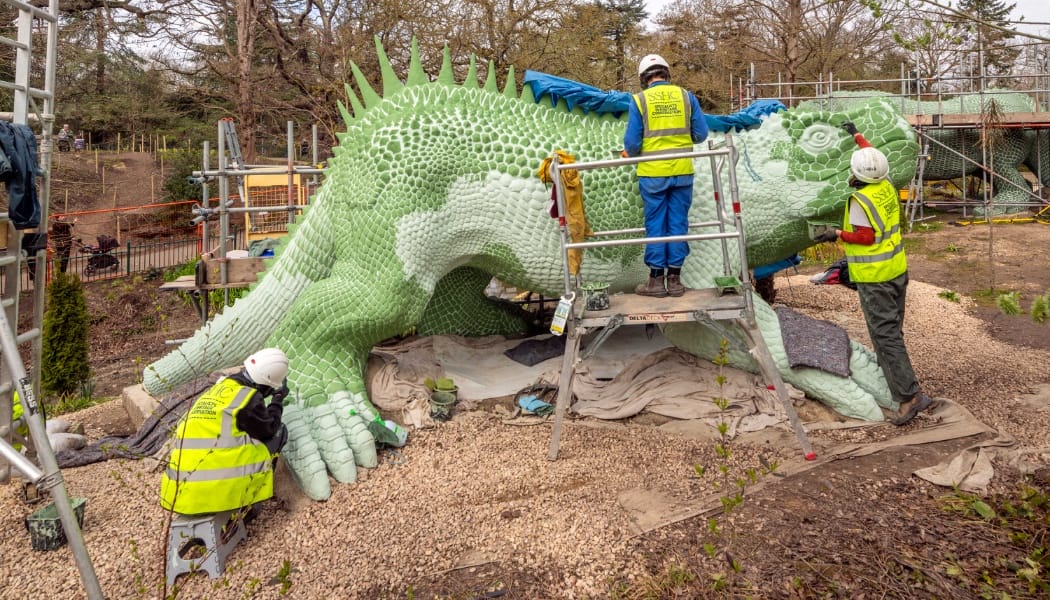
The Grade I listed Victorian sculptures were added to the register in 2020, after large cracks appeared in some of the animals’ bodies and limbs, putting them at risk of losing toes, teeth and tails. They have now been restored and painted in line with their original colours.
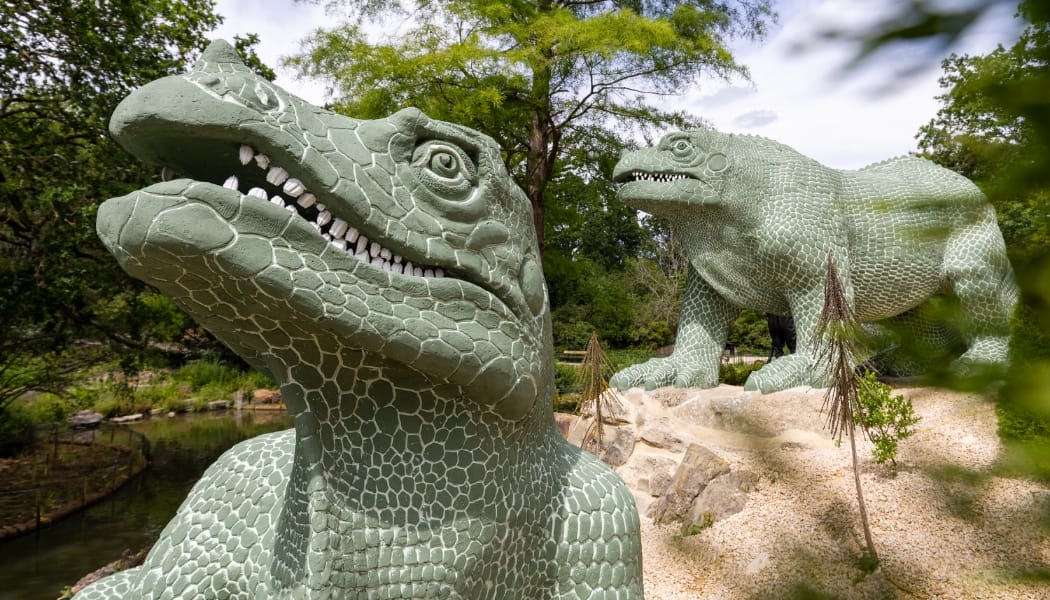
The 30 sculptures were the world’s first life-sized models of extinct creatures, intended to communicate fossil discoveries being made by Victorian palaeontologists to the public. They are Grade I listed in recognition of their role in the history of science.
The restoration formed part of a regeneration programme at Crystal Palace Park, co-delivered by Bromley Council and Crystal Palace Park Trust. The works were funded by the sale of land adjacent to the park for affordable housing and the Heritage Fund grant, with match funding from the Garfield Weston Foundation, London Marathon Foundation, the Wolfson Foundation and Pilgrim Trust. According to the partners, it is the largest regeneration programme delivered in the park since the Crystal Palace was destroyed in 1936.
Alongside the dinosaurs, the project has delivered a new Dinosaur Playground, restoration of the Grade II-listed Italian Terraces, a new visitor centre housing a permanent exhibition, restoration of the Grand Centre Walk, reinstatement of the bust of the park’s founder Sir Joseph Paxton, improved footpaths and lighting, sustainable drainage systems and new planting.
The works were completed by construction company Maylim in collaboration with HTA Design as landscape architect. Historic England provided advice on the restoration of the sculptures, and the Friends of Crystal Palace Dinosaurs provided expertise and archival information.
Claudia Kenyatta and Emma Squire, co-chief executives of Historic England, said the victorian sculptures, built to model how they understood prehistoric animals, are “internationally important in the history of science and loved by people around the world.”
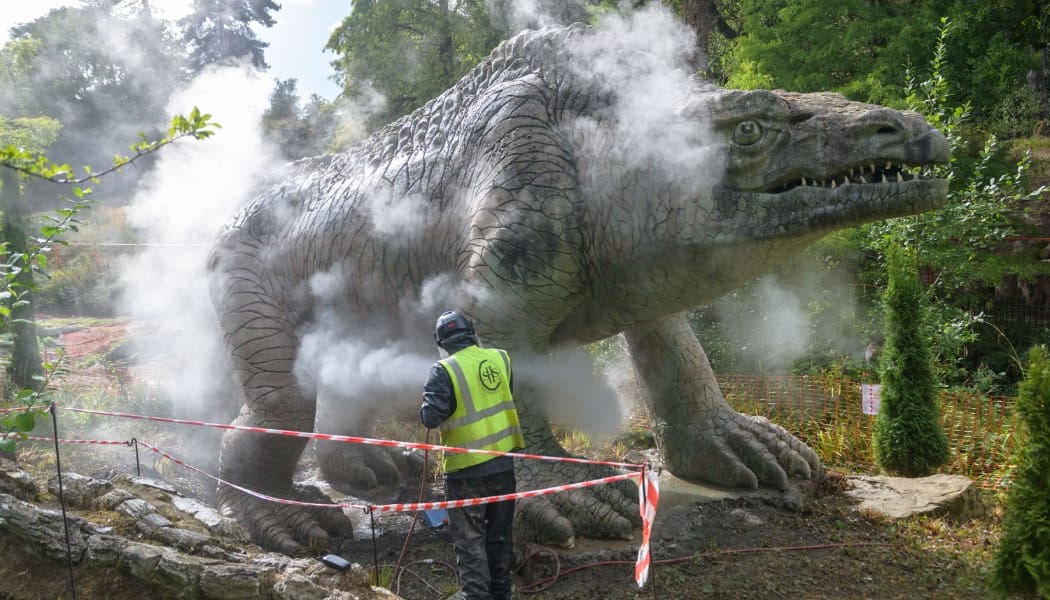
“This project has involved a wide range of experts to record the sculptures and inform the best course of repair and conservation.”
A weekend of events marking the end of the regeneration, Crystal Palace Park Celebrates, takes place on 18 and 19 July, with the Mayor of Bromley opening the new visitor centre.