Alistair Hardaker | Image: Birmingham Museums Trust
Over 85,000 records dating back to 1912 transcribed as part of Dynamic Collections programme.
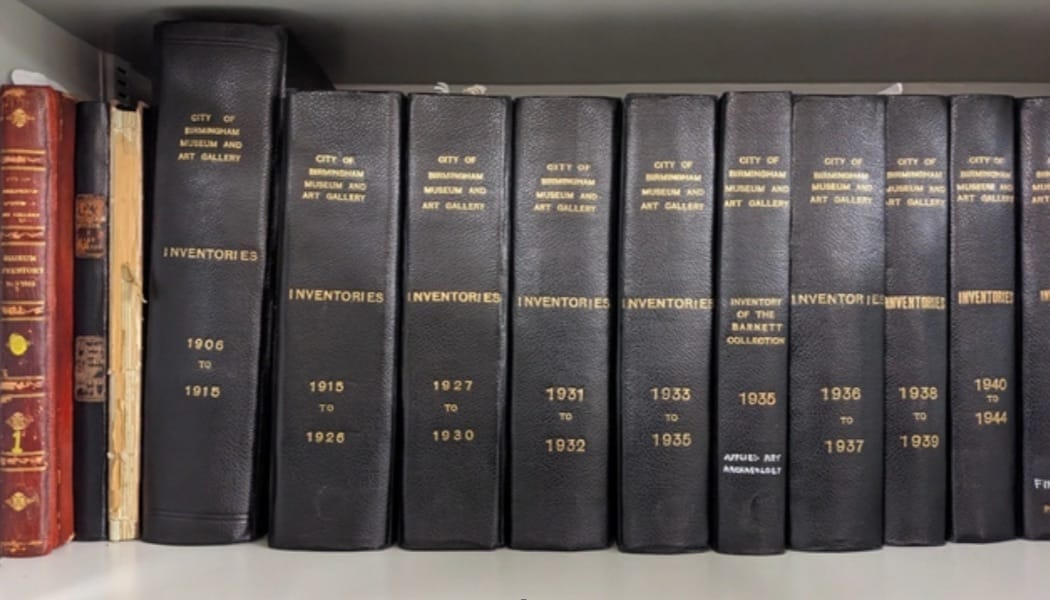
Birmingham Museums Trust has completed the upload phase of a crowdsourcing initiative to digitise paper accession registers spanning more than a century.
The project, ‘Documentation Detectives’ is part of the trust’s 10-year Dynamic Collections programme. It was established to enable volunteers to transcribe accession records for addition to the collections database. The final upload of records for transcription was made on 31 December 2025.
Over the project’s nearly two-year duration, more than 3,400 volunteers from around the world used the online platform Zooniverse to work through entries containing information about objects’ origins, materials and histories.
The volunteers have completed over 85,000 records dating from between 1912 and 2003, covering objects from archaeology, fashion, fine art, numismatics, social history and natural science collections.
Birmingham Museums said transcribed data has already influenced curatorial work. Research uncovered through the project informed the development of The Elephant in the Room: The Roots and Routes of the City’s Collections, an exhibition at Birmingham Museum & Art Gallery examining the city’s global connections and colonial histories.
Transcribed records enabled curators to identify and contextualise items linked to imperial trade and conflict.
Birmingham Museums Trust will now import the transcriptions into a dedicated accession registers section of the collections database exactly as volunteers typed them on the Zooniverse platform.
The data will be used to fill gaps in core object record information ahead of creating a public database. Further documentation projects involving local Birmingham-based participants both in person and remotely are planned.
Alex Pinford, collections information assistant and project lead at Birmingham Museums Trust, said: “We still vividly remember the shock we felt when our initially prepared batch of 28,000 files was completed by our volunteers in less than two weeks.
“This landmark step in our Dynamic Collections project has brought us tangibly closer to building the public collections database we have dreamt of for years, opening doors that have been closed for generations.
“The project has surpassed all expectations and we cannot thank our documentation detectives enough for their contributions.”