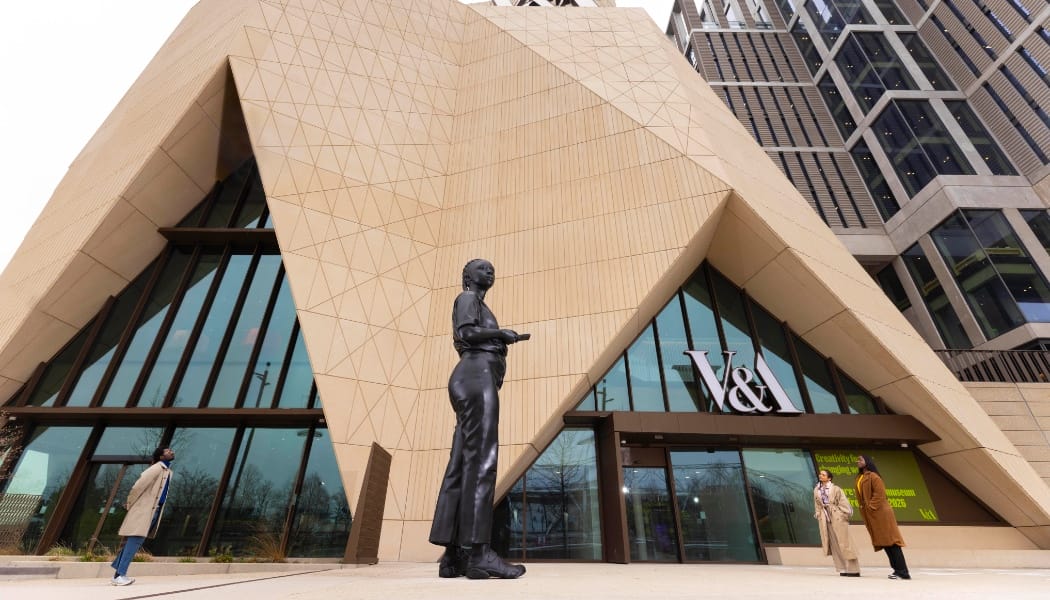
Alistair Hardaker | Image: ‘A Place Beyond’ by Thomas J Price. (David Parry and PA Media Assignments for the V&A)
Sculptor Thomas J Price’s tallest work to date unveiled outside museum ahead of its public opening next month
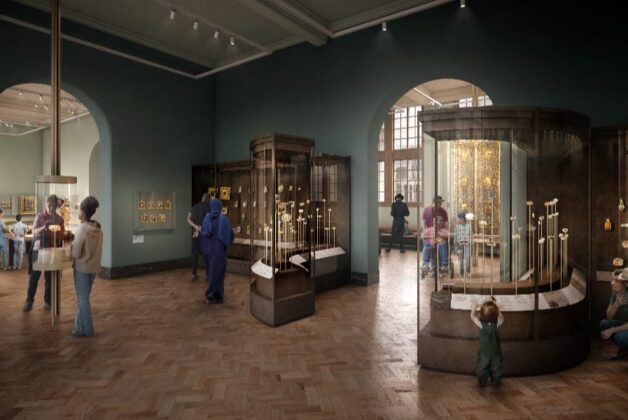
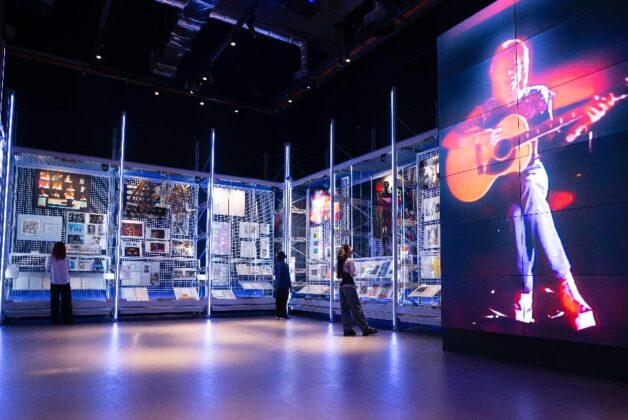
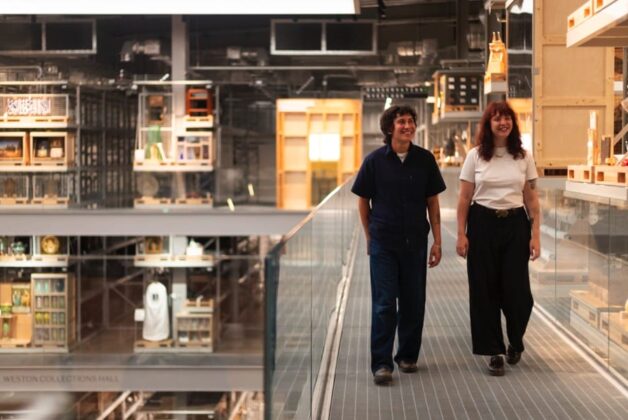
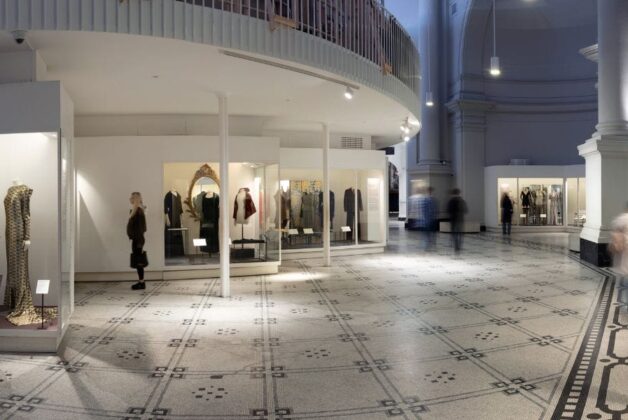
The V&A East Museum itself opens on 18 April 2026, and includes two permanent ‘Why We Make’ galleries alongside temporary exhibitions, and live events, and a café by London restaurant Jikoni.
Also announced today is ‘New Work’, V&A East’s new six-monthly rotating creative commissions programme, which spotlights artists, designers and community collaborators who are shaping contemporary culture.
New Work’s inaugural theme, ‘Making East London’ invites artists Tania Bruguera, Es Devlin, Lawrence Lek, Rene Matić, Shahed Saleem, Justinien Tribillon, Carrie Mae Weems, and Laura Wilson to reflect on east London’s histories and creative futures.
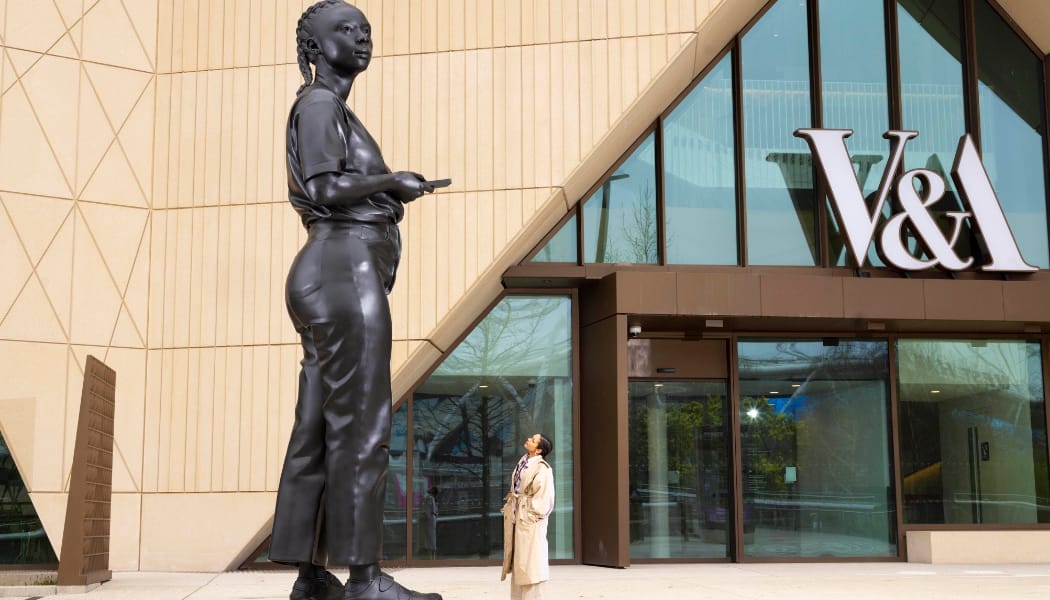
The V&A has unveiled a new sculpture outside the V&A East Museum, on East Bank in Stratford’s Queen Elizabeth Olympic Park.
The 18ft sculpture ‘A Place Beyond’ s London-based artist Thomas J Price’s tallest work to date, and depicts a fictionalised young person in casual dress, mobile phone in-hand, looking out to the horizon.
The V&A said the sculpture was chosen as it “acts as a quiet emblem for change and a rejection of social or racial profiling to instead create connection through everyday moments.”
The V&A East Youth Collective, a London-based group of 16–24 year olds, were consulted during the sculpture’s selection process.
The sculpture, constructed in bronze, has been created from an amalgamation of images, 3D scans and observations.
Thomas J Price, said: “I want this sculpture to become an extension of the people who inhabit the museum, and the spaces around it. This commission is especially meaningful to me as I was taken to the V&A as a child with my mother and it has shaped much of my critique of museum collections. I’m excited to be part of the next chapter in the V&A’s evolution in east London.”
Gus Casel-Hayford, director of V&A East said the sculpture “symbolises those historically excluded from public monuments, challenging our preconceptions about representation, perception and identity. I can’t think of a more powerful work to greet our visitors on their way into V&A East Museum.”