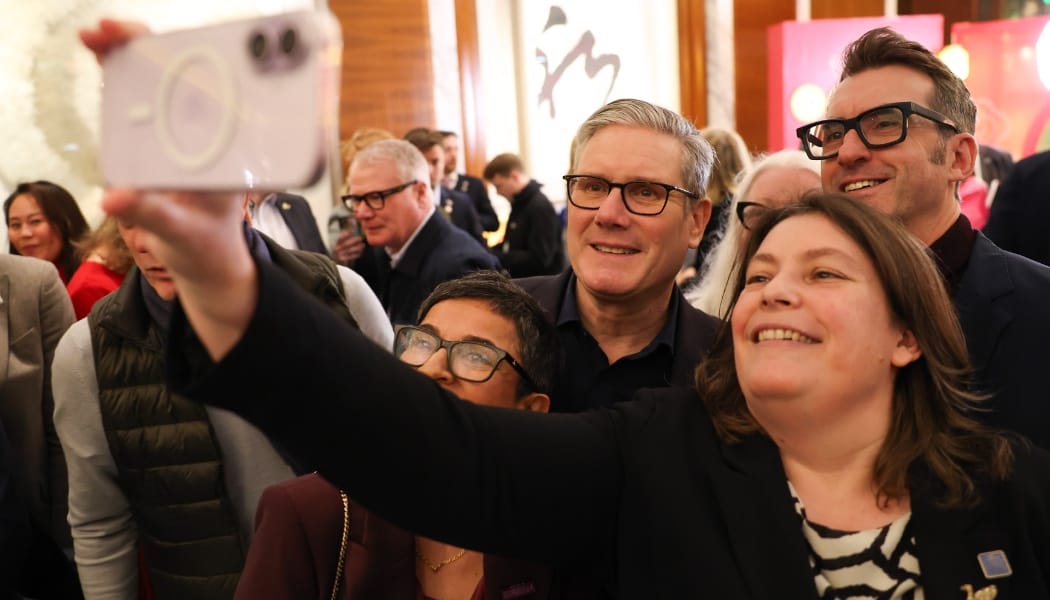

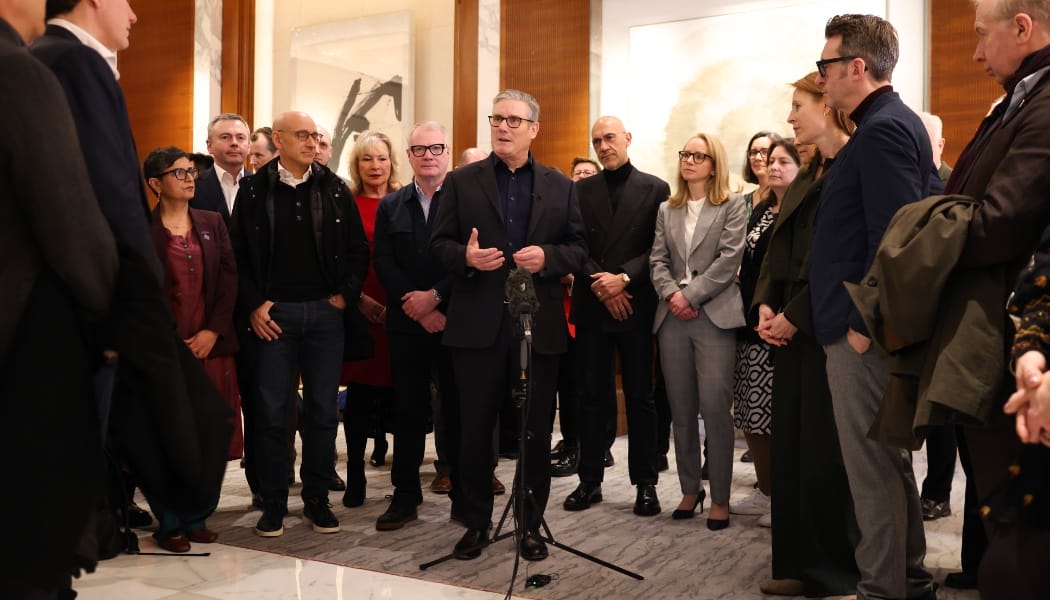
Image: Keir Starmer during his visit to China alongside a delegation featuring Sara Wajid (CC BY 4.0 Number 10)
We’re socially conditioned to associate size with power. Being just over 5ft, I learned that lesson early, because my size shapes how the world meets me and treats me.
Last month, I found myself walking into rooms designed for power. Vast halls, choreographed handshakes, cameras tracking every movement. I was part of a UK delegation led by the Prime Minister to China and Japan, moving at speed between Beijing, Shanghai and Tokyo. Four days. Multiple cities. Ever-present discreet security. And a constant awareness that these spaces were not built with people like me in mind.
I am the co-CEO of Birmingham Museums Trust. I am a woman of colour. I am a feminist. I lead a civic cultural organisation rooted in a post-industrial British city that rarely sees itself reflected in the places where global influence is exercised. And suddenly I was there. Not observing from the margins, but inside the room.
These visits are meticulously planned. There is an official schedule and an unofficial one. The public moments, carefully photographed, and the private conversations in corridors, cars and side rooms. What struck me most was not the theatre of diplomacy, impressive though that is, but the quiet work of translation constantly happening beneath it. Translation not just of language, but of values, intentions and human connection.
Culture is often described as “soft power”, a phrase that can feel dismissive until you witness it up close. Museums, theatre, heritage and creative practice were not decorative extras on this visit. They were active participants in how relationships were built. When you talk about art, history or shared cultural reference points, the temperature in a room changes. People lean in. The conversation slows. The focus shifts from extraction to exchange.
In Shanghai, the Prime Minister celebrated Great British theatre. In meetings and receptions, cultural leaders were present alongside business and government. This mattered. It signalled that Britain understands itself not only as an economy, but as a cultural actor. That our stories, collections and creative voices are part of how we engage with the world.
Museums are often asked to justify themselves in economic terms. Visitor numbers. Regeneration impact. Tourism spend. Those things matter, but they are not the whole story.
Behind the scenes, the experience was human and slightly surreal. Long days that blurred into one another. Jet lag and adrenaline co-existing. Carefully chosen outfits designed to say “serious, but myself”. At one point, sitting on the floor with other women from the delegation, sharing quiet laughter between engagements, I was struck by how grounding those moments were. Power can be loud. Solidarity is often quiet.
One of the most meaningful aspects of the trip for me was the presence of other female leaders, and the unspoken understanding between us. There is a particular choreography to being a woman in elite spaces. When to speak. When to wait. How to hold your ground without being labelled difficult. When to support another woman with a glance, a word, a hand on the arm.
These things never make the official readouts. But they are part of how leadership actually functions.
As a museum leader, I was constantly aware of what I carried with me. Not just my own identity, but the stories of Birmingham. A city shaped by migration, industry, creativity and protest. A city whose collections tell global stories from a local perspective. When I spoke about our work, I was not selling a product. I was offering a way of understanding the world that is rooted in public value.
Museums are often asked to justify themselves in economic terms. Visitor numbers. Regeneration impact. Tourism spend. Those things matter, but they are not the whole story. What this trip reinforced for me is that cultural institutions also operate at the level of trust. We create spaces where complexity is allowed. Where difficult histories can be held. Where dialogue can begin without a contract attached.
China is the UK’s third largest trading partner. These visits are rightly focused on jobs, exports and investment. But culture has a different kind of return on investment. It builds relationships that can outlast political cycles. It allows nations to see one another as more than headlines.
There is also something important about who gets to represent Britain abroad. Too often, international narratives about the UK default to London, to a narrow image of heritage and power. Being there as a Birmingham-based leader felt quietly radical. It said that Britain’s cultural life is plural, regional and diverse. That our national story is not owned by one city or one class.
When I returned home, tired but energised, I thought about the photographs from the trip. The formal group shots will circulate widely. But the images I carry with me are smaller. A moment of shared recognition with another female leader. A conversation about collections and care. A reminder that even in the most controlled environments, human connection finds a way through.
Culture does not shout. It listens, reflects and endures. And sometimes, if you are lucky, it gets invited into the room where decisions are being made.