
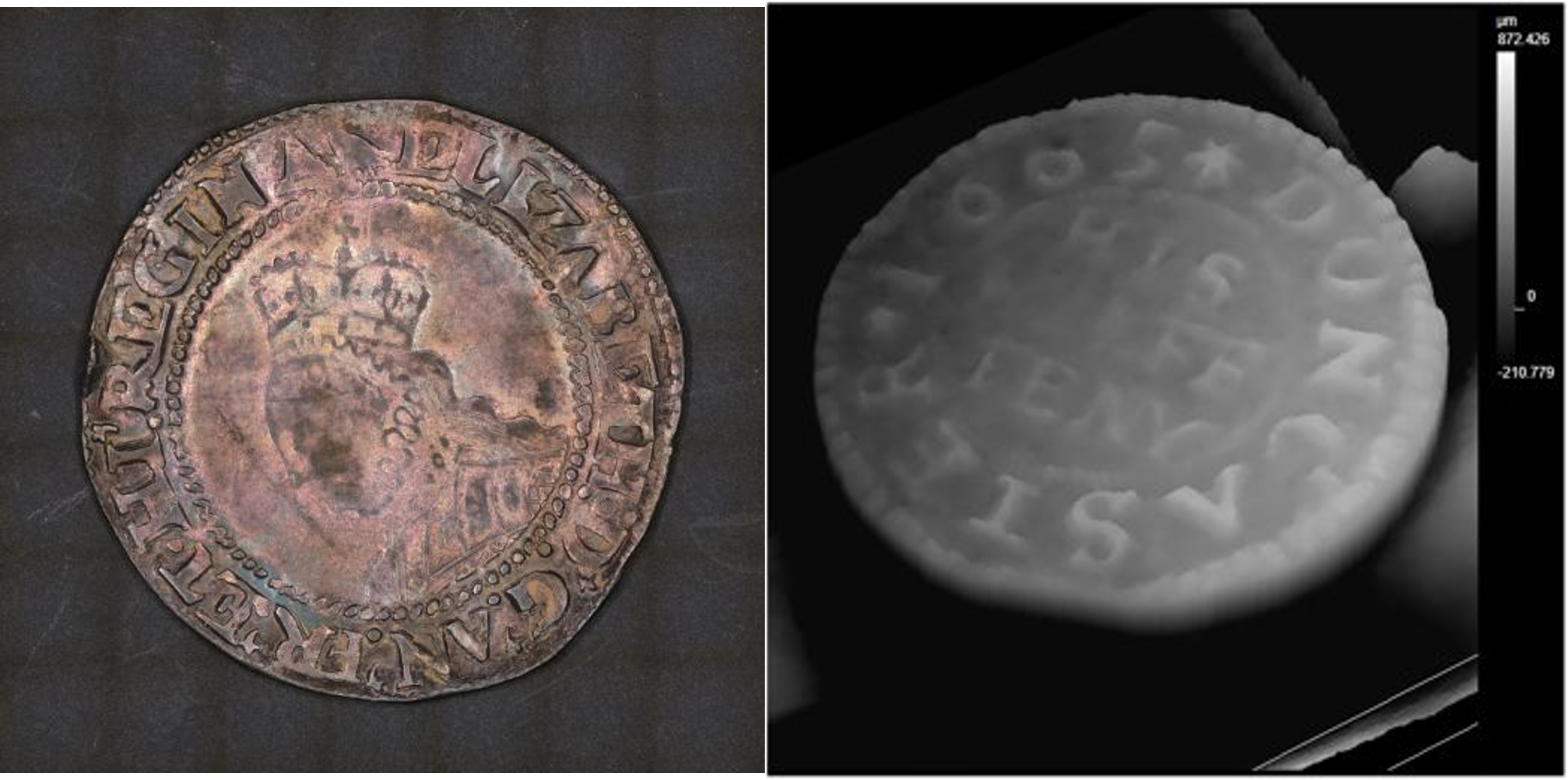
Alistair Hardaker | Image: A coin scanned by the lab
Manchester Met’s new centre offers museum and heritage organisations imaging and scanning technology, funded by AHRC.
Manchester Metropolitan University has launched a centre that offers museums, archives and heritage organisations access to imaging, scanning and analytical technology.
The new Centre for Digital Modelling and Analysis for Cultural Heritage (DMACH) at Manchester Met is funded by nearly £1m from the Arts and Humanities Research Council (AHRC).
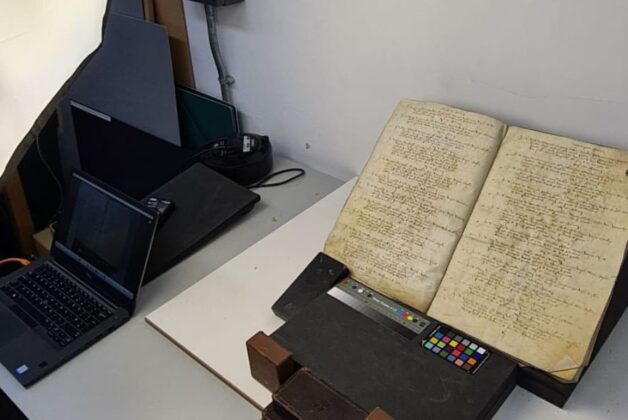
The centre brings together imaging, scanning and analytical technologies, including micro-CT scanning, that can reveal details invisible to the human eye, such as inscriptions on ancient artefacts and the contents of sealed objects.
The technology can also be used to recover audio from some of the earliest sound recordings made on wax cylinders.
Paul Bason, Reader in Digital and Creative Industries, said DMACH “will give organisations access to world-class equipment and expertise, helping to uncover new knowledge about our shared heritage and ensuring it can be preserved for future generations.”
Researchers have used the technology in projects which have analysed Roman artefacts and inscriptions, and made digital recording of historic buildings and landscapes.
One project involved creating detailed 3D scans of artefacts in Portland Basin Museum, Tameside, which were then reproduced through 3D printing so that visitors are able to handle accurate replicas.
The team also embedded braille onto the surface of some of the prints, so that blind and partially sighted people could learn about the objects through touching them.
It is the latest digital lab to open at Manchester Met, following the launch of its £1.27m Digital Education Nexus (DEN), which enables healthcare and life science students to perform AI-powered learning tasks including ‘digital dissections’.