Alistair Hardaker | Image:
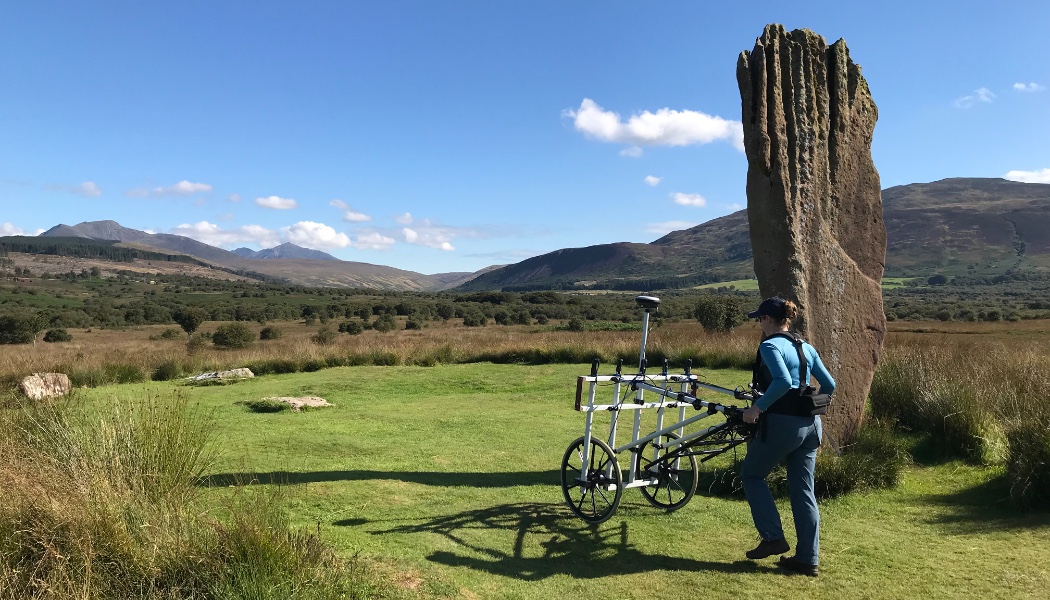
Geophysical survey at Machrie Moor reveals traces of a possible stone or timber circle hidden beneath the surface, Historic Environment Scotland reports.
Archaeologists at Historic Environment Scotland have discovered traces of a possible stone or timber circle beneath the surface at Machrie Moor on the Isle of Arran.
The circle was identified through a geophysical survey, in which the ground was scanned for anomalies that could be caused by stone, timber, metal or other disturbances beneath the surface.
The survey, led by Dr Nick Hannon, identified twelve circular pit-like anomalies. When connected, the twelve spots form a circle with additional spacing for two more settings. No stones are present in the pits, so the circle could have consisted of either stone or timber posts.
Machrie Moor is an area of peat moorland with a concentration of archaeological remains from the Neolithic and Bronze Ages, dating from 3500 BCE to 1500 BCE. Six stone circles have currently been identified at the site. Excavation has shown that several of the stone circles were preceded by timber circles in the same positions, where the timber was later replaced by stone.
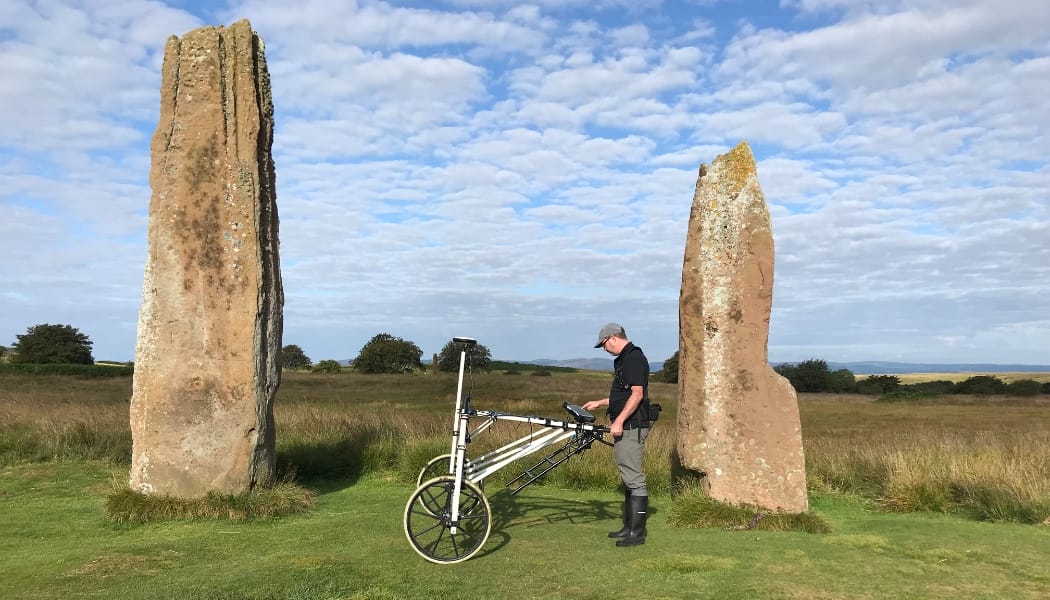
According to HES, the newly discovered circle is likely to date from a similar period to the other circles. These circles were associated with ritual and ceremonial activities and align with a notch at the head of Machrie Glen, where the midsummer sunrise would have been visible. The circles were later used for burials, including cremations and inhumations. HES says further archaeological research is required to understand the new circle’s place in the site’s history.
Dr Nick Hannon, senior heritage recording manager at HES, said: “The tools we use to learn about what’s underground are constantly developing, and we can learn more and more about our buried history without disturbing the earth and potentially damaging archaeological remains. Discoveries like this one remind us why we do this work – to look after Scotland’s heritage and uncover more of our past in the process.”