Alistair Hardaker | Image: V&A East Museum (c) Hufton+Crow
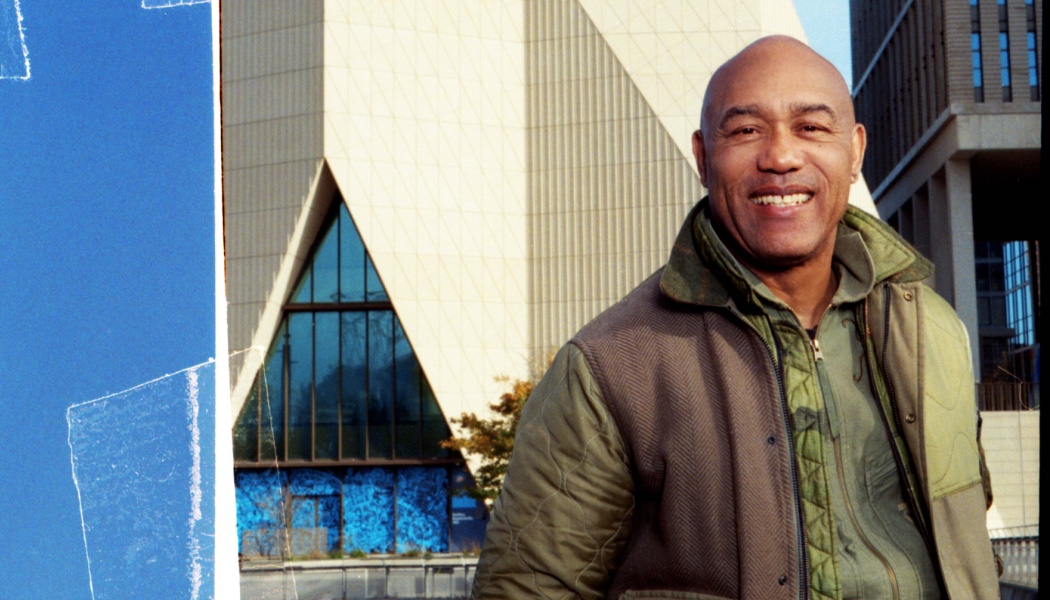
Gus Casely-Hayford has spent five years building one of the most significant new cultural institutions in Britain. On the day it opens, the thing he most wants to talk about is what it feels like to walk into a museum and not belong there. “I have been on the side of those visitors, who haven’t felt welcome and have felt it enormously upsetting and frustrating.”
Eliminating that experience is, “in a way… the core objective of my role” he tells Advisor.
“I think of the kinds of barriers that I’ve perceived to museum visits when I was younger particularly, and some of those are quite ineffable, they aren’t things that are easy to articulate.”
That experience is the thread running through every decision taken at V&A East, which opens this weekend on 18th April, from the curatorial frameworks in its permanent galleries to the food on the menu in its restaurant.
It is, he says, why the institution has spent more than a decade not just planning, but listening, and why measuring success will be about more than visitor figures.
A decade in the making
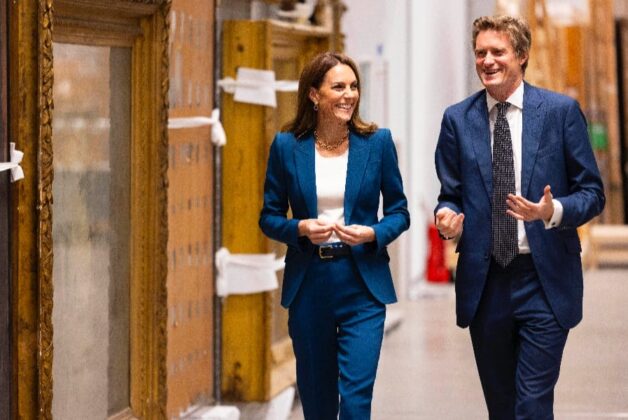
The opening of V&A East in Stratford marks the end of a long journey. First conceived in 2013 as part of Boris Johnson’s Olympicopolis vision for the Queen Elizabeth Olympic Park, the project took shape as V&A East from around 2018. Casely-Hayford joined as director in March 2020, arriving from the Smithsonian’s National Museum of African Art in Washington DC, and has steered it through some of the most turbulent years in recent memory: a pandemic, Brexit-related labour shortages, the seismic cultural reckonings of Me Too and Black Lives Matter, and multiple changes of government.
That it exists at all, he says, is testament to “an incredible team of indefatigable and brilliant colleagues who have given everything and more to creating not just a space, but a space which speaks to contemporary need in very, very powerful ways.”
With opening weekend now imminent, he reflects on what the moment means. “There’s a moment when you walk in the door and you realise this is a space with its own identity”.
Casely-Hayford reaches for an analogy: “I’ve never built a house before, but I imagine there’s a point at which a list of problems and issues and irritations becomes a shelter. It becomes a place of refuge and love, of family and stories”. The space, he says, is already doing for him what he had hoped it would do for visitors: “It’s inspiring, it’s uplifting, but a space of deep catharsis”.
Listening first
Central to the project’s development was a commitment to get out into the communities V&A East hopes to serve, before a single curatorial decision was made. Casely-Hayford describes a generation shaped by overlapping crises, pandemic, political upheaval, global cultural flashpoints, that left young people “frustrated and upset” by problems they felt they had been left to resolve, yet simultaneously “full of hope and aspiration and underpinned by an incredible kind of ethical compass.”
What they asked for was clear: an institution that reflected their values, that could ” speak to issues of history and heritage with openness and honesty,” while also offering real pathways into professional careers in the creative industries.
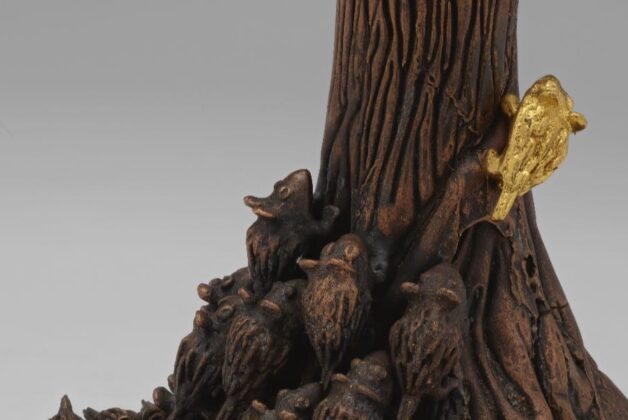
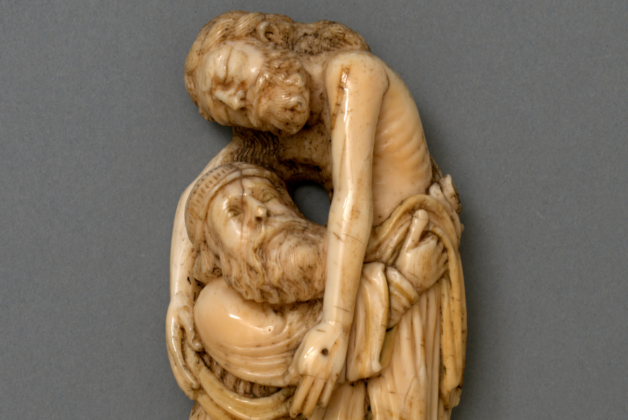
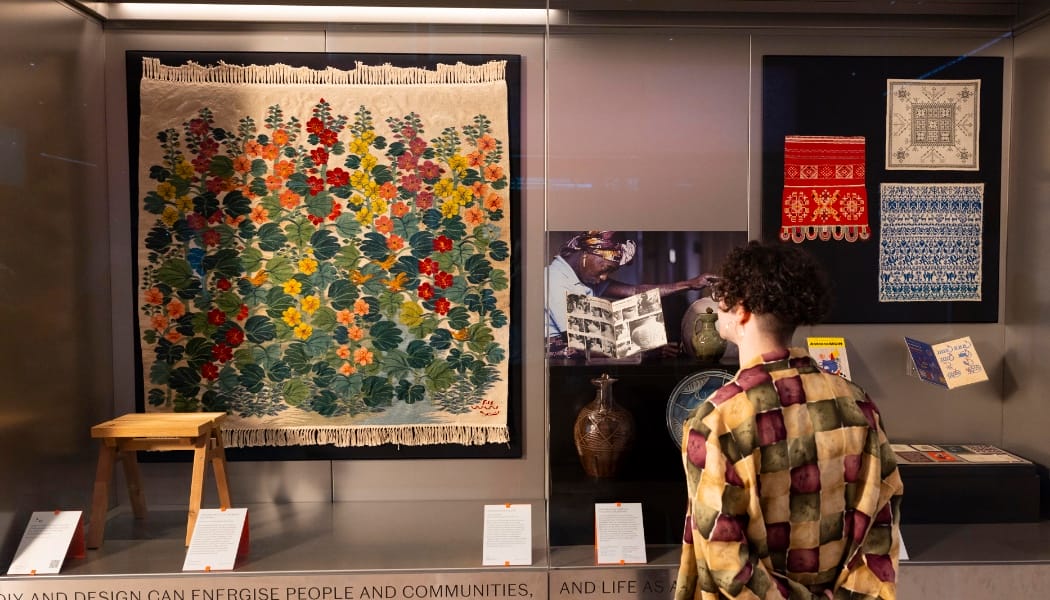
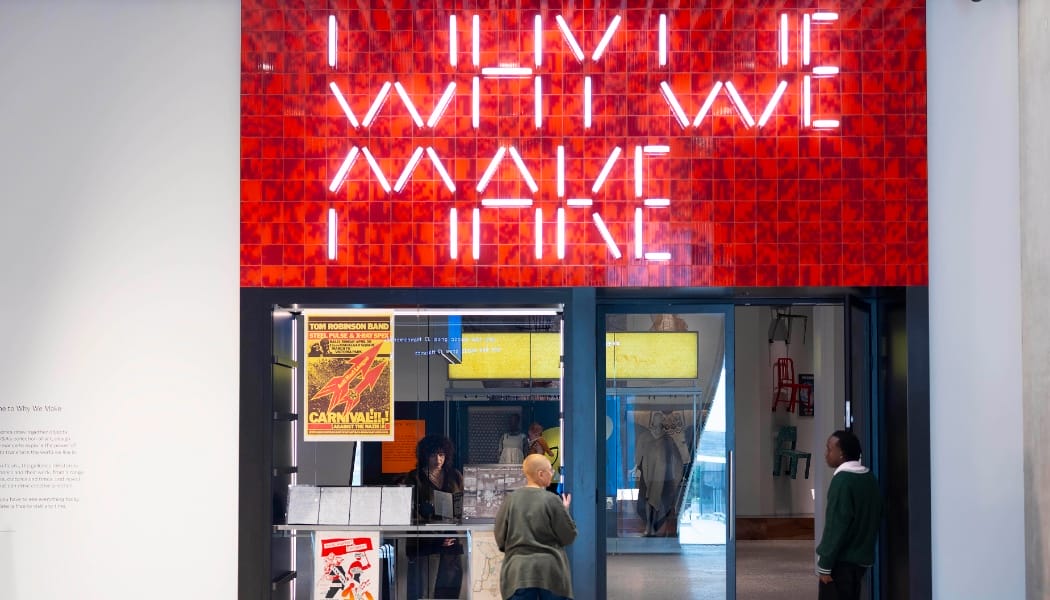
From those early conversations, V&A East assembled a formal youth consultative collective that has remained involved throughout the project’s development. Their influence runs deep, extending into the permanent collection’s Why We Make galleries, which draw on more than 500 objects spanning 1,000 years of making, many not seen in a V&A space for generations. Engaging young people in shaping that collection was, Casely-Hayford is clear, not only curatorially important but ethically important. “…we wanted to be conscious and honest and open about the ways in which we were considering our work.”
Rather than organising the collection chronologically, the curatorial team, guided in part by the collective, chose to structure it thematically around issues the young people identified as urgent: sustainability, equity, and the connective threads between makers across time and geography. The collective also helped curators guard against a particular occupational hazard.
“One can lean into subjects and be led too much by the abstract history or by the aesthetics. I think to reground those things within a kind of ethical framework has been really very important.”
Their involvement extended to every area of operation: the staff uniforms, the restaurant menu, the curatorial narratives underpinning both the permanent collection and the opening exhibition. “They’ve advised us on every area of operation on curatorial delivery. They’ve sampled the food that’s in the restaurant. They’ve been absolutely fantastic.”
The irreplaceable thing
One assumption the project explicitly challenges is that reaching young audiences means going digital. For Casely-Hayford, the collections are the institution’s irreducible advantage.
“What we have that no other institution on earth has, is our collections. That is our USP.” No digital experience, however sophisticated, can replicate what he calls the existential power of physical proximity: “there is something which is existentially powerful about being present and about being in close proximity to truly glorious things that have been made by another human hand.”
AI, social media and digital connectivity are valuable, he says, but only as additions to that encounter, never substitutes for it.
The result, he argues, allows visitors to stand before something a millennium old and feel genuine connection: “getting up close to something that a maker’s hand has been engaged in lovingly crafting is really a powerful way of connecting across time and geography.”
Measuring what matters
Which brings conversation back to the question of who walks through the door and what they find when they get there. Metrics like visitors figures will be important, he says, but the sector needs to develop better tools for capturing what really counts. “We need to find ways of offering qualitative evaluation that can lean into some of the softer areas of benefit”.
The work that has gone into every front-facing element of V&A East, from the interpretation to the operational delivery, is designed to ensure that visitors feel not just reflected but, in his words “deeply welcome”.
For a director who knows what the alternative feels like, that is not a secondary ambition but the driving force.
Opening with music
The launch exhibition, Music is Black, curated by Jacqueline Springer, puts black British music at the centre of the institution’s debut. Casely-Hayford is emphatic about why it deserves the platform. “Black British music, which is the connective tissue between us and through our own kind of biographical narratives, it really does not get enough of a platform.”
The exhibition is accompanied by a major BBC partnership spanning radio, television and live concerts, as well as digital curriculum resources for schools developed through BBC Bitesize: legacies, he says, that will outlast the exhibition itself.
After more than a decade, V&A East is now a building ready to welcome visitors.
More than that, Casely-Hayford hopes, it is proof that a major public institution can be genuinely shaped by the people it sets out to serve.
“You can feel that love that commitment in the fabric of the building, in the operational delivery, in every single thing that you’ll see on sale in the shops, and available in the restaurant.
“We have worked so hard to make sure that this is a place that speaks to the brilliant values of the V&A, but which does it in a way that speaks to a new audience.”